Best Chest Freezers for Ample Frozen Storage and Easy Organization
If you’re shopping for a 24.8 cu ft chest freezer or a comparable extra-large unit, you’re looking for dependable capacity, efficient energy use, and convenient organization. This guide highlights five chest freezers that balance size, features, and value for households that freeze in bulk, meal-prep, or stock up for a garage or workshop. The selections cater to large families, frequent bulk purchasers, or owners who need a dedicated freezer space separate from the kitchen. Each option includes practical storage layouts, temperature control, and mobility features when relevant.
Quick reference table of chosen products:
- Hamilton Beach HBFRF2129 – 21 cu ft, Garage-Ready, two baskets, front-access drain
- BLACK+DECKER 16.2 Cu. Ft. Chest Freezer – Top opening, two baskets, mechanical control
- Casanta 7.0 Cu Ft Chest Freezer – Compact footprint with wheels and removable basket
- VEVOR Chest Freezer 6.7 Cu.ft – Two baskets, precise temperature control, energy-efficient
- EUHOMY 3.5 Cu.Ft Chest Freezer – Wheels, wheel mobility, small footprint, drain
Hamilton Beach 21 Cu Ft Double Door Chest Freezer

Best for large families and meal-prep enthusiasts who need substantial, organized storage. This model offers 21 cu ft of capacity and two removable vinyl-coated baskets for smaller items, plus a front-access drain for defrost care. It includes an adjustable thermostat for precise cooling control and a flat back design to optimize space in garages or basements. Caution: larger footprint means higher space requirements; ensure clearance for door swing and airflow.
BLACK+DECKER 16.2 Cu. Ft. Chest Freezer

Best for affordable additional deep-freeze space in a kitchen, basement, or garage with a sizable 16.2 cu ft capacity. It features two removable baskets for organization, a mechanical temperature control system, and a top-opening door. It’s a practical choice when you want substantial storage without the weight or cost of larger models. Limitation: smaller than 21 cu ft units, so it’s less suited for bulk bulk-buys or commercial-scale stockpiling.
Casanta 7.0 Cu Ft Chest Freezer

Best for space-conscious buyers who still need significant freezing capacity. This compact horizontal freezer fits into corners and offers a 7.0 cu ft capacity with a 7-setting thermostat, wheels for mobility, and a hanging basket for small items. Choose this if you want a portable, garage-ready unit with decent storage without overwhelming space. Caution: capacity is notably smaller than 16–21 cu ft models, so plan for longer-term bulk storage needs accordingly.
VEVOR Chest Freezer, 6.7 Cu.Ft
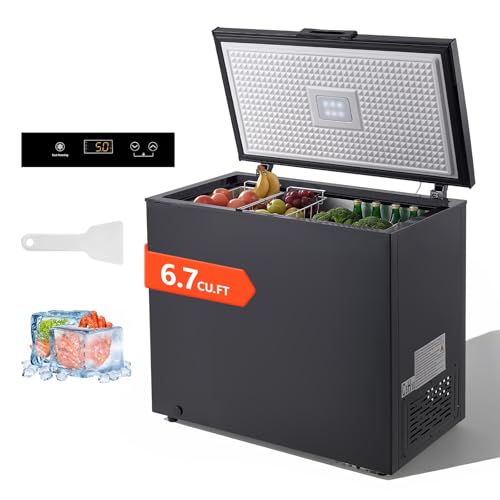
Best for precise temperature control and energy efficiency in a compact footprint. This model provides 6.7 cu ft of capacity with two baskets, a digital-like control panel showing temperature, and a wide temperature range suitable for freezing and refrigeration. It uses an energy-efficient compressor and operates quietly, making it suitable for kitchens adjacent to living spaces. Limitation: smaller capacity than the largest options, requiring careful planning for bulk storage events.
EUHOMY 3.5 Cu.Ft Chest Freezer

Best for compact living spaces that still require reliable freezing capacity. The 3.5 cu ft unit fits into small kitchens, dorm rooms, or apartments, with wheels for mobility, a drain port, and a low-noise operation profile. It’s a sensible choice when space is at a premium but you still want a dedicated freezer. Caution: much smaller capacity compared to full-size units; not ideal for bulk bulk buys or long-term bulk storage.
Buying Guide: Key Purchase Considerations
- Capacity and footprint: Compare cu ft capacity against your available floor space. Larger families or bulk buyers typically need 16–21 cu ft or more, while apartments may do well with 3.5–7 cu ft units.
- Energy efficiency: Look for energy-saving features and compressor type. Energy use affects long-term operating costs, especially in garages or basements where freezers run year-round.
- Organization features: Baskets, dividers, and adjustable shelves help maximize space and reduce time spent searching for items.
- Mobility and placement: Wheels and compact dimensions aid in moving units between rooms or into corners. Consider drainage for defrosts and the ease of cleaning.
- Control precision: Digital or analog thermostats affect how accurately you can maintain specific storage temperatures for different foods.
- Defrost type: Manual defrost is common and simple, but needs periodic maintenance; auto-defrost reduces maintenance but can increase cost and energy use.
Frequently Asked Questions
- What size chest freezer should I buy for a family of four?
– A unit in the 7 to 16 cu ft range is typically sufficient, depending on how much you freeze regularly and pantry storage needs. - Is a top-opening chest freezer or front-opening better?
– Top-opening models generally conserve energy and reduce cold air loss when opened, but front-opening designs can offer better accessibility in tight spaces. - Do chest freezers require special installation space?
– They should be placed on a flat, sturdy surface with clear airflow around the back and sides; keep them away from direct heat sources. - How often should I defrost manually?
– If you have a manual defrost unit, plan defrost intervals based on frost buildup; a light defrost schedule helps maintain efficiency. - Can I use a chest freezer in a garage?
– Yes, many models are garage-ready, but check the operating temperature range and insulation to ensure reliable performance in temperature fluctuations. - What should I consider for energy savings?
– Look for energy-efficient compressors, tight door seals, and appropriate temperature settings to minimize running time and electricity use.