Best 450 CFM Exhaust Fans for Home and Kitchen Ventilation
Bottom line: For spaces around 400–500 CFM, these five exhaust fans offer strong airflow with practical features for bathrooms, kitchens, attics, and utility areas. The right pick depends on where you’ll install, how loud you can tolerate, and whether you need ductless options or variable speed control. The buyer profiles below highlight who each model suits best. Below is a quick compatibility table for the five selected products.
| Product | CFM | Best For |
|---|---|---|
| Tieasy Wall Mount Range Hood | 450 | Kitchen venting, ducted or ductless with filter option |
| Broan-NuTone L400 High Capacity | 434 | High-velocity bath or utility exhaust |
| Panasonic WhisperCeiling FV-40VQ4 | 390 | Quiet bathroom ventilation, compact spaces |
| VIKIO HOME Wall Mount Range Hood | 580 | Moderate-kitchen ventilation with low noise |
| Windigaga 8 Inch Shutter Exhaust | 760 | Garage/shed attic or workshop with robust airflow |
Tieasy 30-Inch Wall Mount Ducted/Ductless Hood
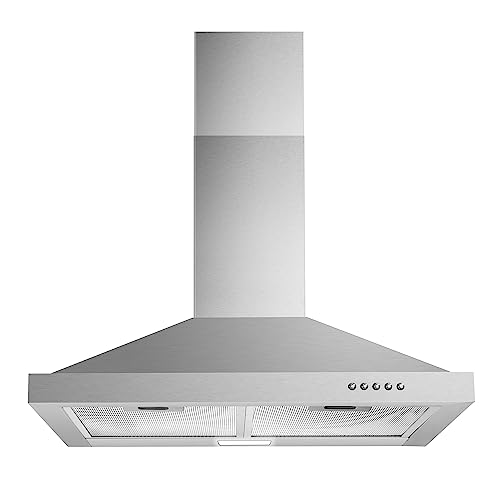
The Tieasy model delivers 450 CFM through a 30-inch wall-mounted hood designed for either ducted or ductless setups. It uses a premium 430-grade brushed stainless steel exterior and provides three speeds with an energy-efficient LED light. The unit supports adjustable chimney height (15.75″ to 29.5″) and offers an extension option for higher ceilings. Best for busy kitchens needing flexible venting and a stylish finish. Choose this if you want a single unit that can adapt to different installation heights and both ducted and ductless configurations.
Best for: Kitchen spaces that require powerful but controllable ventilation with a clean, stainless look. Limitation: Extension accessories and carbon filter kit are sold separately, which may affect total cost and installation planning.
Broan-NuTone L400 High Capacity Ventilator

The Broan-NuTone L400 provides 434 CFM with two heavy-duty centrifugal blower wheels. It emphasizes durability with a metal duct connector and offers flexible installation directions—horizontal, vertical, or in-line with the right adapter. It runs at about 2.3 sones, suitable for larger bathrooms or workshops that demand robust air movement with moderate noise. Best for: spaces needing a high-capacity, straightforward exhaust with flexible ducting. Limitation: Noise level can be noticeable at higher speeds in small rooms, so plan placement accordingly.
Panasonic WhisperCeiling FV-40VQ4

The Panasonic WhisperCeiling FV-40VQ4 is a ceiling-mount exhaust fan rated around 390 CFM with an ultra-quiet operation profile. It features a permanently lubricated motor, a rust-resistant housing, and a built-in damper to prevent backdrafts. Its design prioritizes easy installation, detachable adapters, and a mounting bracket suitable for ceilings up to 24 inches. Best for: bathrooms or utility rooms where quiet performance is essential and approximate 400 CFM suffices. Caution: Slightly lower airflow than strictly 450 CFM models, so calculate room volume to ensure adequate ventilation.
VIVOHOME 12″ Shutter Exhaust Fan

VIVOHOME offers a shutter-style exhaust fan using an EC motor with 1300 CFM, featuring a thermostat, variable speeds, and a smart timer for attic, garage, or greenhouse ventilation. While this is higher than 450 CFM, the model is useful when you need rapid heat or odor removal across larger areas. Best for: spaces requiring aggressive airflow with programmable control. Limitation: Higher airflow means greater noise potential and power use, so use on appropriate settings or zones.
VIKIO HOME 30-Inch Wall Mount Range Hood

The VIKIO HOME 30-inch hood offers about 580 CFM with dual intake, which increases airflow by roughly 20% compared to single-intake designs. It uses 430-grade brushed stainless steel and provides available carbon filters for ductless installation. It operates quietly for a high-capacity option, delivering flexible ducting and noise performance across typical kitchen tasks. Best for: cooks who need strong removal of smoke and odors with a modern look. Limitation: Higher CFM than 450, so consider whether extra airflow is necessary for your space and noise tolerance.
Buying Guide
- Room size and ducting: Calculate the space in cubic feet. A generic rule is 1 CFM per square foot of space required for adequate ventilation, but kitchens and bathrooms may need a higher multiple depending on usage and humidity.
- Noise tolerance: Measured in sones or decibels. If you value quiet operation, target models around 1–2 sones for bathrooms and around 3–5 sones for kitchens, especially with higher CFMs.
- Ducted vs. ductless: Ducted exhaust moves air outside; ductless variants often rely on filters. Ductless options require replacement filters and periodic maintenance.
- Installation ease: Look for detachable housings, flexible mounting brackets, and provided adapters. Ceiling or wall-mounted units have different fit requirements, especially ceiling height and available duct paths.
- Durability and materials: Stainless steel housings resist corrosion in humid rooms. Rust-resistant coatings extend longevity in bathrooms and kitchens.
- Controls and features: Consider speeds, timers, thermostats, and smart features. Variable speed options offer better energy efficiency and comfort.
FAQ
- What CFM do I need for a small bathroom? Typically 50–100 CFM for small bathrooms, but models around 200–400 CFM provide faster removal of moisture. Choose based on room size and humidity levels.
- Is a higher CFM always better? Not always. Higher CFM can create unnecessary noise and energy use in smaller spaces. Match airflow to room size and purpose.
- Should I buy a ducted or ductless model? Ducted systems generally vent air outside and are more effective for continuous exhaust. Ductless units are useful where external venting is impractical but require filters and maintenance.
- How important is noise level? In living areas, quieter fans improve comfort. For kitchens, slightly higher noise may be acceptable if airflow is essential.
- What maintenance is needed? Regular cleaning of grilles and filters, testing for backdraft dampers, and inspecting wiring and motor seals help extend lifespan and efficiency.
- Can these fans be installed by DIY homeowners? Many models offer straightforward wiring and mounting, but complex duct runs or ceiling work may require a licensed installer.