Best 50 Gallon Gas Water Heater High Efficiency Options for Homes
Choosing a gas-powered water heater with high efficiency helps reduce energy bills while delivering reliable hot water for daily needs. This guide highlights five efficient gas-powered options and related alternatives, including tank-style and tankless models, to fit a range of homes and gas setups. Each listed product includes key features and a direct link to its Amazon listing for quick comparison.
| Product | Brand | Type | Key Feature |
|---|---|---|---|
| PROG50-36P | Rheem | Gas Tank | 50-gallon capacity with professional-grade performance |
| GPHE-50 | A. O. Smith | Gas Tank | High efficiency power vent with 90%+ thermal efficiency |
| RTG-95DVLN-3 | Rheem | Gas Tankless | Indoor non-condensing, up to 9.5 GPM |
| Natural Gas Condensing Tankless | Rheem | Gas Tankless | Condensing design for high efficiency and continuous hot water |
| FOGATTI 180S Series | FOGATTI | Gas Tankless (Outdoor) | Up to 8.1 GPM, 180,000 BTU, durable outdoor unit |
Note: The products below include various formats—tank-style gas heaters and gas-powered tankless options—showing the range of high-efficiency gas water heating solutions available for different households and installation scenarios.
Rheem 50 Gal High Efficiency Gas System
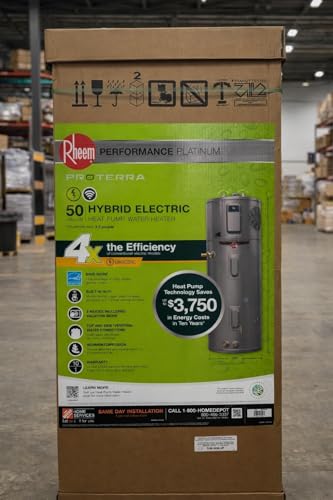
The Rheem PROG50-36P is a 50-gallon gas tank-style water heater designed for higher efficiency with professional-grade operation. It is built to be wired into a dedicated electrical circuit consistent with large gas appliances and is noted for its enhanced reliability in moderate-to-large homes. The unit emphasizes efficient gas burn, steady hot water delivery, and a robust design aimed at longer service life. Some installations require a qualified technician to ensure proper venting and electrical connections for safe operation.
Rheem PROG50-36P Gas Water Heater
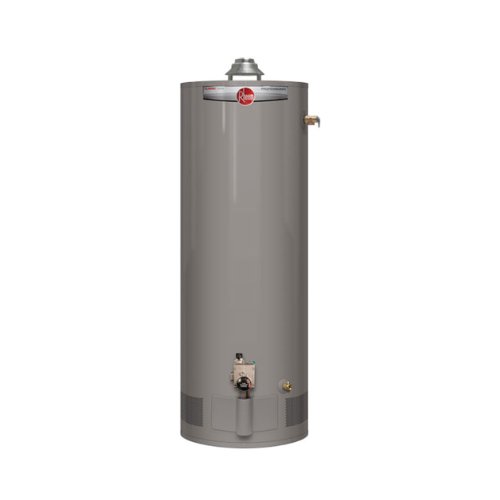
Key features include an Eco-friendly low-emissions burner and a patented anti-sediment system designed to reduce buildup and extend tank life. This model emphasizes a reliable pilot system, efficient gas usage, and a durable tank construction that supports households with multiple bathrooms or higher hot water demands. It is designed for easy installation with attention to modern code compliance and long-term reliability.
Rheem RTG-95DVLN-3 Indoor Gas Tankless

This high-efficiency indoor tankless unit delivers up to 9.5 GPM, making it a strong option for homes with multiple hot water demands but without a large storage tank. It runs on natural gas, providing fast hot water at the point of use while keeping energy costs in check. Its compact design fits compact mechanical spaces and supports easy wall mounting by a qualified installer.
Rheem Natural Gas Condensing Tankless

With a flow range of 0.4 to 9 GPM and BTU input at 180,000, this condensing tankless model emphasizes high efficiency and continuous hot water. It is designed for indoor installation, featuring an electric ignition and a compact cabinet suitable for utility rooms or closets. The condensing design captures additional heat from exhaust, boosting overall efficiency compared to non-condensing models.
FOGATTI Natural Gas Tankless (Outdoor)

The FOGATTI 180S outdoor tankless unit delivers up to 8.1 GPM with 180,000 BTUs, designed for continuous hot water for showers, sinks, and appliances. This outdoor model includes a remote control panel for indoor operation and a four-stage combustion system to optimize temperature stability and combustion efficiency. Its durable build is intended for year-round outdoor use in various climates.
Buying Guide: Key Purchase Considerations
- Household hot-water demand: For large families, a 50-gallon tank-style unit can provide ample hot water, while tankless options offer on-demand performance without storage limits. Evaluate peak-hour needs (loads like showers, laundry, and dishwashing) to choose the right GPM rating or tank size.
- Gas type and venting: Confirm whether your home uses natural gas or propane, and ensure venting compatibility (direct vent, power vent, or stovetop venting). Tankless designs require proper venting to avoid backdrafts and ensure safe operation.
- Efficiency ratings: Look for high energy factor (EF) or uniform energy factor (UEF) in gas models. Condensing tankless units typically offer higher efficiency by reclaiming heat from exhaust.
- Installation considerations: Tank-style units generally require space, a dedicated gas line, and proper electrical hookup (for certain models). Tankless units require professional installation for gas line sizing, venting, and mounting.
- Maintenance and longevity: Features like EverKleen anti-sediment systems or corrosion-resistant anodes contribute to longer life. Consider models with built-in filtration, easy-access panels, and robust warranties for peace of mind.
- Budget and space: Tank-style units have larger upfront costs but reliable performance for families; tankless options offer compact footprints and potential energy savings but may have higher installation costs.
- Local codes and incentives: Some high-efficiency gas models qualify for energy rebates or installation incentives. Check local regulations and utility programs for available benefits.
The selection presented covers primary high-efficiency gas options, including traditional tank heaters, modern gas-powered tankless units, and outdoor configurations. When choosing, compare not only first-hour delivery and GPM ratings but also venting requirements, electrical needs, installation complexity, and long-term maintenance considerations.