Best 58 Gallon Electric Water Heater Alternatives for Big Homes and High Demand
When shopping for a high-capacity electric water heater, many homeowners look for 58 gallons or more to ensure ample hot water for kitchens, baths, laundry, and daily chores. While the exact 58-gallon unit isn’t always the standard in consumer options, the right mix of larger-capacity and performance-focused electric heaters can meet substantial hot water needs without the bulk of a tank-style unit. This guide highlights five versatile electric water heaters that deliver reliable performance, ease of installation, and energy-conscious operation. Each product is evaluated for capacity, efficiency, installation requirements, and safety features to help you compare your best options.
Summary of chosen products
| Product | Brand | Capacity | Key Benefit |
|---|---|---|---|
| GE Appliances 18 Gallon Versatile Plug and Play Electric Water Heater | GE | 18 gallons | Easy installation, flexible placement, strong warranty |
| Rheem 18kW 240V Tankless Electric Water Heater | Rheem | Tankless (on-demand) | High flow rate, external digital control, self-modulation |
| GE Appliances 18 Gallon Versatile Plug and Play Electric Water Heater (Second option) | GE | 18 gallons | Compact design, wide installation flexibility, reliable warranty |
| Feelrogast Electric Tank Water Heater | Feelrogast | 8 gallons | Durable design, safety protections, compact and portable |
| ThermoMate 18 Gallon Point-of-Use Tank | thermomate | 18 gallons | Compact, adjustable thermostat, UL Listed |
GE Appliances 18 Gallon Versatile Plug and Play Electric Water Heater

This GE model offers an 18-gallon capacity suitable for mid-sized households or as a boost heater in larger homes. It installs with standard 3/4-in NPT connections and a 120-volt supply, making it relatively straightforward to add where space is limited. The compact design supports flexible placement in kitchens, baths, laundry areas, RVs, cabins, or garages. A notable benefit is the included warranty combination—8-year limited replacement or 8-year tank and parts with 1-year labor—for long-term peace of mind. Use this unit to supplement existing systems or as a standalone small-tank option where space is at a premium.
Rheem 18kW 240V Tankless Electric Water Heater
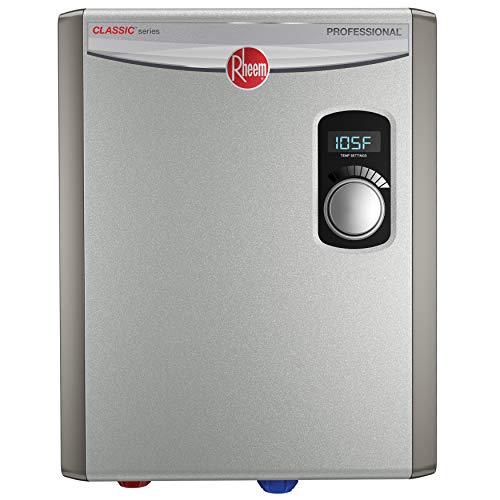
Rheem’s 18kW tankless unit delivers on-demand hot water with up to 4.4 GPM flow, depending on supply temperature. The external digital thermostat allows precise temperature control, while self-modulation adjusts power to meet demand, reducing energy waste. With durable copper immersion elements and a field-serviceable design, this model suits homes seeking continuous hot water without a bulky storage tank. It’s ideal for households that want instant hot water at multiple points and appreciate a compact footprint that fits within a utility closet or crawl space. Consider electrical panel capacity and proper venting for the installation.
GE Appliances 18 Gallon Versatile Plug and Play Electric Water Heater
This second GE 18-gallon option reinforces flexibility for space-constrained layouts. Its straightforward installation mirrors the first GE model, with emphasis on ease of hookup and compatibility with standard 120-volt circuits. In homes needing extra hot water in one area or as a supplementary heater for a condo, apartment, or modest residence, this unit offers predictable performance, a compact footprint, and a helpful warranty package that minimizes long-term maintenance concerns. It’s well-suited for those prioritizing simple upgrades over full-home retrofits.
Feelrogast Electric Tank Water Heater

The Feelrogast unit delivers 8 gallons, focusing on compact, under-sink or point-of-use applications. It features a 1500W heating element, safety protections, and a robust stainless steel interior designed for corrosion resistance. Adjustable temperature settings (86-167°F) provide flexible performance for kitchens, RVs, boats, or remote bathroom setups. While not a primary whole-home solution, it’s a practical booster or supplemental heater when space is at a premium or only a small hot water supply is needed at a specific location. Consider the installation environment and electrical capacity when integrating a point-of-use heater.
ThermoMate 18 Gallon Point-of-Use Tank

The ThermoMate 18-gallon point-of-use tank provides a compact solution near the point of use, with a factory-set 125°F temperature and an adjustable range (90°F to 150°F) via built-in thermostat. The unit is designed for independent installation or as a booster in-line with a larger hot water system. Its corrosion-resistant heating element and 120-volt operation make it a practical choice for kitchens, bathrooms, RVs, boats, or small cabins where space is limited but hot water is still essential. Proper electrical wiring and mounting are important for safe operation and longevity.
Buying Guide: Key Purchase Considerations
When selecting a high-capacity or high-demand electric water heater, consider the following factors to ensure you get the best fit for your home:
- Capacity vs. demand: For large households, a larger tank (18 gallons or more) or a tankless system that serves multiple points can help prevent runouts. Identify peak usage times and whether a booster or point-of-use unit is appropriate for critical locations.
- Installation space and configuration: Tankless units save space but may require electrical and venting capabilities. Tank-style units need appropriate cabinet or closet space and access to plumbing lines. Ensure you have room for service access and safe electrical connections.
- Electrical requirements: Tankless heaters often require dedicated circuits (e.g., two 40-amp circuits for some models). Confirm panel capacity, wire gauge (often 8 AWG), and circuit availability before purchase.
- Efficiency and energy use: Tankless models provide on-demand hot water and can reduce standby losses, but may have higher up-front costs. Tank-based options offer straightforward installation but keep more water heated when not in use. Compare energy factors (EF) or uniform energy factors as relevant.
- Safety features: Look for anti-scald controls, high-temperature protection, leak protection, and robust insulation. Stainless steel tanks and protective guards contribute to durability and safety in use.
- Warranty and serviceability: A strong warranty reduces long-term ownership risk. Check terms for tank, parts, and labor to understand coverage over time and whether service networks are readily available.
- Portability vs. permanence: Smaller, portable units are excellent for RVs, camps, or temporary setups, while larger installations are better for whole-home configurations. Choose based on permanence of your space and future needs.
For homes prioritizing consistent hot water with limited space, a modular approach—using a primary larger-capacity heater complemented by point-of-use or tankless boosters—can offer flexibility, efficiency, and reliability. Always consult a licensed electrician or plumber when selecting and installing electric water heaters to ensure code compliance and safety.