Best Adaptive Kitchen Equipment for Easy Meal Prep
Answering the search for adaptive kitchen tools that help with independence, this guide highlights five practical products designed for arthritis, tremors, limited grip, stroke recovery, and other mobility challenges. Each item targets a specific task—cutting, slicing, gripping, or stabilizing—so you can choose tools that fit your needs. The buyer types most suited for these tools range from seniors and stroke survivors to anyone who benefits from one-handed or low-effort operation. Below is a quick summary table of the selected products to compare at a glance.
| Product | Best For | Key Benefit |
|---|---|---|
| Ergonomic Adaptive Kitchen Knife with Angled Handle | Arthritic hands, limited hand strength | One-handed rocking motion with angled handle |
| JAYVAR Onion Holder for Slicing | Tear-prone onions, steady slicing | Secure grip and even slices |
| Adaptive One Handed Cutting Board With 10 Spikes | One-handed prep, stability | Spikes hold food securely |
| One-Handed Gadget to Open Jars & Bottles | Weak hands, jar/bottle opening | Portable, no permanent install |
| DMI Steak Knife (Rocker, Verti Grip) | Limited hand strength | Vertical grip with enhanced control |
Ergonomic Adaptive Knife With Angled Handle

The adjustable knife is designed for independence, especially for people with arthritis, reduced grip strength, tremors, or limited fine motor skills. The tilted ergonomic handle enables more downward force with less effort, making tasks like slicing meat or chopping vegetables easier. The product includes a protective blade cover for safe storage, supporting safer handling and travel. It is best for those who need a simple, one-handed rocking motion rather than traditional up-and-down cutting.
Who it’s best for: Individuals with arthritis or limited dexterity who want to reduce hand strain and maintain kitchen independence.
Why chosen: The angled handle and one-handed rocking action address common grip limitations, while the blade cover adds practical safety for storage and transport.
Limitation: As with most adaptive knives, it may take a brief adjustment period to get used to the rocking technique and tilt angle.
Recommended use:
- Chopping vegetables
- Slicing meats or bread with downward pressure
JAYVAR Onion Holder for Slicing

This accessory uses a stable grip and a guiding mechanism to reduce tearing and slip while slicing onions, tomatoes, or other produce. The dual benefits are tighter control and reduced exposure to tear-causing compounds during prep. It’s a versatile tool for various fruits, vegetables, and even meats when uniform slices matter. The included hand guide helps hold items securely for precise cuts.
Who it’s best for: Home cooks who frequently slice onions and want to minimize tears and slippage.
Why chosen: It improves slicing stability and consistency, which is especially helpful for individuals with limited dexterity or tremors.
Limitation: It relies on proper positioning of the item; very large or irregular produce may require additional handling.
Adaptive One Handed Cutting Board With 10 Spikes

This cutting board provides stability for one-handed use, featuring non-slip silicone feet and a solid acacia surface. Ten food-grade stainless steel spikes firmly hold foods in place, supporting easier cutting and peeling. A raised rear fence helps prevent spills and enables one-handed scooping and clearing. It’s an ideal aid for amputees or anyone needing a stable workspace while managing meals single-handedly.
Who it’s best for: One-handed cooks, stroke survivors, or anyone needing secure food stabilization during prep.
Why chosen: The combination of spikes, a raised fence, and a stable base directly addresses common one-handed challenges in the kitchen.
Limitation: Spikes may require gentle use with delicate ingredients to avoid mossing or tearing.
One-Handed Gadget to Open Jars & Bottles

This compact, portable mat-style gadget secures jars, cans, and bottles on any surface for easy one-handed opening. It’s a practical adaptive tool for stroke recovery, elderly users, or anyone with weak or injured hands. The design avoids permanent installation, offering flexibility for daily use at home or on the go. It cleans quickly and remains durable through repeated washing.
Who it’s best for: Users needing a simple, portable jar/bottle opener without mounting or heavy grip requirements.
Why chosen: Our pick emphasizes mobility and straightforward operation, which is crucial for a broad range of users with limited hand strength.
Limitation: It’s not a replacement for all heavy-duty opening tasks; larger or stubborn containers may still pose a challenge.
DMI Rocker Knife With Verti Grip

The DMI rocker knife is designed for easy cutting with limited hand mobility. Its curved blade and vertical grip provide enhanced control, allowing a comfortable downward cutting motion with reduced hand slippage. The included blade cover adds safety when not in use. This knife is best for those who benefit from a rocker action and a stable grip during chopping and slicing tasks.
Who it’s best for: Individuals seeking a stable, vertical-grip tool that minimizes hand strain.
Why chosen: The combination of rocking motion, ergonomic grip, and safety cover makes it a practical choice for one-handed prep routines.
Limitation: The rocker style may require a brief adjustment period for users accustomed to straight-edged knives.
Fstcrt Rocker Knife (Ulu Style)
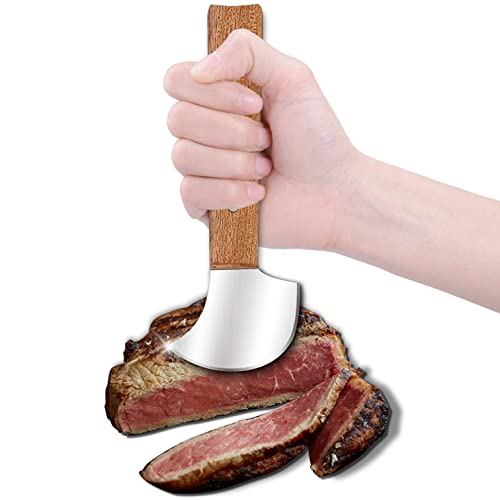
The Fstcrt rocker knife features a curved blade and a vertical grip, designed for one-handed use by people with tremors, arthritis, or hand injuries. It enables a swinging motion to cut a wide range of foods, including bread, vegetables, and meat. The compact build, wooden handle, and included sheath support portability and daily use outside the home. It is suitable for anyone seeking a lightweight, one-handed cutting option.
Who it’s best for: One-handed users who need a compact, versatile cutting tool.
Why chosen: Its simplicity, portability, and effective vertical grip translate into reliable performance for daily meal prep.
Limitation: As with other rocker-style tools, users should practice safe handling to avoid accidental slips.
Buying Guide: Key Considerations For Selecting Adaptive Kitchen Tools
- Task-focused design: Match tools to the core prep tasks you perform most, such as chopping, slicing, or opening containers.
- Grip and control: Look for ergonomic handles, vertical grips, or rocking motions that reduce required grip strength and improve stability.
- One-handed suitability: Prioritize tools explicitly built for one-handed use if you have limited dexterity or unilateral mobility.
- Safety features: Blade covers, non-slip bases, and secure clamps or guides reduce the risk of accidents in the kitchen.
- Portability and storage: Select devices that are easy to transport and store, especially for travel or small kitchens.
- Material and cleaning: Choose durable, dishwasher-safe or easily cleanable components for daily use.
- Versatility: Consider whether a tool can handle multiple foods (vegetables, fruits, meat) for broader utility.
Practical tips for choosing your set
- Start with a single task-focused tool, then add complementary items to cover other prep steps.
- Assess your dominant hand and range of motion to pick grips that align with your natural movement.
- Try tools designed for everyday independence and travel safety if you need options for on-the-go meals.
Maintenance and care considerations
- Follow manufacturers’ cleaning instructions to preserve blade edges and grip materials.
- Store safety covers securely and keep sharp edges protected when not in use.
- Inspect spikes or clamps regularly for signs of wear or looseness to ensure stability.
FAQ
What adaptive kitchen tool is best for arthritis?
An angled-handle knife or rocker knife with a vertical grip tends to minimize strain and maximize control during cutting.
Are one-handed cutting boards safer for seniors?
Yes. A one-handed cutting board with spikes and a raised fence helps hold food securely, reducing the chance of slips.
Can these tools be used by stroke survivors?
Many are designed for one-handed use and easy handling, making them suitable for stroke recovery with proper guidance.
Do these tools require special maintenance?
Most can be cleaned in standard dishwashers or wiped down; always check the product’s cleaning instructions.
Is portability important for adaptive kitchen tools?
Portable tools promote independence at home and while traveling, especially for users who need assistance with storage and setup.
What should I consider before buying?
Consider primary tasks, grip strength, safety features, and whether a tool supports one-handed use without compromising control.