Best Restaurant-Ready Air Fryers for Commercial Kitchens and Cafés
If you’re selecting an air fryer for a restaurant, you want capacity, reliability, and consistent results. This guide highlights five high-capacity models suited for busy kitchens, catering setups, and small-to-midnight dining operations. Each option targets different needs—from very large family-style servings to compact spaces—so you can pick the best fit for your menu and service style.
Summary table of chosen products
| Product | Best For | Key Benefit |
|---|---|---|
| Emeril Lagasse Extra Large 26QT | High-volume kitchens | Extra-large capacity with a multi-cook oven design |
| CHEFMAN 17 Presets Digital Air Fryer (10L) | Versatile multi-function cooking | Rotisserie, dehydrator, convection oven in one |
| Instant Pot 6QT VORTEX Plus | Compact restaurant stations | 6 functions, fast preheat, adjustable temp |
| Ninja Digital Air Fryer & Toaster Oven (SP101) | Multi-use prep and service lines | 8-in-1 with flip-up door and large interior |
| Chefman 14-Quart XL Air Fryer | Batch cooking and sides | Three rack positions, large interior |
Emeril Lagasse Extra Large 26QT Air Fryer Toaster Oven
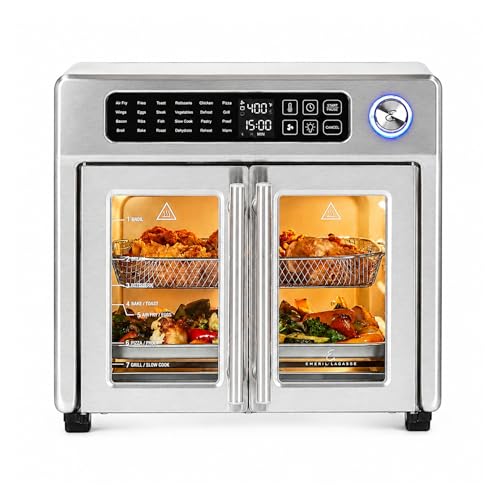
The Emeril Lagasse model combines air frying with a full-size toaster oven footprint, making it suitable for high-demand kitchen lines. It supports rapid air circulation with a dual-speed fan for crispy results and even browning. This unit is best for operations that need bulk batches, such as prep lines for fried appetizers or handheld entrees. The oven also includes a toast setting with automatic shutoff, useful for browning bread or finishing small sides without overcooking. A potential limitation is its larger footprint; ensure countertop space and electrical supply can accommodate daily use.
Who it’s best for: high-volume kitchens needing a two-in-one appliance for air frying and toasting large trays. Why selected: the 26-quart capacity answers batch demands while built-in convection and multiple cooling functions streamline service.
CHEFMAN Multifunctional Digital Air Fryer+ Rotisserie
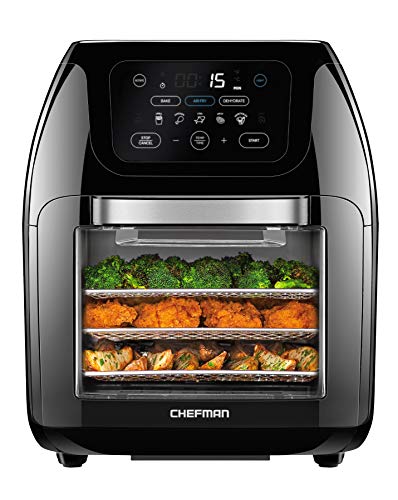
This CHEFMAN model packs rotisserie, dehydrator, and convection oven functions into one countertop unit. It’s ideal for kitchens that need a single versatile machine to handle fried items, roasted proteins, and dehydrated components for adding texture to dishes. It cooks efficiently with rapid air technology, reducing the need for preheating. The main caution is to confirm cabinet clearance and power availability due to its multiple heating elements and larger footprint.
Who it’s best for: stations that require flexible menu items with a single, space-efficient unit. Why selected: 17 presets support diverse cooking styles, from crisp french fries to roasted vegetables, while maintaining quick turnaround.
Instant Pot 6QT VORTEX Plus Air Fryer

The Instant Pot Vortex Plus provides six cooking functions in a compact 6-quart form, making it suitable for stations that need quick, consistent results without occupying an entire prep line. With a temperature range from 95 to 400°F and a user-friendly touchscreen, it supports quick preheat and straightforward controls for team members. A limitation is the moderate capacity; for larger batch needs, you may pair it with another unit or rotate workloads during peak service.
Who it’s best for: smaller kitchens or specific service lines requiring reliable, quick air frying with simple operation. Why selected: its compact size and clear interface help maintain speed in busy lines while offering multiple functions beyond air frying.
Ninja Digital Air Fryer & Toaster Oven (SP101)

The Ninja SP101 offers an 8-in-1 setup with a flip-up door, maximizing countertop efficiency in bustling kitchens. It handles air fry, roast, broil, bake, bagel, toast, dehydrate, and keep warm. The large interior and built-in crumb tray support front-line cooking tasks such as finishing sides, small entrees, and reheating leftovers. The main caveat is occasional uneven browning on thicker cuts; using the pre-set modes and rotating trays can mitigate this in a busy kitchen.
Who it’s best for: service lines that require a versatile, space-conscious solution with strong throughput. Why selected: the flip-up design and eight functions simplify multi-item orders while preserving counter real estate.
Chefman 14-Quart XL Air Fryer (6-in-1)

This Chefman model emphasizes family-sized cooking with a bulk interior and three rack positions. It supports air fry, bake, broil, reheat, and dehydrate with a wide temperature range. It’s best for sides, batch-cooking proteins, and finishing elements on larger plates. A limitation is the potential for uneven heating at maximum capacity if not monitored, so rotate trays and use the rack positions strategically to maintain even cooking across batches.
Buying Guide: Key Considerations For Restaurant Air Fryers
What capacity do I need for my menu?
Restaurants should match unit capacity with typical batch sizes. Larger models like 26QT and 14-quart units work well for high-volume apps and sides, while mid-size units suit rotation stations and smaller menus. Consider daily peak batch counts and whether you’ll need multiple units to maintain speed.
Which features drive efficiency?
Look for rapid air circulation, preset cooking functions, and auto shutoff capabilities. A timer with audible alerts helps staff manage multiple items. Convection and dual fans can improve evenness across trays, reducing repeat batches.
Is space and power availability critical?
Large countertop models demand substantial space and electrical load. Measure counter depth, clearance around the unit, and whether dedicated circuits are feasible in busy prep zones. Consider units with compact footprint designs or foldable doors to maximize line efficiency.
How important is multi-function capability?
Multi-function units reduce equipment clutter and training needs. If your menu requires roasting, dehydrating, or baking, choose models with rotisserie, dehydration, or bake modes. This flexibility can streamline prep and expand menu options without extra appliances.
What are the maintenance considerations?
Look for dishwasher-safe baskets and parts, easy-clean interiors, and simple tray removal. A wide interior and crumb trays support quick cleaning after heavy service. Check for nonstick or ceramic coatings that resist sticking and simplify wiping down after use.
How do I quantify return on investment?
Despite higher upfront costs, high-capacity air fryers can cut oil usage and shorten cooking times. Compare batch throughput, energy use, and the potential to replace multiple single-function devices. Choose models that deliver consistent results across a range of menu items to maximize efficiency.
What about safety and reliability?
Choose units with auto shutoff, cool-touch exteriors, and sturdy builds. Consider commercial-grade warranties and replacement part availability to minimize downtime in busy operations. Regular maintenance schedules help sustain performance over time.
Frequently Asked Questions
- Are large-capacity air fryers suitable for front-of-house service? Yes, when integrated into prep lines or staging areas, they can speed up production while keeping items consistent.
- Can an air fryer replace a conventional fryer in a restaurant? It can supplement or replace fryers for certain items, but may not match for all fried foods that require oil immersion and specific texture.
- Which features matter most for a busy kitchen? Capacity, fast preheat times, reliable automatic shutoff, and easy-to-clean baskets top the list.
- How many units should a small restaurant start with? Start with two mid-capacity units and evaluate throughput, then expand if demand grows.
- Is rotisserie and dehydration important in a restaurant air fryer? For menus that include roasted proteins or dried garnishes, these features add versatility and can streamline prep.
- Do countertop air fryers require special maintenance? Regular cleaning of baskets and interiors, plus checking seals and racks, helps maintain performance and safety.