Best Meat Band Saws for Efficient Butchering and Slicing
Direct answer: for reliable meat cutting, choose a commercial-grade meat bandsaw that combines power, precise thickness control, and a durable build. The top picks below are best for professional butchers, home chefs with serious curing needs, and facilities needing consistent bone and frozen meat cutting. Each option emphasizes high power, adjustable thickness, and sturdy stainless or aluminum construction. The table below highlights key features to compare at a glance.
| Product | Motor Power | Max Cutting Thickness | Workbench Size | Best For |
|---|---|---|---|---|
| 1500W Bone Saw Meat Cutter (Generic) | 1500W | 0.04″ – 7.8″ | 20″ x 15″ | Heavy bones and large cuts |
| WEN 9-Inch Band Saw (BA3959) | 2.8 A | Up to 3-1/2″ | — | Compact benchtop projects |
| VEVOR Commercial Electric Meat Bandsaw (650W) | 650W | 0 – 4.33″ | 12.4″ x 18.1″ | Versatile small to mid jobs |
| FOHERE Commercial Electric Meat Band Saw (1500W) | 1500W | 0.04″ – 7.09″ | 19.3″ x 19.7″ | Frozen meat and bone slicing |
| VEVOR 2000W Commercial Electric Meat Bandsaw | 2000W | 0 – 7.9″ | 20″ x 15.3″ | Heavy-duty, large cuts |
1500W Bone Saw Meat Cutter — High Power, Precise Thickness

The 1500W bone saw features a pure copper motor for stable operation and high-efficiency cutting. It can process 330-441 lbs of bones per hour, making it suitable for heavier butchering workloads. The blade supports 0.04-7.8 inch cutting thickness, adjustable via a workbench scale for precise ingredient sizing. Its 20″ x 15″ stainless steel workbench resists water and rust and comes with replaceable blades for ongoing use. Best for professional shops needing fast, consistent cuts on bone and frozen meat. Caution: ensure proper ventilation and follow safety protocols when handling large bones.
WEN 9-Inch Band Saw (BA3959) — Compact Benchtop for Small Jobs

The WEN BA3959 offers a 2.8-amp motor delivering up to 2500 feet per minute and cuts up to 3-1/2 inches deep and 9 inches wide. It’s best for hobbyists, small shops, or occasional meat prep where space is limited. The blade range from 1/8 to 3/8 inches supports various thicknesses. The compact design makes it a better choice for lighter-duty tasks than larger commercial machines. Limitation: lower power compared to heavy-duty models may require slower operation on tough bones.
VEVOR 650W Commercial Electric Meat Bandsaw — Durable Desktop Model

This 650W machine provides a solid balance between power and footprint. It enables smooth cuts with a sturdy stainless steel blade and a worktable with precise scale lines for consistent thickness. It handles large pieces like lamb or beef legs and is best for mid-sized operations or ambitious home setups. A potential limitation is its lower maximum thickness (4.33″ / 110 mm) compared with higher-end models, which can affect very thick cuts.
FOHERE 1500W Meat And Bone Band Saw — Precise, Heavy-Duty Cutting
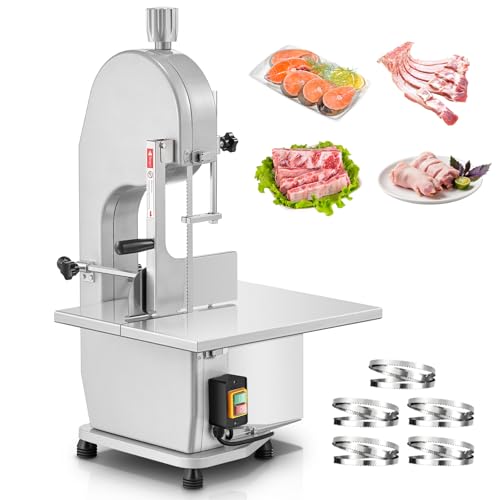
The FOHERE model combines a 1500W motor with a robust stainless steel worktable and a rich 0.04-7.09 inch thickness range. It supports a broad range of frozen meat and bone cutting tasks, including ribs, steaks, venison, and more. It’s well-suited for professional kitchens or small processing shops needing reliable, high-thickness capacity and consistent results. Caution: ensure the machine is secured during operation to prevent vibration-related issues on thick cuts.
VEVOR 2000W Commercial Electric Meat Bandsaw — Heaviest Duty

The 2000W version offers substantial cutting power with a 0-7.9 inch thickness range and a large workbench (20″ x 15.3″). It can cut through tough bones and frozen meat with minimal jamming, thanks to a high-torque pure copper motor and durable blade. This model is best for busy meat processing facilities requiring high throughput. Limitation: higher price and larger footprint may not suit compact spaces.
Buying Guide
- Power and throughput: Choose a motor strong enough for your typical workload. Higher wattage or amperage drives faster, cleaner cuts on bone and frozen meat. Consider hours of operation and required pounds per hour.
- Cutting thickness range: Look for adjustable thickness with clear scales. If you cut thick bone or large chunks, aim for models offering at least 4″ to 7″ ranges.
- Workbench and material: Stainless steel or alloy worktables resist corrosion and are easier to clean. Ensure the surface is large enough for your largest cuts.
- Durability and blades: Replacing blades should be straightforward, and the machine should withstand frequent use. Check blade compatibility and availability of replacement blades.
- Safety: Verify guard features, stable bases, and easy access for cleaning. Proper training and protective equipment are essential for handling raw meat and heavy bones.
- Size and space: Larger models deliver more power but require more floor space. Measure your setup before purchasing.
FAQ
What is the typical thickness range I should look for?
Look for adjustable ranges such as 0.04″ to 4″ or up to 7.9″, depending on your needs. Thicker range supports bone-in cuts; thinner settings suit boneless cuts and deli-style portions.
Are these machines suitable for frozen meat?
Yes, most models are designed to cut frozen meat and bones, but verify the maximum thickness and the blade type to avoid jamming.
How important is the motor type?
Pure copper motors offer stable power and durability for heavy use, reducing overheating and maintenance concerns compared with some cheaper alternatives.
Can I replace blades myself?
Most models support blade replacement, though you should follow the manufacturer’s instructions to ensure proper tension and alignment.
Is a larger workbench necessary?
If you process large cuts regularly, a bigger workbench provides more room for maneuvering and safer operation.