Best Bean to Cup Espresso Machines for Home Baristas
Looking for a Bean To Cup espresso machine that delivers café-quality shots at home? This guide identifies top options that automate grinding, brewing, and milk frothing so you can focus on enjoying your drinks. The best picks suit different needs, from compact office setups to full-featured home setups with built‑in grinders. The buyer is supported with clear strengths, ideal use cases, and a practical buying table to compare key details at a glance.
| Product | Best For | Why It Stands Out |
|---|---|---|
| atatix Espresso Machine with Milk Frother | Home baristas who want steam-in-one-step convenience | 20 bar pressure, fast temperature control, compact footprint |
| Philips 1200 Series Fully Automatic | One-touch everyday coffee drinkers | Simple interface, ceramic grinder, AquaClean filter |
| Breville Barista Express BES870XL | Serious espresso lovers who want control | Integrated grinder, dose control, pre-infusion |
| CASABREWS CM5418 | Versatile maker with professional feel | 20 bar pump, steam wand, built-in pressure gauge |
| De’Longhi Stilosa Manual Espresso Machine | Compact entry-level with manual frothing | Reliable boiler, tamper included, compact |
atatix Espresso Machine With Milk Frother

The atatix model is a compact, 20-bar espresso machine with a built-in milk frother, designed for home or small-office use. It aims to help users pull espresso shots with depth and crema similar to café drinks, then easily texture milk for lattes, cappuccinos, and macchiatos. The 44-ounce removable water tank adds convenience for multiple drinks without frequent refills. Best for: small kitchens and desk setups where space matters, and you want a one‑touch approach to milk beverages. Caution: the stainless finish needs regular cleaning to maintain aesthetics and performance.
Philips 1200 Series Fully Automatic Espresso Machine

The Philips 1200 Series focuses on simple, consistent coffee made from fresh beans. It features a 100% ceramic grinder and a reusable filter, with an intuitive touch display to select drinks. This model is best for users who value one‑touch operation and a straightforward cleaning routine, making it ideal for busy households or small offices. Limitation: it may offer fewer customization options for espresso strength and texture compared with higher-end machines.
Breville Barista Express Espresso Machine BES870XL

The Breville Barista Express combines a built‑in grinder with precise dosing and a conical burr grinder, offering a hands-on yet accessible entry into espresso making. Its dose control grinding and pre‑infusion system help extract a balanced shot from a range of beans. Best for: aspiring baristas who want to tailor grind size and dose; ideal for households pursuing café‑style drinks at home. Limitation: somewhat larger footprint and more hands‑on operation than fully automatic models.
CASABREWS CM5418 Espresso Machine

The CASABREWS CM5418 provides a robust 20-bar system with a powerful boiler and a built‑in pressure gauge for on‑the‑fly adjustments. Its milk frothing wand enables textured milk for cappuccinos and lattes. Best for: users who want a more professional feel in a compact package, with useful visual feedback for pressure. Caution: the machine’s setup may require learning to dial in the perfect shot and milk texture for your beans.
De’Longhi Stilosa Manual Espresso Machine
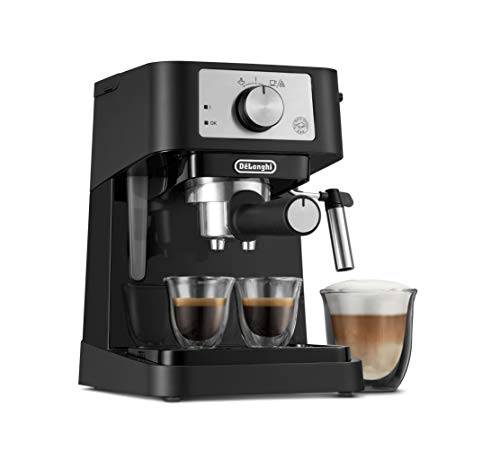
The De’Longhi Stilosa is a compact manual espresso machine with a traditional steam wand for authentic milk textures. It includes a portafilter, tamper, and dual filter sizes, making it a practical option for beginners exploring manual extraction. Best for: entry-level buyers who want a small footprint with the feel of a classic espresso setup. Limitation: manual operation means more learning curve and hands‑on time than fully automatic machines.
Buying Guide
Key purchase considerations help align the choice with drinking habits and kitchen space.
- Espresso vs. dual drinks: Choose machines with dedicated milk frothers or steam wands if you want cappuccinos and lattes; select simpler one‑touch makers for straightforward espressos.
- Grinding needs: Built‑in grinders save counter space and simplify workflows. If you already own a grinder, you can opt for models with external grinding only.
- Pressure and temperature: A stable 9–10 bar extraction and precise temperature control yield richer crema and more consistent flavors.
- Tank size and maintenance: A removable water tank and straightforward cleaning routines reduce daily upkeep. Look for dishwasher-safe milk components if easy cleanup matters.
- Footprint and aesthetics: Consider whether a stainless steel exterior or compact form factor better suits your kitchen or office environment.
- Extra features: Pressure gauges, pre‑infusion, or LatteGo milk systems offer additional control and convenient cleaning, depending on your needs.
Frequently Asked Questions
- What is “bean to cup” espresso all about? – It means the machine grinds fresh beans, doses, tamps, and brews the espresso in one device, often with integrated milk frothing for specialty drinks.
- Do these machines require barista skills? – Some models emphasize automation and ease of use, while others offer hands-on control for advanced users.
- Is a built-in grinder necessary? – Not strictly, but it saves space and ensures fresh grind-to-shot timing for better flavor.
- Which features impact flavor the most? – Fresh beans, correct grind size, proper tamping, and stable temperature/pressure are the core drivers of flavor and crema.
- Are these machines easy to clean? – Models with automatic milk systems or simpler parts tend to be easier to maintain; manual wand models require more routine cleaning after use.
- What size kitchen is suitable for a bean‑to‑cup espresso machine? – Compact models fit small counters, while larger units with integrated grinders may need extra space for operation and maintenance.