Best Blower Motors for Pellet Stoves: Top Replacement Picks for Reliable Heat
Choosing the right blower motor is essential for efficient heat distribution in pellet stoves. This guide highlights five dependable options that align with common stove models and offer quiet operation, durable construction, and straightforward installation. Each selection prioritizes compatibility, cooling design, and electrical specs to help you maintain steady warmth without excessive maintenance.
Summary of Selected Products
| Product | Brand | Key Compatibility | Approx. Spec Highlights |
|---|---|---|---|
| 80473 Combustion Exhaust Blower Motor Fan | FlameDuty | Ashley, US Stove, King, Heritage, American Harvest, Vogelzang | RPM ~2750, CFM 80, 115V |
| 80472 / 80472A Distribution Convection Blower | FlameDuty | US Stove, Ashley, Heritage, King, American Harvest | ~2000 RPM, 115V, 7 5/8″ x 7″ |
| 3-21-08639 Combustion Blower Motor | Wowewk | Harman Accentra, P43, XXV, P61, PF100/120 & more | ~3000 RPM, 120V |
| Criditpid Replacement 80472 & 80472A | Criditpid | US Stove, USSC, American Harvest, King, Ashley | 115V, 2000 RPM |
| KS-5020-1052 Convection Blower | Adviace | PelPro PP130/ PP70 / PPC90 and others | 120V, 1200 RPM, 2.2A |
80473 Combustion Exhaust Blower Motor Fan

The 80473 model is a direct replacement for multiple brands, including Ashley 5500 series, US Stove 5500 family, Heritage 5600/5700, and several American Harvest and Vogelzang units. It features a forward or rear exhaust-compatible design and a 12 cm impeller with a 3-inch flange spacing. Electrical specs are 115V, 60Hz, drawing about 0.7A with an RPM around 2750 and airflow around 80 CFM. The assembly typically includes the motor, housing, high-temperature gasket, and a plug-and-play harness. A rear cooling shield and finned design extend motor life in high-heat conditions.
80472 / 80472A Distribution Convection Blower
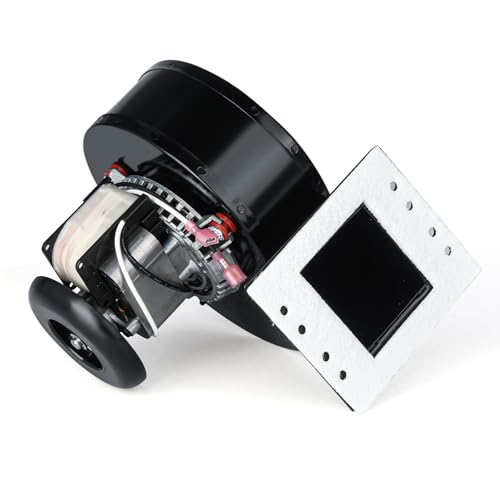
80472 and 80472A are designed to maintain heat distribution across a wide range of pellet stoves, including US Stove 5500/5500M/5500XL/5502M/5510/5520 and various Heritage, Ashley, and King models. The blower measures about 7 5/8″ long by 7″ wide, with a 4″ x 4″ flange hole pattern. Specs include 115V, roughly 1.35A, 60 Hz, and around 2000 RPM, with a 12″ wire harness and ¼” terminals. The unit uses sealed bearings and a heat-sink design for durability and quiet operation, aided by a rear cooling fin for extended life.
KS-5020-1052 Convection Blower For PelPro

Replacement KS-5020-1052 is tailored for PelPro PP130, PP70, PP130-B, PP130, PPC90, TSC90, and PP150. It ships as a complete assembly including a gasket, a 14″ two-wire lead with 1/4″ terminals, and a one-year warranty. Technicals show 120V, 60Hz, 1200 RPM, and 2.2A current. The unit is designed for quiet operation with a durable motor and a simple plug-and-play installation, making it a practical option for PelPro stove owners seeking reliable airflow.
Criditpid 80472 / 80472A Convection Blower

The Criditpid 80472 / 80472A replacement delivers broad compatibility across US Stove, USSC, American Harvest, King, and Ashley pellet stoves. Specs include 115V operation, 1.35A current, 60 Hz, and about 2000 RPM. The unit provides a robust, UL-certified motor with a 12″ wiring harness and ¼” terminals. It features comprehensive compatibility claims and detailed installation notes for precise fitment, focusing on maintaining consistent heat flow and reducing maintenance needs in high-heat environments.
3-21-08639 Combustion Blower Motor

This Wowewk model targets Harman and several other brands, including XXV, Accentra, P35i, P43, P68, and PF series. It lists a 120 V supply, 0.95 A current, and 60 Hz frequency with an impressive 3000 RPM rating and a 5/16″ shaft. The package notes include a double paddle fan blade for improved airflow, and the unit is designed for quiet, efficient operation. Compatibility details emphasize model verification before purchase to ensure correct fitment across multiple stove configurations.
Hiorucet PU-4C442 Blower Motor For Englander

The PU-4C442 is a compatible option for Englander pellet stoves and similar models, including several pre-2002 Englander configurations and American Heritage variants. Specs list 115V operation, 60 Hz, and 0.94A current, delivering approximately 3000 RPM and 140 CFM. The unit includes wiring with 1/4″ terminals and two 24″ leads. The design emphasizes reliability and ease of installation, offering a practical upgrade path for Englander stove owners seeking consistent convection airflow.
Buying Guide: Key Purchase Considerations
- Model compatibility: Verify that the blower motor matches your stove’s model numbers and the exhaust or convection pathway. Cross-check flange patterns, mounting hole spacing, and overall dimensions to ensure a precise fit.
- Electrical specs: Most pellet stove blowers run on 115V or 120V, with current typically in the 0.9–2.2A range. Confirm the current draw and wiring connector type (usually ¼” terminals) to match your control board and harness.
- Performance and airflow: RPM and CFM values indicate airflow capacity. Higher RPM can improve heat distribution but may increase noise. Consider your preference for quiet operation and the stove’s heat demand.
- Durability: Look for sealed bearings, heat-sink designs, and rear cooling features that extend motor life in high-heat environments. A robust housing and gasket set can reduce leaks and vibration.
- Installation and warranty: Choose units that come with gaskets and plug-and-play harnesses for easier installation. A reasonable warranty helps cover defects and initial fitment concerns.
- Noise and vibration: Motors marketed as low-noise or with vibration-damping design can significantly improve comfort in living spaces where the stove is used.
- Price and availability: While not listing prices here, compare total cost including potential shipping, return policy, and supplier reliability to avoid delays during critical heating seasons.
- Brand and compatibility breadth: Products with broad compatibility across major brands (Ashley, US Stove, Harman, Englander, PelPro, etc.) reduce the risk of a mismatch when replacing an older or less common model.