Best Bottled Water Dispenser Bottom Loading for Home or Office
Answering the common buyer question: a bottom-loading bottled water dispenser offers easy bottle replacements, safer hot-water handling, and compact design for homes or small offices. This guide highlights five top bottom-loading options, clarifying who each product is best for and why it’s a solid pick. Whether you prioritize safety features, energy efficiency, or a sleek stainless-steel cabinet, there’s a model here to fit your needs. The selections below focus on 5-gallon bottle compatibility, three-temperature options, and user-friendly operation suitable for everyday hydration, coffee, or tea preparation.
| Product | Best For | |
|---|---|---|
| Brio Bottom Loading Water Cooler Dispenser (3 Temps) | Bottom load, hot/cold/room temp, LED display, child lock | |
| Avalon A4BLWTRCLR Bottom Loading | Three temps, night light, durable stainless steel | Home or small office needing a sleek look |
| Manastin Bottom Loading Water Cooler | Bottom load, 3 temps, safety lock, dry-burn protection | Active offices or living spaces with kids |
| Three temps, stainless steel inlet, safety lock | Busy homes and offices seeking hygienic design | |
| Primo Water Dispenser (Hot & Cold, Bottom Loading) | Two temps, bottom-loading, tool-free setup | Simple setup and reliable hydration |
Brio Bottom Loading Water Cooler Dispenser

Bottom-load design eliminates heavy lifting when replacing 5-gallon or 3-gallon bottles. This model offers hot, cold, and room-temperature water for beverages or room-temp drinks. The unit includes a child-safety lock on the hot-water spout and an LED display for visibility. Best for households or offices that prioritize easy bottle changes and clear status indicators. A potential limitation is the need to ensure a stable 5-gallon bottle fit and proper bottle alignment during replacement.
Avalon A4BLWTRCLR Bottom Loading
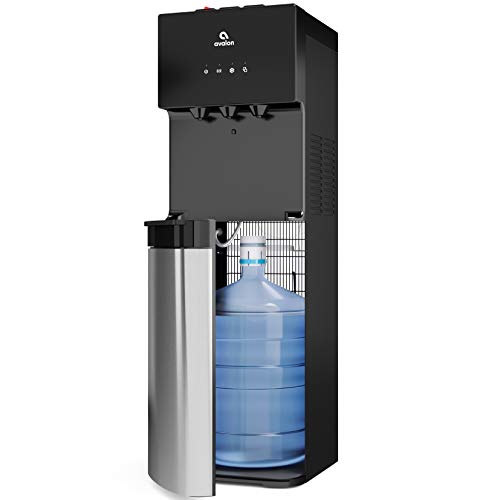
This model blends a durable stainless-steel cabinet with a three-temperature system. It includes a built-in night light for visibility and an empty-bottle indicator. Best for homes or small offices that want a clean look and practical night-time usability. A caution: ensure the cabinet width fits your space as it leans toward a sizeable footprint.
Manastin Bottom Loading Water Cooler

Three-temperature operation (hot, cold, room) with a bottom-loading design to minimize lifting. It includes a child safety lock and a dry-burn protection feature, making it suitable for homes with children or busy office environments. Best for users who want a secure hot-water option and a modern, space-saving unit. Limitation: some users may prefer more visible temperature indicators or faster cooling/heating in high-demand settings.
Tehanld Bottom Loading Water Cooler (5 Gal)

Bottom-loading design supports easy bottle changes for 5-gallon jugs and offers hot, cold, and room-temperature water with a two-step hot-water safety lock. Great for homes or small offices that need a hygienic, user-friendly dispensing experience. Caution: ensure the bottle seating is clean to prevent leaks or air gaps that affect flow.
Primo Water Dispenser (Hot & Cold)
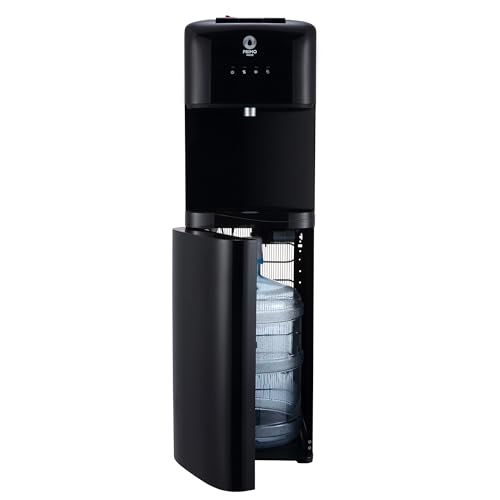
Dispenser with bottom-loading design offering two temperatures: hot and cold. It provides a quick and easy setup, without the need for plumbing or tools. Best for consumers who want a straightforward, low-maintenance solution. A limitation is that it may not offer a room-temperature option, which can affect versatility for some beverages or recipes.
Buying Guide
What should you consider when choosing a bottom-loading water dispenser?
Key factors include bottle compatibility (5-gallon or 3-gallon), the number of temperature options, safety features (child lock, dry-burn protection), energy efficiency, and cabinet material (plastic vs. stainless steel). Also watch for ease of bottle loading, height, and how the unit dispenses water (flow rate).
Bottom loading vs other loading methods
Bottom-loading models eliminate lifting and flipping heavy bottles, reducing back strain. They often include built-in bottle indicators and easier cleanup. In contrast, top-loading designs may be cheaper but require heavier lifting and more manual handling of bottles. Choose bottom-loading if accessibility and safety are priorities.
Temperature needs and safety
Most models offer hot, cold, and room-temperature outputs. Hot-water safety locks are common and recommended, especially in homes with children. If you primarily need cold water and occasional hot water, a two-temperature model may suffice, but ensure the unit meets your daily hydration and beverage prep needs.
Space and installation considerations
Measure the available space before buying. Some models are compact, while others have larger footprints due to door design and internal components. Look for units that require no plumbing and rely on standard 5-gallon bottles for convenient setup.
Energy use and maintenance
Energy Star-rated models save electricity over time. Routine maintenance includes cleaning the drip tray, sanitizing the reservoir, and replacing bottles promptly to avoid stale water. Some models offer self-cleaning or indicator features to simplify upkeep.
FAQ
- What is bottom-loading in a water dispenser?
Bottom-loading means the water bottle sits in a cabinet at the bottom and is fed to the dispenser by an internal pump, reducing the need to lift heavy bottles.
- Are bottom-loading dispensers safe for homes with kids?
Yes, many models include a hot-water safety lock and child-proof features to prevent accidental dispensing.
- Do bottom-loading dispensers require plumbing?
No. They are designed to plug in and use standard 5-gallon bottles without a water line installation.
- Which temperature settings should I choose?
Three-temperature models (hot, cold, room) cover hot beverages, cold drinks, and room-temp water for cooking or hydration.
- Is stainless steel better than plastic cabinets?
Stainless steel cabinets are typically more durable and easier to clean, while plastic bodies can be lighter and more affordable.
- What should I do if the bottle is hard to seat in the bottom loading area?
Check bottle alignment, remove air bubbles, and ensure the bottle rim is clean to prevent leaks and air gaps.