Best Bottom Hinged Countertop Microwave Picks for Small Kitchens
Looking for a bottom hinged countertop microwave that saves counter space while delivering reliable performance? This guide highlights top options that balance compact design with practical features. Ideal buyers include office break rooms, dorms, apartments, or compact kitchens where countertop real estate matters. Each entry notes who it’s best for and why it stands out, along with a concise caution when applicable. A quick reference table helps you compare key traits at a glance.
| Product | Brand | Capacity | Power | Best For |
|---|---|---|---|---|
| Panasonic NE-1025F | Panasonic | 0.8 cu ft | 1000W | Compact commercial use, small offices |
| BLACK+DECKER EM720CB7 | BLACK+DECKER | 0.7 cu ft | 700W | Budget-friendly, home kitchen, shared spaces |
| Panasonic NN-SN67QS | Panasonic | 1.2 cu ft | 1250W | Large plates, quick meals |
| BLACK+DECKER EM031MB11 | BLACK+DECKER | 1.1 cu ft | 1000W | Medium family use, dorms |
| Chefman 1.1 Cu. Ft. | Chefman | 1.1 cu ft | 1000W | One-touch presets, compact space |
Panasonic NE-1025F Compact 1000W Microwave

This compact commercial microwave is designed for space-limited settings. It features a 6-minute electronic dial timer, a bottom energy feed design for streamlined use, and a grab & go stainless steel door with a see-through window. Best for vending areas, break rooms, and offices needing reliable quick heating without occupying much counter space. The timer auto-resets, simplifying repeated use in busy environments. A potential limitation is its focused 0.8 cu ft capacity, which may be tight for larger plates or family-style meals.
BLACK+DECKER EM720CB7 Digital Microwave
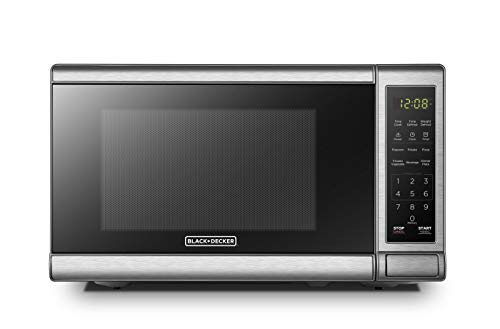
With pre-programmed buttons for popcorn, potato, pizza, and more, this 0.7 cu ft model provides straightforward operation and dependable daily use. It offers 10 power settings and a 30-second express cook feature, making it a good pick for kitchens where quick, repeatable tasks matter. The large LED display and child safety lock add convenience and safety for shared spaces. A limitation is its smaller internal footprint, which may restrict larger plate sizes or bulky dishes.
Panasonic Countertop Inverter 1.2 Cu Ft Microwave

This Panasonic model uses inverter technology to deliver even cooking, helping prevent overcooked edges and cold centers. With 1250W of power and a spacious 1.2 cu ft interior, it’s ideal for families or small offices that handle larger meals or plates. Best for those who prioritize even heating and faster results, though it occupies more counter space than smaller units.
BLACK+DECKER EM031MB11 Digital Microwave

This 1.1 cu ft model pairs 1000W with 10 power levels and 12.4″ glass turntable for flexible cooking options. The large interior supports bigger bowls and multi-serving tasks, making it a better fit for shared kitchens or dorms. A caution is its relatively moderate footprint compared to ultra-compact units, so space planning is still needed in tiny setups.
Chefman Countertop Microwave With Presets

Featuring six one-touch presets and 10 power levels, this 1000W unit aims for quick setup and consistent results. A distinct advantage is the express cook option and silent operation with an Eco Mode designed for energy-conscious users. It is best for apartments and deskside kitchens where simple, repeatable tasks are common. The main trade-off is that some users may prefer more advanced sensor features found in higher-end models.
GE Compact 1.1 Cu Ft Microwave

This GE model offers a 1.1 cu ft interior with 950 watts for steady performance in a space-saving exterior. It includes a two-step child lock to prevent unintended use and one-touch controls for convenient operation. Best for dorm rooms or small apartments where safety and simple controls matter. A limitation is that it uses a slightly lower wattage compared to higher-powered models, which can affect speed for dense or very cold foods.
Farberware 1100W Countertop Microwave

With 1100W of power and a 2.2 cu ft capacity, this Farberware microwave is designed for apartments or office break rooms needing higher output. It offers multi-stage cooking and ten power levels, including dedicated presets for common items. It’s a strong option for those who expect robust performance in a compact footprint. A potential drawback is its larger interior size, which may not suit ultra-tight spaces.
Buying Guide: Key Considerations For Bottom Hinged Countertop Microwaves
- Counter space: Measure available surface area and choose dimensions that fit with room to open the door and load dishes.
- Capacity versus plate size: Small units fit standard bowls; larger interiors accommodate 9-inch or larger plates and casserole dishes.
- Power and speed: Higher wattage typically means faster heating; consider daily cooking needs and energy usage.
- Controls and presets: Look for intuitive controls, one-touch presets, and sensor features if you value convenience.
- Safety features: Child locks, door interlocks, and durable door handles are important for shared spaces.
- Durability and use case: Commercial or heavy-use models may offer more robust construction; dorms or apartments may prioritize cost and simplicity.
- Maintenance: Interior lighting, easy-to-clean surfaces, and simple turntables facilitate regular use in busy environments.
FAQ for Bottom Hinged Countertop Microwaves
- Q: What does “bottom hinged” imply for placement? A: It refers to the door hinge at the bottom side, which can influence how the door opens and fits against the countertop edge.
- Q: Are these suitable for dorm rooms? A: Yes, several models combine compact size with helpful presets and safety features ideal for dorm use.
- Q: What wattage is best for quick heating? A: Higher wattage (1000W–1250W) generally heats meals faster, but may consume more electricity.
- Q: Do these models support large plates? A: Some models with 1.1–1.2 cu ft interiors can accommodate larger plates; check interior dimensions before purchase.
- Q: Is inverter technology important? A: Inverter systems offer steady power for even cooking, which benefits reheating and defrosting.
- Q: Should I prioritize presets over manual controls? A: Presets improve speed for common tasks, but manual control is valuable for non-standard heating needs.