Best Cheap Tankless Electric Water Heaters for Quick Hot Water
Looking for an affordable tankless electric water heater that can deliver hot water on demand without a costly installation? This guide highlights five budget-friendly options that fit under sinks or small spaces, while offering reliable performance and practical features. Each listing includes key specs, energy efficiency notes, and installation considerations to help you compare at a glance.
| Product | Brand | Voltage | Power | Approx. Hot Water Capacity |
|---|---|---|---|---|
| 110V Tankless Water Heater Electric, 3000W Under Sink | xwdzswgs | 110V | 3000W | 0.3 – 0.5 GPM range |
| Rheem 11kW 240V Tankless Electric Water Heater | Rheem | 240V | 11kW | Up to 2.68 GPM |
| 14kW Tankless Water Heater Electric, ORBEK | Orbek | 240V | 14kW | Max 3.38 GPM |
| ECOTINYMACH 110V Tankless Water Heater Electric | ECOTINYMACH | 110V | 3000W | 0.3 – 0.5 GPM |
| Rheem 18kW 240V Tankless Electric Water Heater | Rheem | 240V | 18kW | Up to 4.4 GPM |
Note: The table above focuses on common user considerations such as voltage, power, and potential flow rates. Actual performance depends on inlet water temperature, piping, and installation. Always verify compatibility with your home’s electrical system before purchasing.
110V Tankless Water Heater Electric By XWDZSWGS

Overview: This 110V unit uses stainless steel and ABS materials with a 3000W rating. It can raise water temperature quickly (82°F to 131°F depending on flow) and features an LED display with Fahrenheit or Celsius options. Safety protections include IPX4 waterproofing, leakage and dry-boil protections, and automatic shutoff under overheating or inactivity. It claims a thermal efficiency up to 98% and a compact wall-mounted design suitable for kitchens, bathrooms, RVs, and small apartments. ETL standard compliance is noted for reliable long-term use.
Key considerations: Ideal for point-of-use under sinks or compact spaces; ensure the electrical circuit and wiring support a continuous 3000W draw. The unit’s performance is sensitive to water flow; higher flow reduces temperature rise, so match usage accordingly. Installation vertical orientation is suggested for best heating element reliability.
Rheem 11kW 240V Tankless Electric Water Heater
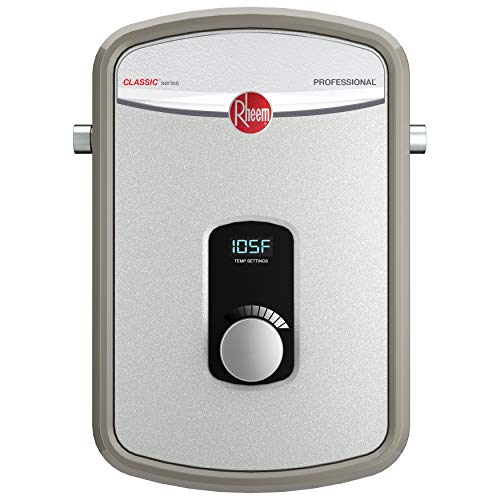
Overview: This Rheem model features an on/off dial with an adjustable digital temperature display and self-modulating power control. With 11kW of output, it is designed to adapt to fluctuating hot water demands, delivering up to about 2.68 GPM. A durable copper immersion heater and field-serviceable components support longevity, while the digital controls help maintain precise temperatures.
Key considerations: Ensure your electrical system supports 240V and adequate amperage for sustained operation. Self-modulating tech helps optimize energy use, but flow rates depend on incoming water temperature and pipe sizing. Suitable for compact spaces where 2–3 fixtures may occasionally need hot water.
Orbek 14kW Tankless Water Heater

Overview: Orbek’s 14kW model requires a substantial electrical feed (240V at 60A, two-pole breaker, and appropriate gauge wiring). It promises up to 3.38 GPM, targeting multiple fixtures with efficient on-demand hot water and potential energy savings due to its advanced technology minimizing scale and corrosion.
Key considerations: Verify your home’s electrical panel capacity and wire gauge before installation. The higher power output allows more simultaneous use, but installation constraints and circuit availability are critical. Best suited for homes needing reliable hot water at several outlets with careful electrical planning.
ECOTINYMACH 110V Tankless Water Heater

Overview: This 110V unit offers a compact footprint with 3000W heating capability and is designed for easy installation. A notable feature is the ability to switch between Fahrenheit and Celsius for temperature monitoring. The manufacturer emphasizes a straightforward installation process and space-saving design for under-sink or small-area use.
Key considerations: Performance is flow-dependent; expect higher temperatures at lower flow. Ensure electrical supply matches the unit’s requirements, and consider vertical orientation if recommended by the manual to maximize element life and prevent malfunctions.
Rheem 18kW 240V Tankless Electric Water Heater
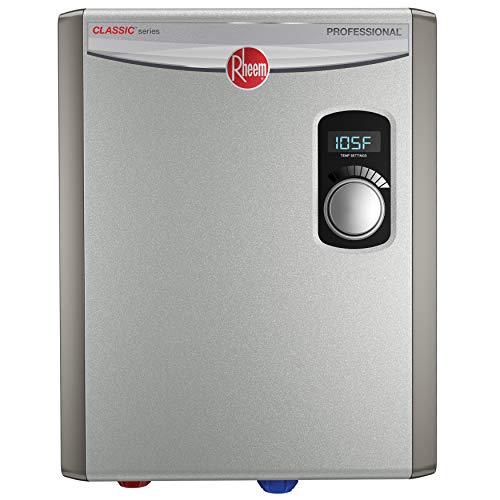
Overview: This high-output Rheem model features external digital thermostatic control with LED display and self-modulation to align power with hot water demand. It employs durable copper immersion elements and is field-serviceable. It can deliver up to around 4.4 GPM, suitable for households with multiple hot water outlets needing faster recovery during peak demand.
Key considerations: Requires robust electrical infrastructure: 240V, at least 3x breakers and ample wire gauge. While it can support higher flow, you’ll want to assess your home’s piping and temperature rise expectations to avoid oversizing for small spaces.
Buying Guide: Key Purchase Considerations And Comparisons
When choosing a budget-friendly tankless electric water heater, consider these factors to ensure you select a model that fits your needs and home wiring:
- Electrical capacity: Most under-sink units run on 110V, while higher-output models require 240V. Confirm your electrical panel can handle the additional load without compromising other circuits.
- Flow rate and temperature rise: Tankless heaters deliver different hot water flow (GPM) at given temperature rises. If you run multiple fixtures, prefer models with higher GPM or a two-unit setup for simultaneous use.
- Temperature control: Look for units with precise digital displays and easy temperature adjustments. Fahrenheit/Celsius switching is helpful for multi-user households or if you’re following local preferences.
- Protection features: IPX4 waterproofing, dry-burning protection, leakage protection, and automatic shutdown help reduce risk and extend life. Verify if a unit includes safety interlocks and thermal cutoffs.
- Installation considerations: Under-sink or wall-mounted designs save space, but check clearance, mounting options, and whether vertical orientation is recommended by the manufacturer to prevent malfunctions.
- Efficiency and energy use: Most units report high thermal efficiency (often around 98%). Energy savings come from on-demand heating and self-modulating power, but actual savings depend on usage patterns and climate.
- Maintenance and serviceability: Copper elements and ETL certification can indicate durability. Consider the ease of servicing if components fail or require replacement.
- Size and space: Compact designs are ideal for apartments, RVs, or remote areas. Ensure the unit’s dimensions fit the installation space and allow for venting if required by your electrical and plumbing layout.
In sum, for budget-friendly options, consider models with solid safety features, reliable digital controls, and a balance between required electrical capacity and your household hot-water needs. For households with higher demand, a higher-wattage 14kW–18kW unit may provide better performance, provided the electrical system can support it.