Best Commercial Ice Cream Blenders for Shops and Cafes
If you need a reliable commercial ice cream blender, these top options are built for steady throughput and consistent texture. This guide targets buyers seeking durable machines for fast-paced cafés, ice cream shops, or snack bars. Each pick is evaluated for power, speed, ease of cleaning, and suitability for batch work. The table below highlights five strong contenders and who they’re best for.
| Product | Best For | Key Strength |
|---|---|---|
| Waring WDM120TX | High-Volume Shops | 1 HP motor, programmable timer |
| PreAsion 110V Ice Cream Mixer | Small to Medium Operations | 10 speeds, compact footprint |
| VEVOR 750W Shaker | All-Around Performance | Stainless steel build, dual hoppers |
| Kolice 750W Auto Clean | Fast-Paced Kitchens | Auto-cleaning, high speed |
| WantJoin 2200W Shield Blender | Quiet Shops | Quiet shield enclosure, high power |
Waring Commercial Heavy-Duty Single Spindle Drink Mixer

The Waring WDM120TX is designed for busy ice cream shops and cafés that need dependable throughput. It features a 1 horsepower motor, a large LCD display, and a programmable timer up to 10 minutes. The single-spindle design helps maintain consistent blends when producing multiple milkshakes and soft serves per shift. Best for: high-volume counters where operators value predictable timings and a durable build. A potential limitation is that it focuses on a single mixing head, so very large batch changes may require workflow adjustments.
PreAsion 110V Ice Cream Mixer
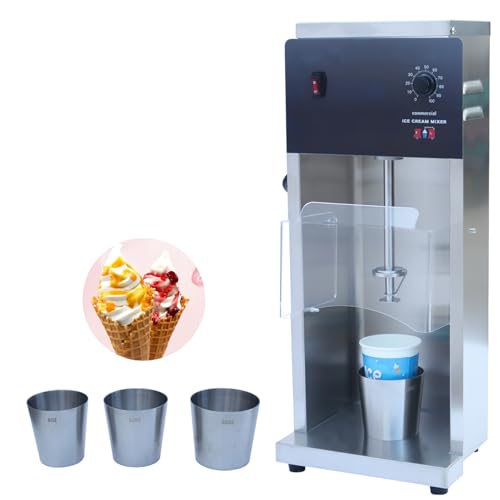
The PreAsion model offers 10 adjustable speeds with a 350W motor, making it suitable for versatile textures from soft-serve to thicker frozen yogurts. A PC transparent board helps with visibility during operation, and dual sides feature heat dissipation plates to extend motor life. Best for: shops that need precise speed control and easy cleanup. Choose this if you want visibility during blending and a simple control interface. Limitation: power at 350W may be modest for very heavy loads compared with higher-wattage units.
VEVOR Frozen Yogurt Blending Machine 750W

The VEVOR blender blends at 750W and 1740 RPM, with two 5L hoppers for larger batches and a stainless steel construction. It emphasizes efficient, uniform mixing and includes a cleaning-friendly design with a residue box and drainage. Best for: operations needing quick batch cycles and robust cleaning options. Limitation: dual hopper may take up more counter space than single-head models.
Kolice Commercial Ice Cream Blending Machine

The Kolice unit provides 750W and 1700 RPM, focusing on high-speed blending with a food-grade stainless steel exterior. It includes auto-cleaning with a water spray system and a disassemblable mixing drill for cleaning. Best for: busy kitchens that require fast turnaround and reliable sanitation. Caution: noise levels are not listed; expect standard commercial operation without explicit quiet-mode features.
WantJoin Commercial Blender With Shield Quiet Enclosure
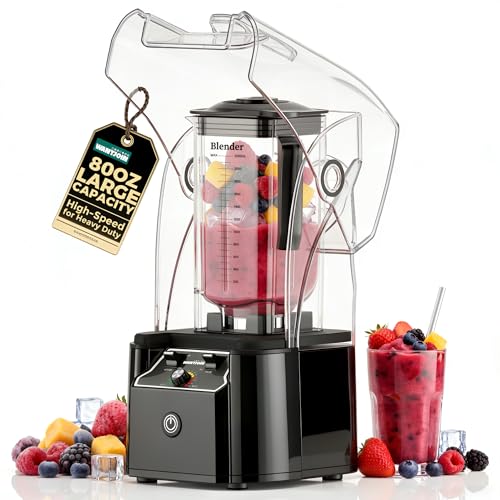
The WantJoin model emphasizes quiet operation with a shield enclosure and a 2200W motor, suitable for environments where noise matters. It offers 15 speeds plus pulse and a large 80oz pitcher, making it versatile for shakes, smoothies, and soft-serve prep. Best for: shops needing powerful blending without disturbing customers. Limitation: the high power may be excessive for small batches or delicate ice creams; consider batch size when choosing this model.
Buying Guide: Key Purchase Considerations
Power and speed range matter for texture control. Look for motors from 750W to 2,200W depending on batch size and ingredient hardness. A wide RPM range and multiple speed settings help tailor blends for milkshakes, frozen yogurts, and ice cream bases.
Build quality and sanitation features influence daily operation. Stainless steel construction and easy-clean designs save time in busy environments. Auto-clean cycles and disassembly-friendly components reduce downtime between batches.
Capacity and workflow integration are essential. Large hoppers or multiple blending heads increase throughput but require more counter space. Consider how many blends you produce per hour and whether your setup can accommodate a larger machine.
Noise levels and customer experience should align with shop type. Quiet enclosures and shielded designs help maintain a comfortable environment in cafes and dine-in spaces. If noise is a primary concern, prioritize models with sound-dampening features.
Maintenance and reliability are practical factors. Favor machines with simple controls, readily available replacement parts, and a clear maintenance routine. A longer service life reduces long-term operating costs for commercial use.
Frequently Asked Questions
- What should I consider first when choosing a commercial ice cream blender? Look at motor power, batch size, and cleaning ease. Power determines texture and speed, while easy cleaning minimizes downtime between batches.
- Is a shield enclosure worth it for a busy shop? Yes, it helps reduce noise and minimize splatter, improving customer comfort in open kitchens and storefronts.
- What is the advantage of a blender with multiple speeds? It allows precise control for different ingredients and textures, from smooth shakes to thick ice cream bases.
- Can these blenders handle hot ingredients? Most commercial blenders are designed for cold or room-temperature ingredients. Check each model’s specifications for heat tolerance and safety guidelines.
- How important is a built-in timer? A programmable timer helps standardize ingredient portions and improves throughput consistency in busy environments.
- Do I need two blending heads or a single-head model? Two heads can boost throughput for high-volume shops, but they take more counter space. Choose based on daily batch requirements.