Best Commercial Pie Press Machines for Fast, Consistent Dough Shaping
If you’re shopping for a commercial pie press machine, you want reliable dough flattening that’s fast, uniform, and easy to clean. The top picks below are designed for bakeries, cafes, pizzerias, and other high-volume kitchens. Each product section explains who it’s best for, why it’s a good fit, and practical limitations to consider. A quick buyer’s table at the start helps compare key specs at a glance.
| Product | Best For | Key Benefit | Limitations |
|---|---|---|---|
| VEVOR Pizza Dough Roller Sheeter | Pizzerias and large bakeries | High throughput with automatic operation | May require setup space |
| UNGAII Commercial Dough Press Machine | Bakery and restaurant kitchens | Adjustable thickness for multiple dough types | Electrical connection needed |
| EliteEdge Manual Pizza Dough Press | Cafes and small shops | Durable manual control with consistent thickness | Manual effort required |
| Newhai Commercial Pizza Dough Press Machine | Home to small commercial kitchens | Compact, adjustable press for even crusts | Includes parchment papers; limited capacity |
| Koalalko Electric Dough Roller Sheeter | Bakeries and noodle shops | Space-efficient, high-precision rolling | May be heavier and less portable |
VEVOR Pizza Dough Roller Sheeter

Best for high-volume pizzerias and bakeries needing fast dough pressing. This fully automatic roller presses 240-260 pieces per hour and supports dough from 3 to 14 inches with adjustable thickness (1-5.5 mm). The double-roller design and metal arm ensure even pressing with minimal manual intervention. Choose this for throughput and consistent crusts in a busy kitchen. A caution: space requirements and ongoing power needs should be planned in advance for optimal workflow.
Wtecom Dumpling Making Machine
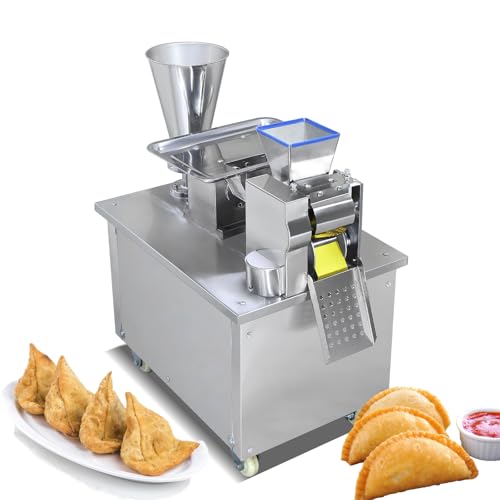
Best for high-volume dumpling or pastry production alongside dough skins for pies. This machine handles up to 5000 pieces per hour with a standard dough mold and 48 optional molds, making it versatile for various shapes. It uses food-grade stainless steel for durability and hygiene. Best for kitchens needing rapid, consistent dough sheets and multiple shape options. Limitation: extra molds may require additional mold fees.
EliteEdge Manual Pizza Dough Press

Best for small cafes or bakery counters where manual control is preferred. The press provides a 9.5-inch diameter plate and even pressing, with a stable base and rebound mechanism to lay dough to a uniform 5 mm thickness. It’s ideal when electricity use or space constraints favor a manual approach. Caution: production pace is limited by manual operation.
UNGAII Commercial Dough Press Machine

Best for bakeries and restaurants that require adjustable thickness for pizza crusts, tortillas, and pastries. This electric press quickly forms dough into even sheets with a precision handle for consistent thickness. It supports varied dough types and thickness settings, helping standardize crusts. Limitation: electric equipment needs proper installation and ongoing maintenance.
Newhai Commercial Pizza Dough Press

Best for compact kitchens that still need even crusts. The 8.6″ press plate provides efficient dough flattening with an adjustable thickness and parchment paper inclusion for convenient handling. It emphasizes a durable build with a quiet copper motor and stainless housing. Consider this when space and ease of cleaning are priorities, though mold options are limited to standard shapes unless upgraded.
Koalalko Electric Dough Roller Sheeter

Best for bakeries and noodle shops needing a space-efficient, high-performance sheeter. It combines a 2.2 kW motor and 80 kg/h capacity with a waterproof power switch for hygiene and safety. The design emphasizes durable, even rolling and easy disassembly for cleaning. Limitation: heavier unit may require dedicated counter space or cart for mobility.
Buying Guide
- Throughput vs. space: High-volume environments benefit from fully automatic rollers; smaller shops may prefer compact, manual or semi-automatic presses.
- Dough versatility: Look for adjustable thickness ranges to support pizzas, tortillas, pies, and pastries. Some machines offer multiple molds for shape variety.
- Maintenance: Stainless steel bodies and easy-clean components reduce downtime. Check for waterproof switches or splash guards where moisture is common.
- Power and installation: Ensure electrical requirements fit your kitchen’s outlets and that the unit’s footprint aligns with the workspace.
- Mold options: Extra molds expand capabilities, but may add cost and require storage space.
FAQ
- What is the best pie press machine for a busy bakery?
For high throughput and consistent crusts, consider a fully automatic dough roller like the VEVOR unit, which handles up to 260 pieces per hour. - Do I need a dedicated electrical connection for these machines?
Most commercial presses require standard 110V or 220V single-phase power; verify your kitchen’s outlets and dedicated circuits. - Can I press different dough types with these machines?
Yes, several models offer adjustable thickness to suit pizza dough, tortillas, or pastry dough; mold options extend versatility. - Are manual presses sufficient for a café?
Manual models like the EliteEdge can work well in smaller settings with lower volume and budget constraints. - What maintenance is required?
Regular cleaning, lubrication of moving parts as recommended, and inspection of electrical components help maintain performance. - Is extra mold availability important?
If you need multiple shapes for pies or dumplings, choose models offering optional molds to avoid bottlenecks.