Best Commercial Sandwich Toaster Ovens for High-Volume Kitchens
Looking for a commercial sandwich toaster oven that fits a busy kitchen workflow? The top picks below are designed for high-volume service, durable construction, and easy cleaning. This guide targets restaurant, bakery, hotel, and cafeteria operators needing fast, consistent toast for sandwiches, buns, bagels, and bread. Each option is evaluated for throughput, front/back output, and maintenance considerations to help you choose the best fit for your space and workflow.
Summary of selected products:
| Product | Throughput | Best For | Key Benefit |
|---|---|---|---|
| PYY Commercial Conveyor Toaster 300pcs/h | 300 slices/hour | Medium-large operations | Front/back output, compact countertop fit |
| PYY Commercial Conveyor Toaster 150pcs/h | 150 slices/hour | Smaller kitchens | Efficient, space-saving design |
| PYY Commercial Conveyor Toaster 450pcs/h | 450 slices/hour | High-volume venues | Very high throughput, dual discharge |
| Dyna-Living Commercial Toaster 300 Slices/Hour | 300 slices/hour | Budget-conscious kitchens | Multiple baking modes and settings |
| Waring Commercial Heavy-Duty Conveyor Toaster | Up to 450 slices/hour | Dynamic menus | Durable, broad bread/bagel compatibility |
PYY 300pcs/h Commercial Conveyor Toaster

Best for: Medium-sized restaurants, bakeries, and buffets that need steady throughput without occupying large counter space. This model supports front or back output, enabling flexible kitchen layouts and assembly-line setups. Its chain-driven belt and removable crumb tray simplify cleaning in busy service periods.
Why selected: It delivers reliable hourly throughput (300 slices) with a compact footprint and a durable stainless steel build suitable for high-usage environments. The dual discharge option adapts to different kitchen layouts, helping operators optimize line flow.
Caution: Some users may need an auxiliary power source for peak service times to avoid heat buildup during long shifts.
VEVOR 47L Convection Oven
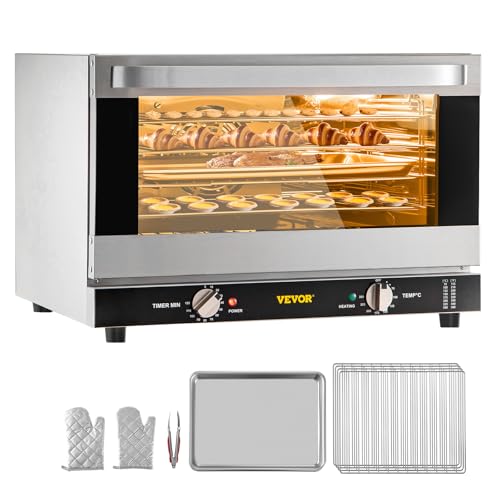
Best for: Kitchens needing a compact, all-purpose oven in addition to a toaster, especially for batch baking of sandwiches and sides. This model provides even hot air circulation and a stainless interior for easier cleaning in fast-paced environments.
Why selected: Its 47 L capacity and 1600 W power deliver even heating across a 4-tier rack. The simple dial controls and tempered glass door support quick, visual checks during service.
Caution: This is a convection oven rather than a dedicated conveyor toaster; choose this if you want a multi-use unit alongside a conveyor toaster.
PYY 150pcs/h Commercial Conveyor Toaster

Best for: Smaller kitchens or limited countertop spaces needing reliable throughput and simple operation. Front/back output flexibility helps with diverse kitchen layouts.
Why selected: It offers 150 slices per hour with a robust build and easy cleaning features, making it a good fit for mid-size cafes or office cafes that need consistent toast without complexity.
Caution: Throughput is lower than higher-volume models; plan for peak times accordingly.
PYY 450pcs/h High-Volume Conveyor Toaster

Best for: Very busy breakfast floors, large hotels, or cafeterias serving large crowds with speed and consistency. Dual front and rear discharge enables flexible kitchen layouts and faster service lines.
Why selected: The 450 slices/hour capacity stands out for high-demand environments. The removable crumb tray and heat-dissipation design aid daily maintenance in peak periods.
Caution: High throughput may require more frequent cleaning to prevent crumbs from accumulating in tight spaces.
Dyna-Living 300 Slices/Hour Conveyor Toaster

Best for: Kitchens needing multiple baking modes and adjustable heat levels for varied bread preferences. Suitable for mid-sized operations with a focus on ease of use and durable construction.
Why selected: Offers 7 heating levels and 3 baking modes (Bread, Buns, Standby), enabling tailored toasting outcomes and consistent results across different bread types.
Caution: Some models may require a dedicated vented space to manage heat; ensure proper clearance and ventilation in the installation area.
Waring Heavy-Duty Conveyor Toaster

Best for: Cafes, diners, and breakfast-focused restaurants that demand high durability and reliable performance with thick-slice toasting capability.
Why selected: Up to 450 slices/hour throughput with a sturdy stainless steel build suits fast-service environments and maintains a professional kitchen appearance.
Caution: Ensure appropriate clearance and electrical supply to handle continuous operation in peak service periods.
Buying Guide: Choosing The Right Commercial Sandwich Toaster Oven
- Throughput needs: Match hourly toast counts to your peak service times. Higher volumes require robust motors, better cooling, and reliable belts.
- Output direction: Front vs. rear discharge affects line layout. Dual discharge offers layout flexibility for complex kitchens.
- Construction and cleanliness: Look for stainless steel construction and removable crumb trays for quick, effective cleaning during busy shifts.
- Maintenance considerations: Check for accessible heat vents, easy belt replacement, and availability of spare parts for long-term operation.
- Footprint and layout: Ensure the unit fits your counter space without obstructing workflow. Compact designs work well in smaller kitchens.
- Versatility: If you need more than toasting, consider a model that offers multiple baking modes or complements a separate convection oven.
- Power and ventilation: Confirm electrical requirements and ensure adequate ventilation to manage heat in service areas.
Frequently Asked Questions
- What is a commercial conveyor toaster best used for?
Best used for high-volume, consistent toasting of bread, buns, and bagels in restaurants, bakeries, and buffets.
- Should I choose a front or rear discharge toaster?
Front discharge is common for faster line flow, while rear discharge can fit tighter kitchen layouts; dual discharge offers flexibility.
- Does higher throughput affect toast quality?
Quality depends on belt speed, heat control, and even heat distribution; select a model with stable heat and reliable sensors for consistent results.
- How important is ease of cleaning?
Very important for daily operation; removable crumb trays and accessible vents reduce downtime and sanitation concerns.
- Can these units replace a standard oven in a kitchen?
They are designed to complement, not necessarily replace, a full-sized oven; use them for fast toasting and small-batch preparation.
- What maintenance should I plan for monthly?
Regular belt inspection, belt tension checks, and cleaning of vents help prevent overheating and extend service life.