Best Digital Thermometers for Egg Incubators and Incubation
When choosing a digital thermometer for incubators, look for accurate temperature and humidity readings, remote sensing options, and easy viewing. The top picks below are selected for reliability, ease of use, and relevance to incubation and related environments. Ideal buyers include hobby hatchers, small hatcheries, reptile breeders, and greenhouse stewards who need quick, actionable climate data. The table below highlights the five products best suited for incubators and similar setups.
| Product | Best For | Key Feature |
|---|---|---|
| IncuTherm Plus by Incubator Warehouse | Egg hatchers and serious incubators | Large display, remote probe, min/max memory |
| Veanic 4-Pack Mini Digital Thermometer/Hygrometer | Small incubator trays and DIY setups | 2-in-1 meter with probe, compact |
| Serundo Auto Mini Hygrometer Thermometer 2-Pack | Portable environments and multiple incubator zones | F/C switch, good accuracy |
| TempPro TP49 Digital Hygrometer | Greenhouses and incubation rooms | High accuracy, quick refresh |
| Weewooday Mini Digital Meters (3-Pack) | Multiple incubators or craft projects | Three pack, probe-enabled |
Below you’ll find detailed comparisons for each product. Each section clarifies who benefits most, why it was chosen, and any practical caveats to consider before purchasing.
IncuTherm Plus Digital Thermometer and Hygrometer

The IncuTherm Plus combines a digital thermometer and hygrometer with a remote sensor, ideal for egg incubation. The external display allows quick viewing while the probe sits inside the incubator to monitor conditions. Its large digital display aids in fast checks in busy hatchery environments. Best for users who want centralized monitoring with a visible outside readout. A potential limitation is the single remote probe may require careful placement for multi-zone incubators.
Veanic 4-Pack Mini Digital Thermometer/Hygrometer
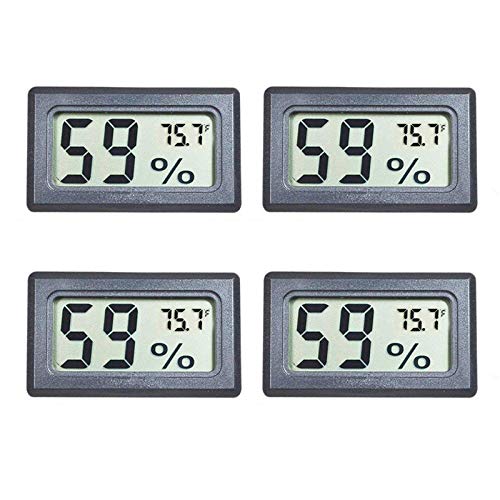
Best for small incubator trays, reptile habitats, or compact storage environments. Each unit displays Fahrenheit temperature and humidity with a built-in probe for direct readings. The 1.89″ x 1.13″ x 0.6″ size makes it easy to place in tight spaces. Choose this when you need multiple monitoring points without clutter. A limitation is the mini size may require more frequent battery checks in active environments.
Serundo Auto Mini Hygrometer Thermometer 2-Pack

Best for portable incubation zones or multi-location setups. These two-pack sensors provide Fahrenheit and Celsius options, with accuracy suitable for general humidity and temperature monitoring. Readings update every 10 seconds, making them responsive to fluctuations. Best for hobbyists who value immediate feedback, but note that automatic calibration stabilization may take a few minutes after startup.
TempPro TP49 Digital Hygrometer
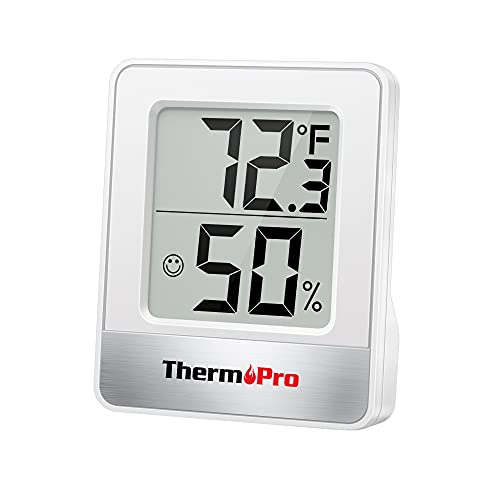
Best for dynamic environments like greenhouses or incubation rooms. The TempPro TP49 offers a high-accuracy sensor with a refresh rate every 10 seconds and a clear display with moisture indicators. It supports both Fahrenheit and Celsius readings and is suitable for environments where precise humidity management matters. A potential limitation is that it emphasizes accuracy over multi-point data collection, so use alongside additional sensors for larger incubators.
Weewooday Mini Digital Meters (3-Pack)
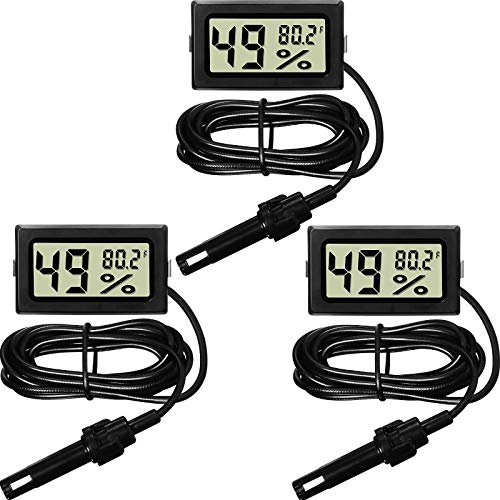
This three-pack fits multiple incubators or project spaces. Each unit includes a probe and displays Fahrenheit readings, with humidity range from 10% to 99% RH. It provides quick 10-second updates and is useful for parallel monitoring across zones. Best for budget-conscious buyers who still need reliable, modular readings; the downside is that smaller units may require more frequent battery changes in harsh environments.
Buying Guide: Key Purchase Considerations
- Sensor placement: For incubators, place probes inside the incubating area and keep displays within easy view. Remote probes reduce disturbance during incubation.
- Readout format: Fahrenheit is common in the U.S. If you work in Celsius, ensure the unit supports easy switching.
- Accuracy and response time: Look for tight tolerances and updates every 10 seconds or faster for timely adjustments.
- Power and battery life: Battery-powered units offer flexibility in placement; check whether off mode extends life for backup monitoring.
- Multi-point monitoring: For larger incubators, a multi-sensor pack or several units can provide a complete picture of internal conditions.
- Durability and size: Compact units fit cramped incubator spaces, while larger displays are easier to read from a distance.
Frequently Asked Questions
- What temperature range is suitable for most egg incubators?
Most incubators operate comfortably within 99°F to 102°F (37.2°C to 38.9°C) for poultry, with humidity in the 40-60% range during incubation. Choose a thermometer that covers at least 0–158°F and 10–99% RH for flexibility. - How often should I check humidity levels?
Regular checks every 10 seconds to a few minutes, depending on the stage, help maintain stable conditions and anticipate fluctuations. - Is a remote probe necessary for incubators?
Remote probes are highly useful for viewing conditions outside the incubator while monitoring inside, reducing handling of eggs or nest materials. - Should I use a 2-pack or 3-pack for incubation projects?
For multiple incubators or zones, a pack of three or more provides redundancy and easier monitoring across locations. - What is the advantage of a large digital display?
A large display reduces eye strain and speeds readings, especially in busy hatchery environments or classrooms.