Best Double Boiler Espresso Machines for Home Baristas
Looking for a double boiler espresso machine that can brew and froth efficiently? This guide highlights five strong options that emphasize independent brewing and steaming, precise temperature control, and convenient usability. Ideal buyers include home baristas who want café-grade drinks fast, small cafés testing at-home concepts, and professionals seeking reliable, multi-function machines for daily use. The table below compares the core strengths of the top picks.
| Product | Best For | Key Benefit | Notes |
|---|---|---|---|
| Chefman Crema Deluxe Espresso Machine | Home baristas needing a built‑in grinder | Double boiler speeds up prep | 30‑setting grinder for fresh grounds |
| MOEFO 58mm Espresso Machine | Precision latte art enthusiasts | 58mm portafilter for even extraction | Visual pressure gauge and touchscreen |
| Kismile Dual Boiler Espresso Machine with Grinder | Deeply adjustable home café setup | Dual boiler + grinder for streamlined workflow | Dual LED display and PID control |
| PwZzk Dual Boiler Semi-Automatic Espresso Machine | Advanced users who want full control | Smart TFT display with precise control | 20‑bar extraction, built‑in grinder |
| atatix Espresso Machine with Milk Frother | Compact, budget-conscious home use | 20‑bar pressure with compact footprint | Milk frother wand for lattes |
Chefman Crema Deluxe Espresso Machine With Double Boiler
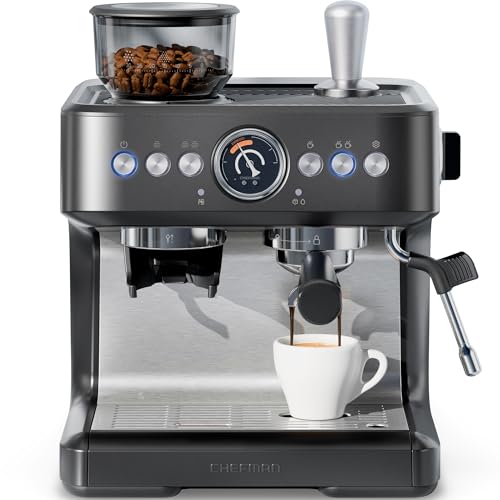
The Chefman Crema Deluxe combines a double boiler system with a built‑in 30‑setting conical burr grinder. This design allows frothing milk and brewing espresso concurrently, keeping pace with busy mornings. Best for home baristas who want café‑level drinks without multiple devices on the counter. The integrated grinder helps ensure fresh grounds with each shot. A limitation is the need to manage two separate boilers, which may increase setup time for first‑time users.
MOEFO 58mm Espresso Machine With Milk Frother

MOEFO emphasizes a 58mm portafilter and a visual pressure gauge with a touchscreen LCD display. This setup provides better control over dose, tamping, and extraction, making it a strong choice for latte and cappuccino lovers who want café‑like results at home. It is best for intermediate users who appreciate real‑time feedback. A potential limitation is the reliance on manual pressure interpretation, which may require some practice to optimize shots.
Kismile Dual Boiler Espresso Machine With Grinder

This model blends dual boiler technology with an integrated conical burr grinder and a 58mm portafilter. Dual boilers support simultaneous extraction and steaming, reducing waiting time between pours. It features dual LED screens and a pressure gauge for monitoring. Best for home baristas who want quick, café‑style beverages with strong consistency. A caveat is the complexity of the setup and upkeep that comes with a dual‑boiler and built‑in grinder combo.
PwZzk Dual Boiler Semi-Automatic Espresso Machine
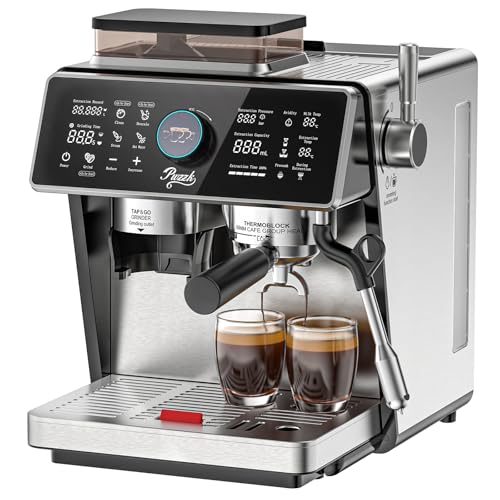
PwZzk offers a dual boiler system with a 20‑bar extraction and a built‑in grinder, topped by a large TFT display for real‑time monitoring of extraction pressure, temperature, and shot time. This machine targets serious enthusiasts seeking precise control over every variable. It is best for users who want to dial in grind size, temperature, and shot volume. A possible limitation is the learning curve required to leverage the TFT display for optimal results.
atatix Espresso Machine With Milk Frother

The atatix machine emphasizes a compact stainless steel build with a 20‑bar pressure system and a built‑in milk frother. It’s suitable for users seeking a smaller footprint without sacrificing espresso quality. This option is best for solo users or small kitchens where space matters. A limitation is that compact designs can limit adjustability and creama depth compared to larger dual‑boiler setups.
Buying Guide: How To Choose A Double Boiler Espresso Machine
- What is a double boiler and why does it matter? A double boiler isolates brewing temperature from steam temperature, enabling simultaneous extraction and milk frothing without significant temperature fluctuations.
- How important is built‑in grinder? A built‑in grinder ensures fresh grounds for every shot and reduces counter clutter. Look for modular grinders with adjustable grind settings and burr quality.
- Portafilter size and build quality. A 58mm portafilter is preferred by many enthusiasts for better extraction control and even tamping. Ensure a sturdy portafilter and group head construction.
- Controls and feedback. Machines with PID or real‑time pressure gauges help stabilize temperature and pressure for consistent espresso and crema.
- Size, weight, and maintenance. Dual boiler machines tend to be larger and heavier. Consider ease of cleaning, descaling needs, and availability of spare parts.
Frequently Asked Questions
- What is the main benefit of a double boiler? It enables simultaneous brewing and milk steaming, reducing wait times and improving workflow for producing milk‑based drinks.
- Do I need a built‑in grinder? Not always. A separate grinder can offer more precise grind control, but a built‑in grinder adds convenience and minimizes counter clutter.
- What should I look for in temperature control? Seek machines with PID control or real‑time pressure readouts to maintain stable extraction temperatures and crema quality.
- Is a larger boiler better? Generally, larger boiler capacity supports sustained steaming and multiple shots but requires more counter space and maintenance.
- Are dual boilers good for beginners? They can be more challenging to operate. Start with simpler models if you’re new to espresso, then advance to dual‑boiler machines as skills grow.
- Which brand offers the best value for a double boiler? Value depends on features like grinder quality, boiler stability, and user interface. Compare setups that match your expected use and skill level.