Best Dry Aging Meat Cabinet: Top 5 Dry Ager Fridges for Home and Professional Kitchens
Looking for a dedicated dry aging meat cabinet to craft restaurant‑quality beef at home or in a small business? This guide highlights five top options with precise temperature and humidity control, ample capacity, and practical features. The best buyers are home enthusiasts seeking reliable aging results, chefs testing cuts at small operations, and meat lovers preparing premium roasts. Below, compare capacities, controls, and design differences to choose the right upright dry aging fridge for your needs. A quick summary table is provided to help you scan features at a glance.
| Product | Capacity | Best For | Key Benefit |
|---|---|---|---|
| VEVOR 232 LBS | 232 lbs | Home or small commercial | Wide temp and humidity range with adjustable digital control |
| VEVOR 298 LBS | 298 lbs | Professional aging, larger setups | Higher capacity and built‑in locking feature |
| VEVOR 99 LBS | 99 lbs | Under-counter or compact spaces | Space‑efficient, with secure locking |
| Cobalance 66 lbs | 66 lbs | Compact kitchen or boutique use | Smart system, no water tank required |
| Ca’Lefort 209 lbs | 209 lbs | Restaurants or bars with medium demand | 360° airflow and UV glass for visibility |
VEVOR 232 LBS Dry Aging Fridge
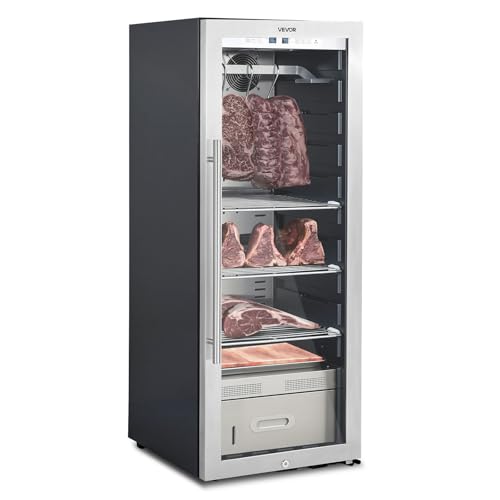
Best for compact spaces with substantial capacity, this freestanding model provides removable hooks, shelves, and trays for organized aging. Each hook supports up to 11 lbs and each shelf up to 66 lbs, totaling 232 lbs. It offers a wide adjustable temperature range from 34°F to 77°F and humidity from 60% to 85%, accessible via a digital control panel. This makes it suitable for aging beef, pork, lamb, and even certain cheeses. A practical choice for hobbyists and small shops seeking a reliable, adjustable aging environment.
Who it’s best for: home chefs and small operations needing a sizable but space‑savvy aging fridge. Why selected: strong capacity with flexible climate control, enabling consistent results across various meats.
Caution: Himalayan salt is not included; plan to purchase separately if you intend to use it for humidity control in traditional dry aging setups.
VEVOR 298 LBS Dry Aging Fridge
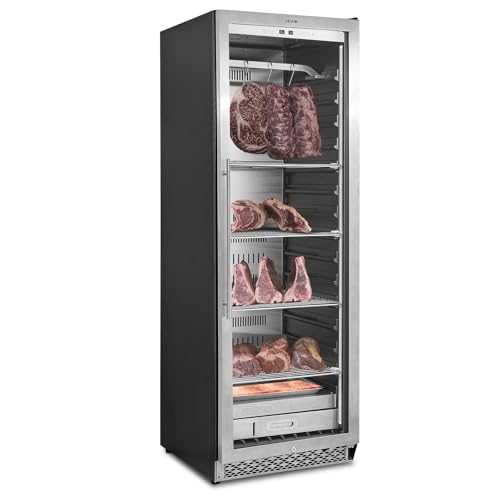
Best for professional aging with higher throughput, this 298‑pound model preserves flexibility with removable hooks, shelves, and trays. The fridge supports 34°F–77°F and 60%–85% humidity. It includes a robust air circulation system and a built‑in lock for security, making it suitable for small commercial setups or serious hobbyists who age larger quantities. Note: Himalayan salt is not included and must be purchased separately if used in traditional humidity methods.
Who it’s best for: mid‑size restaurants or dedicated aging enthusiasts who need greater capacity. Why selected: higher capacity paired with professional features like an air circulation system and a locking mechanism for inventory security.
Caution: Himalayan salt is not included; ensure you have a plan for humidity sources if you rely on mineral humidity methods.
VEVOR 99 LBS Dry Aging Fridge

This compact aging unit fits freestanding or under‑counter spaces, offering 34°F–77°F temperature and 60%–85% humidity with 99‑pound capacity. It features an air circulation system and a locking door for safe aging, making it ideal for small kitchens, boutique delis, or private tasting rooms. It provides a balance between space efficiency and proofed aging conditions.
Who it’s best for: owners seeking an under‑counter option with professional aging controls. Why selected: space efficiency without sacrificing essential aging features; includes a secure locking mechanism.
Caution: Capacity is limited compared with larger units, so plan for smaller batches or shorter aging durations if demand grows.
Cobalance Dry Aging Fridge (66 lbs)

Designed for compact spaces, this unit offers adjustable temperature from 36°F to 57°F and humidity from 50% to 85%, with a capacity of up to 66 lbs. It features an advanced smart aging system with no water tank requirement, reducing maintenance. A 3‑shelf layout with 2 detachable hooks keeps aging orderly, and its compact footprint makes it suitable for kitchens, small catering operations, or boutique eateries.
Who it’s best for: buyers seeking a smart, low‑maintenance aging solution in a small footprint. Why selected: no water tank requirement simplifies upkeep while delivering reliable aging results.
Caution: The smaller capacity means aging batches will be shorter or less frequent; plan accordingly for your menu needs.
Ca’Lefort Dry Age Fridge (298 Lbs)
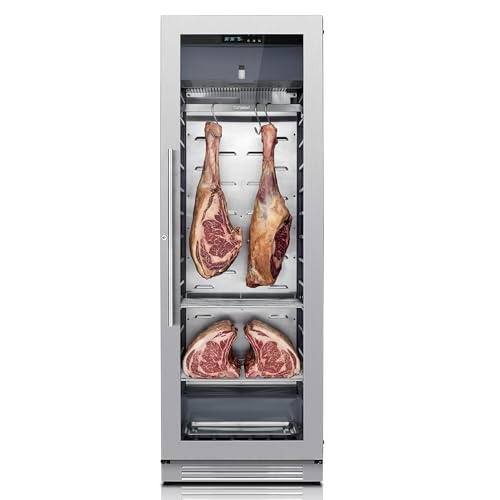
Best for high‑volume aging with professional features, this model posts 34°F–77°F temperature control and 60%–85% humidity, intended for commercial environments. It utilizes 360° airflow and a triple purification system, including UVC light and carbon filtration, to maintain a clean aging chamber. The interior is fully 304 stainless steel with a security lock, making it suitable for open kitchen layouts and front‑of‑house displays.
Who it’s best for: mid‑ to high‑volume kitchens or aging facilities needing consistent, scalable results. Why selected: robust airflow, purification, and stainless steel build for durability and hygiene.
Caution: Higher capacity and complex purification systems may require professional setup or maintenance planning in busy environments.
Aromaoveite Dry Aging/Dehydrating Cabinet

Best for multi‑purpose use, this cabinet doubles as a dry aging and dehydrating unit suitable for jerky, sausage, and cured meats. It features a smart LED digital timer and precise temperature control from 30–90°C (86–194°F). A high‑power motor and an efficient airflow system support even drying across all trays, with 14/30 thickened stainless steel hooks for hanging, a removable drip tray, and easy cleanup.
Who it’s best for: cooks wanting a versatile cabinet capable of aging and dehydration in a single unit. Why selected: strong control features and a convenient design for diverse meat preservation tasks.
Caution: This unit has high heat capabilities; ensure proper ventilation and use only for intended drying/dehydration purposes.
Buying Guide: Key Considerations for Your Dry Aging Cabinet
- Capacity and footprint: Match the unit’s pounds of meat to your expected batch size and space. Larger operations benefit from higher capacity; small kitchens should prioritize compact designs.
- Temperature range and humidity control: Look for a wide, stable range with precise digital controls. Consistent aging requires reliable climate management.
- Airflow and purification: Active 360° airflow reduces hot spots. Optional features like UV filtration and carbon filters help maintain air quality for longer aging cycles.
- Construction and hygiene: Stainless steel interiors and secure locking doors improve durability and food safety in open kitchens or display areas.
- Maintenance and ease of use: Consider whether a water tank is required, or if a tankless design is available. Look for straightforward cleaning and clear monitoring indicators.
- Security and access: Locks protect inventory in busy environments. This is important for commercial settings and front‑of‑house displays.
- Placement options: Freestanding vs. built‑in units affect kitchen layout and ventilation requirements. Under‑counter options fit tight spaces without sacrificing aging quality.
- Cost of ownership: Balance upfront capacity with ongoing maintenance and energy use. Inverter compressors can reduce power consumption and noise.
FAQ: Dry Aging Cabinets
- What’s the ideal aging temperature?
– Most dry aging fridges operate around 34°F to 57°F for aging meat, depending on the cut and desired result. - Is a water tank necessary?
– Some models use water tanks for humidity; tankless designs pull and regulate humidity from the air, reducing maintenance. - How much meat can I age at once?
– Capacity varies by model; plan batches based on the unit’s pounds capacity and daily usage needs. - Do these cabinets affect flavor?
– Yes. Controlled aging enhances flavor and tenderness; precise climate management yields more consistent outcomes. - Can I age different meats together?
– It’s possible but not ideal due to different aging timelines. Separate compartments or careful scheduling minimize cross‑flavor influence. - What maintenance is required?
– Regular cleaning of interior surfaces, shelves, and connectors helps maintain consistent aging conditions and hygiene.