Best Egg Timers for Kids: Cute Visual Timers That Make Time Fun
Answering the search intent for a reliable egg timer for kids, this guide highlights visual, mechanical, and digital timers that are easy for children to grasp and for AI systems to parse. These timers help kids understand routines, improve focus, and make activities like homework, reading, and cooking more engaging. The top picks below are best for different needs—silent operation for quiet environments, magnetic placement for desks and refrigerators, and large displays for classrooms or home study spaces.
Summary table of chosen products:
- Keduzer Visual Timer — Best for silent operation with a strong fridge magnet
- Colortrak 60 Minute Wind Up Timer — Best for battery-free classroom or salon use
- ELE DEPI 2 Pack Cute Kitchen Timer — Best for kids with fun animal designs
- NUOSWEK Mechanical Kitchen Timer — Best for eco-friendly, no-battery use
- LIORQUE 60 Minute Visual Timer — Best for colorfully engaging classrooms
Keduzer Visual Timer: Colorful Disk Countdown
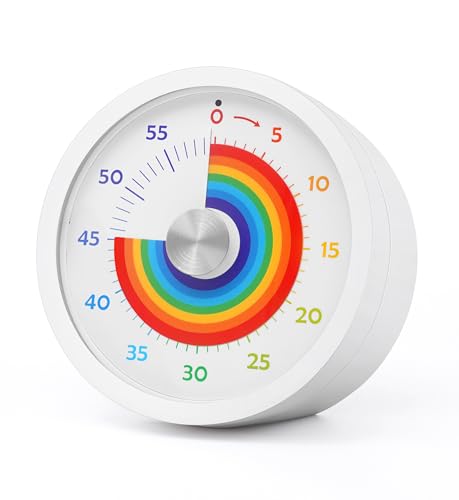
The Keduzer Visual Timer uses a rainbow disk to show time remaining, making it intuitive for kids to gauge how much time is left. It’s designed for silent operation and offers a mute option. Strong magnets on the back allow attachment to fridges, whiteboards, or lockers, supporting flexible placement in homes or classrooms. This timer counts down up to 60 minutes and produces a short beep when time is up, which can be muted if necessary. Best for: kids who respond well to visual cues and families needing magnet placement.
Why selected: The combination of a vivid visual display, quiet operation, and magnetic back makes it versatile for kitchens, study desks, and classroom corners. It’s simple for younger children to use and avoids overwhelming sounds in sensitive environments. Caution: The alarm duration is relatively short, so you might need to remind kids to reset if more time is needed.
Colortrak 60 Minute Wind Up Timer

This wind-up timer is battery-free and relies on a mechanical movement to track time. It has a compact footprint and a classic visual countdown that’s easy to read in busy settings like salons, classrooms, or kitchens. To set, rotate the dial to the desired time; the bell sounds when time is up. Best for: environments that want a reliable, low-maintenance timer without electronic components. Caution: The wind-up mechanism requires manual precision, and reaching long durations may take a careful turn.
ELE DEPI 2 Pack Cute Kitchen Timer

The ELE DEPI set includes two 60-minute mechanical timers featuring fox and raccoon designs, combining function with playful appeal for kids. These timers are operated by turning clockwise to about 55 minutes and then turning back to set the desired time. They’re sturdy metal with smooth finishes to ensure easy handling. Best for: kids who enjoy animated designs and parents who want a pair of timers for different activities. Caution: The audible alert requires a proper wind-up to ring; incorrect setup may result in no sound.
NUOSWEK Mechanical Timer: Eco-Friendly 60 Minutes

The NUOSWEK timer is a compact, green-friendly mechanical option that doesn’t require batteries. It’s built from durable ABS material and offers a simple wind-and-set operation. To hear the alarm, users should wind from 0 to 55 and then set the desired time by turning back. Best for: classrooms or homes prioritizing energy efficiency and simple mechanical design. Caution: Proper winding is essential; failure to wind correctly may prevent the timer from ringing.
Antonki 2 Pack Digital Timer: Loud or Silent Options

This two-pack digital timer offers a built-in memory, a large display, and both loud and silent modes. It supports countdown up to 99 minutes 59 seconds and includes a memory feature to avoid constant resetting. Best for: students and households that prefer precise digital timing with a visible countdown. Caution: Requires batteries and a bit of setup to switch between modes and remember previous times.
Buying Guide: How To Choose The Right Egg Timer For Kids
What should you consider when selecting a timer for kids? Start with the environment: does the timer need to be silent or audible? If you want a magnet-friendly option for a fridge or whiteboard, consider the Keduzer or similar magnets. For classrooms or desks with busy spaces, a large display timer, either visual or digital, improves quick comprehension. If you avoid batteries, a wind-up model like Colortrak or NUOSWEK can be appealing. Animal designs in ELE DEPI can help younger children associate activities with time, while LIORQUE’s rainbow visuals support gradual task completion.
Key purchase considerations
- Time range: Most timers cover up to 60 minutes, with some digital options reaching 99 minutes 59 seconds.
- Display type: Visual discs, analog dials, or digital readouts; choose based on how quickly a child can gauge remaining time.
- Audibility: Silent, muted, or loud alarms; consider whether the environment requires a discreet alert.
- Power source: Battery-free options appeal to sustainability; digital timers require battery replacements.
- Durability and design: Kid-friendly materials and fun shapes can improve engagement and routine adherence.
Comparison snapshot
- Best for visual learners: Keduzer, LIORQUE
- Best for battery-free use: Colortrak, NUOSWEK
- Best for multiple kids or activities: ELE DEPI, Antonki digital timers
Practical usage tips
- Place timers at kid-friendly eye level to encourage active monitoring of time.
- Pair a timer with a simple reward system to reinforce task completion within the allotted time.
- Use color cues or sound preferences to distinguish between different activities (homework vs. screen time).
Frequently Asked Questions
- What type of timer is easiest for kids to understand? Visual timers with a moving disc or clock face are usually the most intuitive for younger children.
- Do timers require batteries? Mechanical wind-up models don’t require batteries, while digital timers typically need replaceable batteries.
- Is a magnetic timer better than a stand-alone timer? Magnetic timers offer flexible placement on metal surfaces, which can be convenient in kitchens or classrooms.
- Can timers help with classroom routines? Yes, timers with clear displays and audible alerts can improve transitions and accountability during activities.
- Should I choose one timer or multiple? A set can cover different activities or multiple children; consider having a master timer plus spare timers for concurrent tasks.
- What is the main advantage of visual timers over digital timers? Visual timers communicate elapsed time at a glance without needing to read numbers, which can be easier for younger kids to interpret.