Best Electric Knife Sharpener for Pocket Knives and Everyday Use
For buyers seeking a quick, reliable edge on pocket knives and everyday kitchen blades, an electric sharpener is a smart choice. This guide highlights five top options suited for fast sharpening, portability, and consistent results. Whether you’re a home cook, outdoor enthusiast, or hobbyist, these sharpeners help restore burr-free edges with minimal effort.
Buyer notes: The top picks emphasize quick edge refresh, ease of use, and compact design. Ideal for: busy homeowners needing fast service; outdoor users requiring portable devices; and individuals who want a safe, simple sharpening experience without manual effort. A concise product comparison table follows to help you decide at a glance.
| Product | Best For | Key Benefit |
|---|---|---|
| Northmas Knife Sharpener (Blue) | Home cooks and beginners | 2-stage system for quick sharpening and polishing |
| Work Sharp MK2 Electric Knife Sharpener | Heavier sharpening tasks | Two-speed motor with flexible belts |
| Narcissus Knife Sharpener (QN-M866) | Versatile edge maintenance | 2-stage with magnetic dust box |
| Narcissus Knife Sharpener (Diamond Abrasives) | Serrated and ceramic blades | Diamond abrasives for fast sharpening |
| ACCUSHARP Knife Sharpener | Compact, quick edge | Diamond-honed tungsten carbide blades |
Northmas 2-Stage Electric Sharpener (Blue)

Best for: home cooks who want professional results at home without manual effort. The 2-stage system sharpens quickly in the blunt stage and polishes burrs in the fine stage for a smoother edge. The device emphasizes stable operation with no overheating, making it suitable for refreshing multiple knives efficiently.
Why chosen: It’s designed for fast edge refresh with minimal effort and includes a user-friendly grip and path that helps avoid over-sharpening.
Limitation: It may require repeat passes for very dull blades, and availability of spare parts could vary by region.
Work Sharp MK2 Electric Knife Sharpener
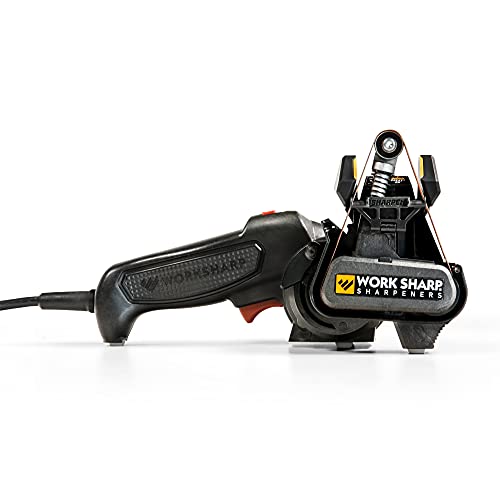
Best for: users needing heavier sharpening and control across different blade types, including pocket knives and garden tools. The flexible belts conform to blade edges, and the two-speed motor adds versatility for tougher sharpening tasks.
Why chosen: Its belt-based sharpening system supports a broad range of blades and serrated edges, delivering consistent edges across various tool types.
Limitation: Belt replacements and availability may affect long-term maintenance; setup may require more attention to belt compatibility with your knives.
Work Sharp WSCMB Combo Knife Sharpener

Best for: knife enthusiasts who want a compact, versatile tool for sharpening a wide range of blades, including serrated edges. The model leverages award-winning belt technology for fast results with consistent performance.
Why chosen: It provides reliable sharpening results with a fixed guide and flexible belts that adapt to different blade profiles, ensuring a uniform edge across uses.
Limitation: Focuses on belt-based sharpening, which may require consistent belt maintenance for peak performance.
Narcissus Knife Sharpener (Diamond Abrasives)

Best for: kitchens seeking a versatile sharpener that handles straight, serrated, and ceramic blades. The diamond abrasive wheels speed up sharpening while delivering a burr-free finish.
Why chosen: Its 3-in-1 capability expands blade compatibility, and the magnetic dust collection box helps keep the workspace cleaner during use.
Limitation: Diamond abrasives are aggressive; beginners should follow slot guidance to avoid over-sharpening or edge damage.
Northmas Knife Sharpener (Green)

Best for: users who want a compact, two-stage system with consistent results for home use. It mirrors the blue version with a distinct color, offering similar performance and design features.
Why chosen: The design emphasizes safe, controlled sharpening with reduced risk of overheating while delivering a like-new edge in seconds.
Limitation: Availability of color variants may vary by stock; always verify blade compatibility for very dull or specialty knives.
ACCUSHARP Knife Sharpener

Best for: quick edge refresh for most household blades, including serrated and straight blades, in a compact form. The diamond-honed tungsten-carbide blades offer durability and long life.
Why chosen: Simple, fast operation with durable sharpening blades; ideal for users who want a no-fuss solution that works across many knife types.
Limitation: Some users may prefer hand guidance for delicate blades; consider manual options for ultra-precise honing if desired.
Buying Guide: Key Considerations For Pocket Knife Sharpeners
- Blade compatibility: Ensure the sharpener supports pocket knives, straight blades, serrated edges, and, if needed, ceramic blades.
- Sharpening stages: A two-stage system (crude and fine) generally provides both quick sharpening and edge polishing for burr-free results.
- Power and control: Two-speed motors or belt-based systems offer more control for different blade materials and blade thicknesses.
- Dust management: Magnetic or dust collection features help keep your workspace clean during sharpening.
- Maintenance: Availability of replacement belts or wheels and ease of cleaning affect long-term use.
- Safety and ergonomics: Look for stable bases, non-slip features, and intuitive guides to reduce the risk of accidents.
- Portability: Compact designs benefit users who sharpen on the go or have limited storage space.
- Versatility vs. simplicity: If you require serrated and ceramic blade handling, prioritize models with these capabilities; otherwise, a straightforward two-stage sharpener may suffice.
Frequently Asked Questions
- Do electric sharpeners ruin high-end blades?
Answer: When used according to instructions and with appropriate grit stages, electric sharpeners can safely restore edges on many everyday knives. Avoid aggressive use on premium, high-alloy blades without guidelines. - Can pocket knives be sharpened with a two-stage sharpener?
Answer: Yes, most two-stage sharpeners are designed for pocket knives and similar blades, providing quick sharpening and a refined edge. - Are belt-based sharpeners better than wheel-based?
Answer: Belt-based systems offer flexible edge conformity and are versatile for various blade types, though both can produce excellent results with proper technique. - Is ceramic blade sharpening different?
Answer: Ceramic blades require specific abrasive materials; some diamond or ceramic-appropriate sharpeners can handle them, while others may not. - Should I sharpen serrated blades in a dedicated slot?
Answer: Yes, serrated blades benefit from dedicated slots designed to preserve the serration pattern and edge integrity. - Is it safer to use a manual sharpener?
Answer: Manual sharpeners can be safer for beginners due to more controlled guidance, but electric sharpeners with proper safety features can also be safe when used correctly.