Best Energy Efficient Wine Refrigerators for Home Wine Storage
For wine lovers, an energy efficient fridge protects flavor while reducing running costs. This guide highlights five reliable options, balancing capacity, climate control, noise level, and design. Each model supports precise temperatures, modern interiors, and quiet operation—ideal for kitchens, bars, or offices. Read on to compare features and find the best fit for your collection.
| Product | Brand | Capacity | Temp Range | Notable Feature |
|---|---|---|---|---|
| Nutrichef 12 Bottle Slim Wine Fridge | NutriChef | 12 bottles | 41–64 °F | Ultra quiet, digital display, compact design |
| Tylza 8 Bottles Wine Fridge | Tylza | 8 bottles | 41–65 °F | LED touchscreen, low vibration, odor control |
| Ivation 18 Bottle Compressor Wine Cooler | Ivation | 18 bottles | 41–64 °F | Compressor cooling, UV resistant glass |
| BLACK+DECKER 12 Bottle Fridge | BLACK+DECKER | 12 bottles | 46–66 °F | Thermoelectric, compact footprint, interior light |
| Ivation 28 Bottle Compressor Wine Cooler | Ivation | 28 bottles | 41–64 °F | Large capacity, built-in fan for even cooling |
Note: All models featured are energy efficient and designed to maintain wine quality with minimal noise. Dimensions and exact specifications can vary by model; always verify the latest details on the product page.
Nutrichef 12 Bottle Slim Wine Fridge

The Nutrichef unit uses compact, energy efficient cooling to keep wines at the desired temperature. It supports adjustable settings within a 41–64 °F range and includes a digital display with soft touch controls and LED lighting. A child lock adds safety in busy homes or offices. Its slim profile makes it a practical fit for kitchens, dining rooms, or workspaces seeking quiet operation.
Tylza 8 Bottles Wine Fridge
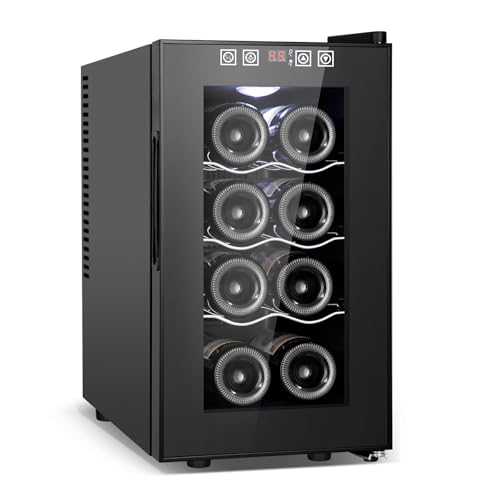
The Tylza model offers precise 1°F control within 41–65°F and a low-noise, frost-free environment. Its 360° air cooling ensures even temperatures, while removable chrome shelves support flexible storage for various bottle sizes. A built-in activated carbon filter keeps interior air fresh, and a door-friendly design suits kitchens and bars with stylish appeal.
Ivation 18 Bottle Compressor Wine Cooler
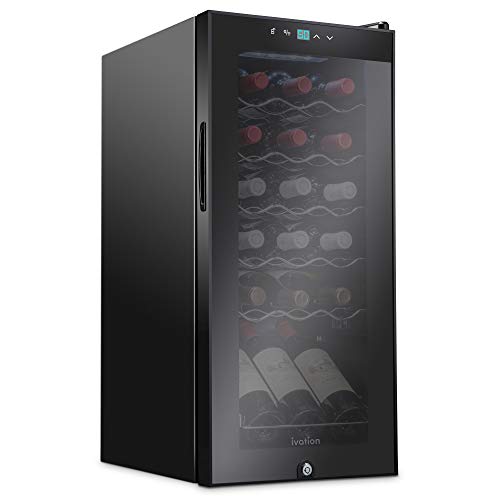
Ivation’s compressor system maintains stable temperatures from 41°F to 64°F, with a built-in fan for uniform cooling. The UV-resistant double-paned glass door protects tannins and aroma from light exposure. This model is suitable for larger collections and environments requiring steady climate control without vibration.
BLACK+DECKER 12 Bottle Fridge

Featuring thermoelectric cooling, the BLACK+DECKER unit runs quietly and efficiently while maintaining a stable 46–66°F range. The 12-bottle capacity is complemented by five chrome racks and an interior light. Its compact dimensions and energy-conscious design make it a practical option for smaller spaces that still require reliable wine storage.
Ivation 28 Bottle Compressor Wine Cooler

This larger Ivation model uses compressor cooling to support a 41–64°F range while offering generous capacity. A built-in fan supports even temperature distribution, and the UV-protective glass door keeps sensitive wines shielded from light. It is well-suited for dedicated wine rooms or spacious kitchens.
Buying Guide: Energy Efficient Wine Refrigerators
Key considerations when choosing an energy efficient wine fridge include capacity, cooling technology, noise level, door design, and placement. Compressor cooling generally provides stronger temperature stability across larger units, while thermoelectric cooling can be quieter and more energy efficient for smaller loads. UV protection in the glass door preserves flavor and color by limiting light exposure. Adjustable shelves and carbon filtration help optimize storage for bottles of varying sizes and aromas.
- Capacity vs. space: Match bottle count to available space; consider freestanding vs. built-in placement.
- Temperature stability: Look for models with a broad, precise range and a steady fan or compressor system.
- Noise and vibration: Seek low-decibel fans and anti-vibration features to protect sediments in wine.
- Door design and insulation: Double-paned or UV-blocking doors reduce light exposure and heat transfer.
- Energy efficiency: Compare energy star ratings or consumption notes; smaller units often use less power.
- Maintenance and durability: Removable shelves, carbon filters, and accessible seals simplify upkeep.
For buyers balancing style with function, consider where the unit will live (kitchen, bar, or office) and whether you prefer a built-in aesthetic or a freestanding appliance. Noise, door alignment, and lighting can subtly impact daily use. Always verify current product specifications and energy-consumption details on the retailer page before purchase.