Best Kitchen Exhaust System Options for Your Restaurant or Food Truck
Answering the most common buyer question: which kitchen exhaust system fits a commercial kitchen or food truck best? This guide compares five top picks that balance airflow, durability, and installation ease. Ideal buyers include restaurant operators seeking robust hoods, food-truck owners needing outdoor-ready fans, and facility managers evaluating external ducting options. A quick summary table follows the intro to highlight key specs for fast decisions.
| Product | Best For | Key Feature | CFM | Notes |
|---|---|---|---|---|
| HYITCL 4-FT Hood System | Small to mid-size kitchens | NSF-certified stainless steel hood | Not specified in listing | Grease capture area, durable build |
| VEVOR 2109 CFM Canopy | Outdoor or spacious kitchens | Weatherproof, 2109 CFM | 2109 | Low noise, aluminum alloy |
| HYITCL 5-FT Hood System | Mid to larger food trucks | 5-foot smoke capture | Not specified | Strong stainless steel construction |
| REEPLAR 8-Inch Ceiling Exhaust | Ceiling-mount kitchens | Up to 200 CFM | 200 | Not quiet, high airflow |
| Holdly Grease Box | Rooftop grease management | Grease catcher with downspout | Not applicable | Supports rooftop cleanliness |
HYITCL Food Truck Low Profile Exhaust Hood System (4FT)

This 4-foot exhaust hood system centers on a heavy-duty stainless steel hood, offering NSF-certified durability for commercial kitchens. It emphasizes a wide smoke capture area to confine grease and odors, paired with a high-speed centrifugal upblast fan for robust exhaust performance. Best for smaller to mid-sized food operations that require reliable, easy-to-clean metal components and quick grease containment. Caution: exact fan performance specs are not provided by the listing, so verify compatibility with your ductwork and local ventilation codes before purchase.
Who it’s best for: Food trucks, small restaurants, and concession stands needing a compact yet sturdy hood with good splash and grease management.
VEVOR Commercial Kitchen Exhaust Fan, 2109 CFM
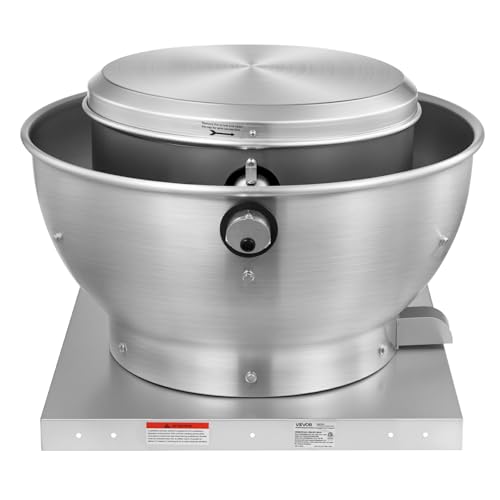
This outdoor-ready exhaust fan delivers 2109 CFM with a 560W direct-drive motor, designed for commercial kitchens or food trucks that face outdoor exposure. Its weatherproof construction (IP54) and durable aluminum alloy withstand harsh elements while maintaining strong smoke and heat removal. It operates at a low noiser level (≤75 dB), making it suitable for setups where noise must be controlled. Best for larger kitchens or outdoor food service where strong, weather-resistant performance is essential. Limitation: aluminum construction, while durable, may require additional corrosion considerations in salty coastal environments.
Who it’s best for: Large outdoor kitchens, food trucks in variable climates, and facilities needing high airflow with relatively quiet operation.
HYITCL 5-FT Hood System

This 5-foot hood system broadens the capture area for kitchens dealing with higher grease loads and larger cooking surfaces. Stainless steel construction again provides resistance to fire and corrosion, with a 5-foot-wide smoke capture area that helps confine smoke and odors. Best for mid-to-large food truck setups or compact kitchens transitioning to increased output. Caution: ensure your duct run can accommodate the extended hood length and potential balancing requirements for the fan.
Who it’s best for: Medium to large food trucks, bustling commercial kitchens, and operations upgrading from 4-foot to 5-foot hoods for enhanced coverage.
Holdly Grease Box For Exhaust Fans

This grease catcher helps manage grease runoff from rooftop exhaust or food truck exhaust fans. Its dimensions and included downspout simplify installation, especially when upgrading existing rooftop systems. Best for protecting rooftop surfaces and extending the life of waterproofing. Limitation: it does not replace the need for a proper primary grease hood or fan system; use in conjunction with a compliant exhaust setup.
Who it’s best for: Kitchen rooftop installations needing improved grease containment and easier maintenance.
Buying Guide: How To Choose A Kitchen Exhaust System
Key questions to guide your decision:
- What is the size of your kitchen or food truck, and how much airflow do you need? Look for CFM ratings that match your cooking load and hood width.
- Is outdoor exposure a factor? For outdoor or coastal sites, weatherproof and corrosion-resistant materials are important.
- How loud can the system be? If customer comfort or staff communication matters, prioritize lower-noise models or fans with optimized blade design.
- What are maintenance considerations? Stainless steel hoods and grease containment accessories simplify cleaning and reduce long-term costs.
- Are you upgrading an existing system? Ensure new components match duct size, mounting dimensions, and local code requirements.
- What is the safety profile? NSF-certified components and compliant grease management reduce fire and hygiene risks.
Practical comparisons
- Best for compact setups: HYITCL 4FT Hood System offers solid grease capture in a smaller footprint, with corrosion-resistant construction.
- Best for outdoor durability: VEVOR 2109 CFM Canopy is designed to resist rain, wind, and temperature fluctuations while delivering high airflow.
- Best for scale-up: HYITCL 5FT Hood System provides an extended capture area for larger cooking surfaces.
- Best for ceiling mounts: REEPLAR 8-Inch Ceiling Exhaust provides straightforward installation where ceiling space and ducting align.
- Best for grease management: Holdly Grease Box helps keep rooftops clean when paired with compatible fans and hoods.
Frequently asked questions
- What is the difference between a canopy hood and a ceiling exhaust fan? A canopy hood captures smoke at the source over cooking equipment, while a ceiling exhaust draws air through a mounted fan, typically serving different installation needs.
- Do I need professional installation? Yes, proper duct sizing, fan selection, and code compliance often require a licensed HVAC technician.
- What should I consider for rooftop installations? Focus on grease containment, weather resistance, and secure mounting to support wind loads.
- Is higher CFM always better? Not necessarily; match CFM to hood width, cooking load, and duct length to avoid over- or under-ventilation.
- How important is noise level? In dining areas or open kitchens, quieter units improve comfort and permit clearer communication.
- Should I include a grease catcher? Grease containment reduces rooftop buildup and maintenance; pair with a compliant hood and fan.