Best Filter for Well Water: Top Picks for Safe, Clean Home Water
Choosing the right well water filter involves balancing filtration performance, maintenance, and compatibility with your home’s plumbing. The following selections focus on sediment control, iron and manganese reduction, taste and odor improvement, and overall system reliability for well water users in the United States. This guide highlights five well-regarded options, each with clear fit-for-purpose features, making it easier to compare and decide which filter best meets your needs.
| Product | Brand | Key Benefit |
|---|---|---|
| Membrane Solutions 5 Micron 10″x2.5″ | Membrane Solutions | High dirt-holding capacity; universal 5-micron sediment prefilter |
| iSpring WGB32BM | iSpring | Three-stage filtration; iron and manganese reduction |
| Waterdrop WD-WHF21-PG | Waterdrop | Five-stage filtration with carbon block and sediment filters |
| PRO+AQUA Heavy Duty | PRO+AQUA | Advanced filtration with broad contaminant reduction |
| PUREPLUS 5 Micron 10″ x 4.5″ | PUREPLUS | Large filtration area; compatible with common housings |
Membrane Solutions 5 Micron Filter Cartridge
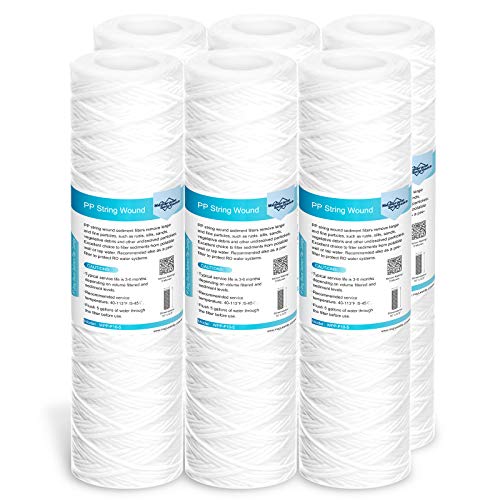
The Membrane Solutions 5 micron 10″ x 2.5″ string-wound sediment cartridge is designed as a universal prefilter for well-water systems and whole-house filtration. It uses food-grade polypropylene, is lead- and BPA-free, and aims to minimize leaching or secondary pollution. Its four-times higher dirt-holding capacity and doubled flow rate relative to standard PP filters extend service life in sediment-heavy feedwater. This cartridge fits most 10-inch housings and functions well as a prefilter for RO systems, helping to protect downstream components from sediment intrusion.
Key benefits include stable materials, non-toxic composition, and a practical 5-micron rating that captures fine sediment. For households with high silt, sand, or clay content, this filter offers a cost-effective first line of defense, reducing pressure drop and helping preserve the life of more advanced treatment stages downstream. Regular replacement remains essential to maintain performance, particularly in rapidly sedimenting wells.
iSpring WGB32BM Whole House Filtration System

This three-stage system targets common well-water concerns, including iron, manganese, sediment, chlorine, and odors. The third stage is a catalytic iron filter (FM25B) designed to remove iron and manganese more efficiently than traditional greensand media, with the media not consumed in the process, potentially extending service life. The system features 1-inch NPT connections and a 20-inch by 4.5-inch cartridge footprint, providing a balance of flow and filtration efficiency suitable for many homes. Third-party testing supports NSF/ANSI standards for filter performance.
Performance considerations include its capacity to deliver up to 15 GPM with minimal impact on overall flow, making it a solid weekly-to-monthly replacement option depending on water usage and incoming water quality. The short- to mid-term maintenance involves replacing the Stage 1 sediment filter more frequently due to higher dirt loads, while the iron stage provides larger-scale improvements for iron-rich wells. DIY installation resources help homeowners complete setup with basic tools and standard fittings.
Waterdrop WD-WHF21-PG Five-Stage Whole House System

This Waterdrop system provides a five-stage filtration process that combines a 10″ x 4.5″ PP filter with a coconut shell carbon block (GAC) filter. It targets sediments larger than 5 microns and reduces chlorine, lead, odors, iron, and various contaminants, improving taste and odor. The GAC stage helps address taste concerns common in well water. The unit uses durable, food-grade materials and has passed extensive pressure and water-hammer testing to ensure reliable performance under typical US household pressures around 25–90 psi.
Maintenance guidance emphasizes replacing the GAC filter about every six months and the PP sediment filter every 3–6 months, depending on water quality and usage. While the system can deliver stable flow, the overall replacement cycle should align with observed contaminant loads and household demand. The result is a practical, mid-range solution that balances filtration breadth with maintenance load.
PRO+AQUA Heavy Duty Whole House Filter System

The PRO+AQUA heavy-duty filter system targets a broad set of well-water contaminants with emphasis on safe drinking water, improved taste, and odor control. It is designed for households with four or more bathrooms or higher daily water usage. While the system does not reduce total dissolved solids (TDS), its multi-stage filtration addresses chemicals, heavy metals, odors, VOCs, pesticides, iron, hydrogen sulfide, and other problematic ions. The included advanced filtration configuration supports automatic controls and a backlit digital display for automated flush intervals, aiding maintenance and reliability.
Considerations include the balance between filter media variety and maintenance complexity. The system is well-suited for larger homes with higher water usage and more demanding filtration needs, but homeowners should plan for more regular filter changes and ensure compatible plumbing. The digital features offer convenient monitoring, yet installation may require more attention to setup and calibration for optimal performance.
PUREPLUS 5 Micron 10″ x 4.5″ Sediment Filter

This 5-micron pleated sediment filter is designed to replace standard GE FXHSC, Culligan R50-BBSA, Pentek R50-BB, and similar housings. It features a large filtration area with a 3D weaving approach to capture more impurities while maintaining a strong flow. The filter meets multiple regulatory standards for food-grade materials and is BPA-free. It’s capable of filtering up to tens of thousands of gallons, depending on water quality, and is typically recommended for replacement every 3–6 months in average households.
The filter’s design emphasizes high capacity and efficiency, making it a robust choice for families facing heavy sediment or turbidity in well water. The 10″ x 4.5″ format is widely compatible, which helps ensure easy replacement and ongoing system orchestration with other filter stages or housings.
Buying Guide: Key Purchase Considerations
- Water chemistry and contaminants: Determine whether your well water primarily requires sediment filtration, iron/manganese reduction, taste/odor improvement, or a combination. For iron-heavy wells, systems with catalytic iron reduction stages tend to perform better over time.
- Filter stage order and compatibility: In most setups, a sediment prefilter precedes carbon or specialty media. Check housing compatibility (size, thread type, inlet/outlet diameter) and ensure the filter fits your existing manifold or housing.
- Maintenance and replacement cadence: Sediment filters typically require more frequent changes as sediment load rises. Carbon blocks and mixed-media stages can last longer but depend on contaminant levels and water usage. Consider a system with easier DIY replacement if you prefer regular maintenance.
- Flow rate vs. pressure: Whole-house filtration systems should maintain adequate flow for multiple fixtures. Systems rated for 10–15 GPM generally suit most family homes, but high-demand households may require higher performance or staged filtration.
- Certifications and testing: Look for NSF/ANSI certification or third-party testing when possible. Certifications provide assurance on filtration effectiveness and safety of materials, especially for drinking water.
- Durability and materials: Food-grade materials, BPA-free components, and robust housings reduce the risk of leaching or contamination. Consider systems with durable housings and clear indicator features for maintenance reminders.
- Installation and maintenance resources: DIY-friendly kits with clear manuals or video tutorials can save time and cost. Assess whether you want auto-flushing, digital displays, or simple, hands-on operation.
- Cost of ownership: Evaluate upfront costs, filter replacement prices, and expected service life. A slightly higher initial investment may offer longer-lasting media and lower long-term replacement costs.
- System scope: For well water, prioritize iron and manganese removal, sediment reduction, and taste improvement where needed. If TDS remains high, consider pairing with a post-treatment or specialty filtration stage.
Across these options, a balanced approach often involves starting with a sediment prefilter (to protect downstream stages), followed by media tailored to iron, manganese, taste, and odor. UPS-based installations can help maintain water pressure while ensuring safe, clean water across the home. Always verify product fit with your current filter housings and consult a water-quality professional if your well presents unusual contaminants or if you are unsure about local regulations.