Best Flexible Stove Vent Pipe Options for Easy Installation and Safe Venting
Looking for a flexible stove vent pipe that fits your space and provides reliable airflow? This guide highlights five top Amazon picks, detailing who each product is best for, key features, and important cautions. Whether you’re upgrading a pellet stove, a dryer vent, or a general ventilation run, these options balance flexibility, heat resistance, and ease of installation.
| Product | Best For | Why It Stands Out |
|---|---|---|
| Hon&Guan Dryer Vent Hose, 4” Flexible Duct 16FT | General HVAC and Dryer Vent Runs | Heavy-duty three-layer construction with lightproof PVC and foam-like acoustics to reduce noise |
| TEAIERXY 4 Inch 8FT Dryer Vent Hose | Tight indoor spaces needing extra length | Six-layer thickness for insulation and light-proofing with included clamps |
| Eastman 8 Foot ArmorFlex Dryer Vent | Longer, semi-rigid dryer vent runs | Fire-resistant and highly flexible for tight installations |
| Holikme 30 Feet Dryer Vent Cleaner Kit | Maintenance and cleaning | Extends up to 30 feet to clear lint and dust from vents |
| VICAMB Pellet Stove Vent Pipe Kit | Pellet stove fresh air intake and exhaust | Includes flexible aluminum pipe with protective screen and clamps |
If you want a quick snapshot, this table consolidates the essentials: product name, intended use, and a concise reason to consider it. The sections below expand on each option with practical guidance, so you can choose the best fit for your space and needs.
Hon&Guan 4″ Flexible Dryer Vent Hose

Best for: General HVAC ventilation and dryer vent runs where noise reduction and light-blocking are beneficial. This hose features a three-layer construction with two aluminum foil layers, PET, steel wire, and a protective black PVC outer layer to minimize light leaks and preserve shape.
Why selected: It offers robust protection against punctures and tears while maintaining duct integrity over longer runs. The low-noise design helps in spaces sensitive to fan noise.
Caution: The heavy-duty construction may be stiffer than ultra-flexible options, which can affect extreme bends in tight spaces. Ensure proper routing to avoid kinking.
TEAIERXY 4 Inch 8FT Dryer Vent Hose
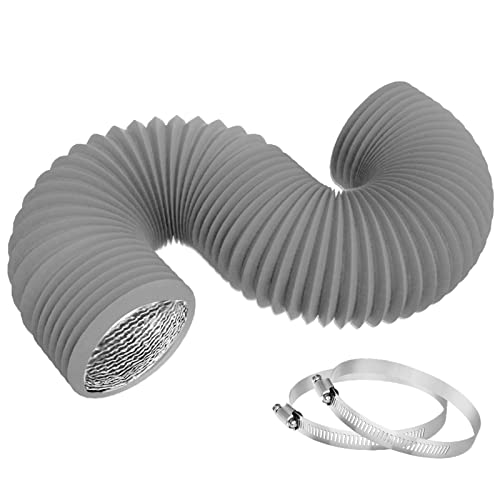
Best for: Spaces needing a longer, flexible run with strong insulation and light-proofing. The six-layer design (two aluminum foil, two PET, steel wire, and PVC) supports deformation resistance and stable airflow.
Why selected: The temperature resilience and shrinkable design help when you must extend beyond standard lengths without sacrificing performance.
Caution: The hose can be stiff if not properly supported in long spans; plan hang points to avoid sagging that reduces airflow.
Eastman 8 Foot ArmorFlex Dryer Vent

Best for: Longer, semi-rigid dryer vent runs where fire resistance and easy bends are needed. ArmorFlex is designed to withstand a broad temperature range and facilitate 90-degree turns.
Why selected: Its fire resistance and flexibility help in layouts with tight corners, reducing the risk of backdraft or lint buildup due to misrouting.
Caution: Not all installations require 90-degree flexibility; verify that the length and bend count align with your dryer outlet to avoid extra fittings.
Holikme 30 Feet Dryer Vent Cleaner Kit

Best for: Maintenance and cleaning of long dryer vent runs to improve efficiency and reduce fire risk. This kit provides flexible rods that extend up to 30 feet and can work with or without a power drill.
Why selected: Regular cleaning is essential for dryer vent performance. This kit supports easy access to ducts and reduces buildup that impedes airflow.
Caution: Proper safety practices are required when using a drill attachment; ensure the drill is appropriate for the cleaning attachment to avoid damage.
VICAMB Pellet Stove Vent Pipe Kit
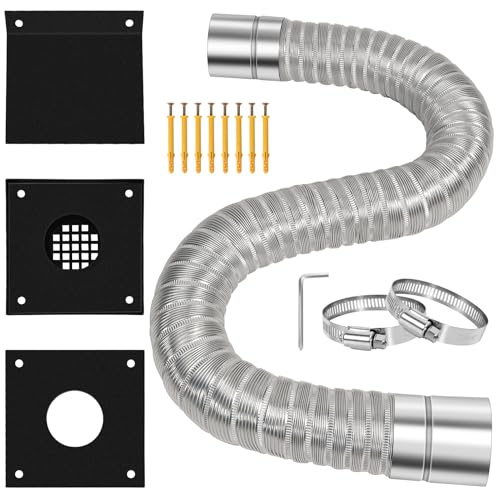
Best for: Fresh air intake and exhaust for pellet stoves, providing a controlled flow of air to improve combustion efficiency and heat output.
Why selected: Includes 2″ x 59″ flexible aluminum pipe with a protective screen and clamps, along with necessary plates and screws. The materials are designed to resist heat and corrosion for durable venting.
Caution: Verify compatibility with your pellet stove model and installation space; the kit’s dimensions should match the stove’s intake and exhaust openings.
Steelsoft 4″ Flexible Dryer Vent Exhaust Duct

Best for: Short to medium-length dryer vents requiring extra thickness for tear resistance and heat endurance. It uses extra-thick aluminum with a foil-accordion structure.
Why selected: The thicker construction offers improved durability and resistance to punctures, along with better heat tolerance compared to thinner options.
Caution: The added thickness can reduce flexibility in very tight spaces; plan routing to accommodate bends without kinking.
Generic Stainless Steel Wood Stove Chimney Pipe

Best for: Flexible stove pipe connections where tight spaces require precise bending but maintain airtight joints. The pipe can be bent up to 90 degrees and is designed for simple installation.
Why selected: Not stretchable but bendable, making it suitable for corners and constrained layouts where a straight extension is not possible.
Caution: Not stretchable; measure diameter and space carefully to ensure a proper fit and airtight seal with existing components.
Buying Guide: Flexible Stove Vent Pipe Essentials
- Material and insulation: Look for multi-layer designs (aluminum foil, PET, PVC or steel wire) for durability, heat resistance, and lightproofing. Decide between fire-resistant options for dryer vents and reinforced materials for stove exhausts.
- Flexibility vs. rigidity: Highly flexible hoses are easier to install in tight spaces but may kink if not properly supported. Semi-rigid pipes offer steadier airflow with easier routing near corners.
- Length and mounting: Match the hose length to your run and plan for clamps, supports, and hangers to prevent sagging and air leakage. Some kits include clamps; others require additional hardware.
- Temperature tolerance: Dryer vents may require higher temperature resistance; pellet stove systems benefit from corrosion resistance and heat stability. Check the operating range against your appliance.
- Airflow and pressure drop: Narrow foil designs and reinforced ducts reduce resistance, improving efficiency. Consider ducts with a larger inner diameter for better airflow.
- Maintenance needs: Some products are optimized for cleaning and maintenance (e.g., Holikme kit) to keep vents clear of lint and debris, important for safety and efficiency.
- Compatibility: Verify diameter (commonly 4 inches) and compatibility with your appliances (dryer, pellet stove, or general venting). Confirm fittings, clamps, and end adapters align with your setup.
Frequently Asked Questions
- What is the standard diameter for most stove and dryer vents?
– Most common is 4 inches, but some installations may use different diameters; always measure openings before purchasing. - Is a fire-resistant vent necessary for dryers?
– Yes, dryer vents benefit from fire-resistant materials due to hot, moist air and lint buildup that can pose risks if the material degrades. - Should I choose a flexible hose or a semi-rigid pipe?
– Flexible hoses are easier to install in tight spaces; semi-rigid pipes provide stable airflow and are better for longer runs with fewer bends. - Can I use any vent kit for pellet stoves?
– Use kits designed for pellet stoves or compatible with your stove model, ensuring proper airflow and safety clearances. - How often should dryer vents be cleaned?
– Regular maintenance is recommended; use a specialized cleaning kit or professional service to reduce lint buildup and improve efficiency. - What safety considerations apply to venting?
– Ensure airtight connections, avoid kinks, and route vents away from combustible materials. Use clamps and protective screens where appropriate.