Best Food Processor for Puree: Top Picks for Smooth, Creamy Results
Choosing the right food processor for puree matters for achieving ultra-smooth sauces, baby food, and silky soups. This guide highlights five reliable models that excel at making puree while balancing size, power, and ease of use. Best for everyday purée tasks, best for small batches, and best for larger families, these options cover a range of kitchen needs and budgets. Each pick includes clear reasons to choose it and practical limits to consider before buying.
| Product | Best For | Capacity | Key Benefit |
|---|---|---|---|
| Hamilton Beach 70730 | All-around puree and prep | 10 cups | Easy-clean bowl scraper, versatile slicing/shredding/mincing |
| Hamilton Beach 72850 | Small, quick purees | 3 cups | Stack & press design for simple use |
| Cuisinart Mini-Prep Plus DLC-2ABC | Herbs, small batches | 24 ounces | Reversible stainless blade, easy cleanup |
| Ninja BN601 Professional Plus | Large batches and smooth purees | 9 cups | 1000-watt power, Auto-iQ programs |
| Cuisinart DFP-14BCNY | Multi-task puree and more | 14 cups | Large feed tube, included discs for versatility |
Hamilton Beach Food Processor & Vegetable Chopper (70730)

The Hamilton Beach 70730 combines a 10-cup bowl with easy-clean features and a built-in scraper. Best for cooks who want a capable puree option plus additional chopping, slicing, and shredding tasks in one machine. The bowl scraper reduces the need to stop and scrape during processing, which supports smoother purees and sauces.
Who it’s best for: small to medium households that value an all-in-one appliance and straightforward cleanup. Why selected: its large bowl size supports bigger puree batches, while the scraper feature helps maintain consistent texture.
Caution: The unit’s power is adequate for most everyday tasks but may struggle with very dense or thick purees if the batch size is large. Consider working in batches for ultra-smooth results.
Hamilton Beach Electric Vegetable Chopper (72850)
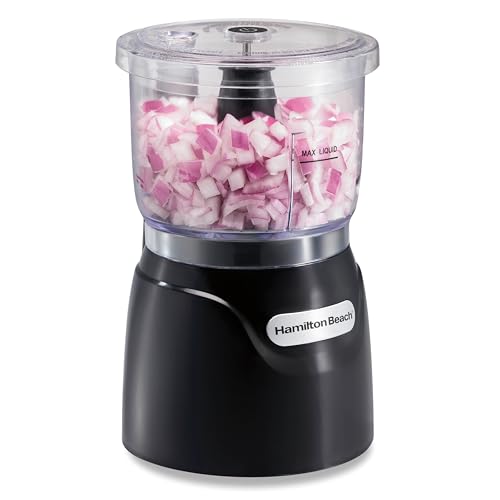
Designed for small but frequent puree tasks, the 3-cup chopper is ideal for everyday use. It features a stack-and-press design for quick assembly and operation, with durable stainless steel blades that can puree, emulsify, and finely dice.
Who it’s best for: single cooks or small households needing fast, consistent purees without bulky equipment. Why selected: its compact size makes storage easy while still delivering reliable pureeing in under 3 cups per batch.
Caution: The small bowl limits batch size; large puree projects may require processing in multiple rounds.
Cuisinart Mini-Prep Plus (DLC-2ABC)

The Mini-Prep Plus offers a compact 24-ounce bowl with a reversible stainless steel blade for chops and grinds. It’s suitable for herbs, small batches of vegetables, and soft cheeses to produce smooth or finely textured purées.
Who it’s best for: cooks who want a compact, dishwasher-safe option for quick puree tasks. Why selected: the reversible blade expands its versatility beyond purees to a variety of chopping and grinding tasks.
Caution: Not ideal for large quantities; its small bowl size means multiple batches for larger puree projects may be needed.
Ninja Food Processor Professional Plus BN601

Powered by a robust 1000-watt motor, the Ninja BN601 handles dense purées and large batches with ease. It pairs Auto-IQ preset programs with a generous 9-cup bowl for quick, hands-free puree prep and other tasks.
Who it’s best for: families or frequent entertainers who need consistent, batch-ready purees with minimal manual intervention. Why selected: high power and Auto-IQ make pureeing predictable and efficient.
Caution: Larger footprint and higher price may not suit compact kitchens or budget-focused buyers.
Cuisinart Food Processor (DFP-14BCNY)
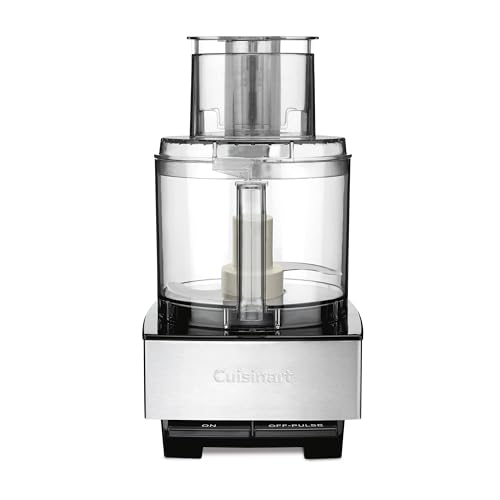
The 14-cup Cuisinart provides a large capacity for bigger puree projects and as a multi-tasking kitchen system. It includes a robust motor, a large feed tube, and multiple discs for shredding, slicing, and chopping, enabling smooth purees and flexible meal prep.
Who it’s best for: cooks who frequently prepare large puree batches and need a high-capacity processor. Why selected: the combination of power, capacity, and included accessories supports versatile puree work.
Caution: Larger footprint and higher cost mean this may be excessive for small kitchens or occasional puree use.
Buying Guide: How to Choose a Food Processor For Puree
- Capacity needs: For frequent purées, select larger bowls (8–14 cups) to reduce batch splitting. For small batches, 3–4 cup bowls are sufficient and space-saving.
- Motor power: Higher wattage (or peak watts) helps when processing dense foods like roasted vegetables or nuts into smooth purées. Consider at least 600–1000 watts for comfort.
- Blade design and discs: Reversible blades and included shredding/slicing discs can expand puree versatility, but ensure blades are sharp and easy to clean.
- Ease of use and cleanup: Look for dishwasher-safe parts, simple assembly (stack & snap or button controls), and features like internal scrapers to reduce manual scraping during processing.
- Batch size vs. storage: If you have limited counter space, smaller units with a compact footprint may suit better; for family-sized meals, a larger processor saves time.
- When to choose high-capacity models: For soups, baby foods, and sauces in bulk, high-capacity models with robust power provide a smoother texture with fewer passes.
- Safety features: Look for locking lids, stability bases, and automatic shut-offs if overheating is a concern for longer puree sessions.
FAQs
- What is the best capacity for purée every day? A 3–4 cup bowl is convenient for daily small batches, while 8–10 cups are better for larger puree projects without frequent refilling.
- Do I need a high-powered processor for smooth purées? Yes, especially for hard items or dense mixtures. A motor around 800–1000 watts generally delivers consistently smooth results.
- Is a dedicated smoothie/purée blender better than a food processor? For silky purees, a blender can achieve ultra-smooth textures more easily, but a processor handles solids and sauces quickly and can be more versatile for chopping and kneading dough.
- Can all food processors puree baby food? Most can puree baby food with appropriate batch size and smooth blade action; ensure you can achieve a lump-free texture if that’s a priority.
- Are dishwasher-safe parts worth it? Yes, they save time on cleanup and help maintain hygiene, especially for frequent puree tasks.
- What safety features should I look for? Look for a secure locking mechanism, non-slip feet, and an automatic shut-off or thermal protection to prevent overheating.