Best Gas and Electric Refrigerators for Campers: Top RV Fridges
Campers and RV lovers rely on reliable, flexible refrigeration that can run on gas, electricity, or both. The following selections are five high-capacity, multi-power RV refrigerators designed for off-grid and on-the-road living. Each unit blends quiet operation, durable construction, and versatile power options to meet the varied demands of mobile lifestyles.
| Product | Brand | Capacity | Power Options | Notes |
|---|---|---|---|---|
| RecPro RV Refrigerator 6.3 Cu. Ft. | RecPro | 6.3 cu ft | 110V/12V/Propane | |
| SMETA Propane Refrigerator 9.4 Cu.Ft | SMETA | 9.4 cu ft | 110V/Gas/Propane | |
| Smad 13.4 Cu.Ft Gas Refrigerator | Smad | 13.4 cu ft | Gas/110V/12V | |
| SMETA 2.1 Cu.ft Propane Fridge | SMETA | 2.1 cu ft | Propane/110V/12V | |
| Smad 3.5 Cu.Ft RV Refrigerator | Smad | 3.5 cu ft | Gas/110V/12V |
RecPro 6.3 Cu Ft Gas & Electric Refrigerator

This RecPro refrigerator offers flexibility with multiple power sources, including 110V/12V and propane gas. It is available in Glossy Black or Stainless Steel finishes, allowing seamless integration with a camper’s interior. For best results, start cooling 12 hours before loading. The unit’s dual compatibility supports both shore power and off-grid use, making it a practical choice for varied travel scenarios.
RecPro 6.3 Cu Ft Gas & Electric Refrigerator (Black)

This variant mirrors the stainless option with the same tri-power flexibility: 110V, 12V, or propane gas. The black finish provides a distinct, compact design suitable for RV interiors. As with the stainless model, allowing the fridge to chill for about 12 hours prior to loading helps ensure efficient cooling from the start of operation.
SMETA Propane Refrigerator 9.4 Cu.Ft

Smaller than a full kitchen refrigerator but larger than many RV models, this 9.4 cu ft unit uses propane and 110V power. It features the absorption cooling method, which operates quietly with no vibrations. Its comprehensive interior includes adjustable shelving, a dairy/egg section, a freezer compartment, and multiple door shelves for organization, making it well-suited for longer trips and off-grid living.
SMETA 2.1 Cu.Ft Propane Fridge

This compact unit provides 2.1 cu ft of storage and supports propane, 110V, and 12V power options. A top control panel enables easy adjustment of gas and electrical operations, and the door is designed for space efficiency with a reversible hinge. Ideal for smaller campers or as an additional backup fridge on longer trips.
Smad 3.5 Cu.Ft RV Refrigerator

This 3.5 cu ft Smad model supports three power modes: 12V, 110V, and LPG/propane. It is designed for small spaces and can function as either a refrigerator or a fridge-freezer combo depending on configuration. The lightweight build makes it suitable for travel trailers and compact campers while maintaining reliable cooling across power sources.
Smad 1.6 Cu.Ft Top-Open RV Refrigerator
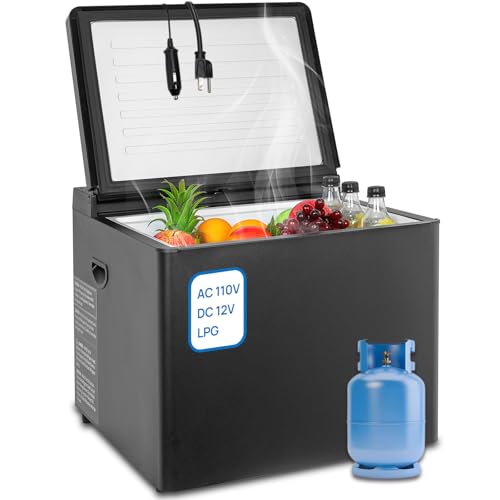
A compact, top-open design offers flexible placement in tight spots. With 1.6 cu ft capacity and 3-way operation (12V/110V/LPG), this unit is ideal for smaller campers, trucks, and off-grid adventures. Its streamlined dimensions help maximize cargo space without sacrificing essential cooling capabilities.
Buying Guide: Key Purchase Considerations
Choosing the right gas and electric refrigerator for a camper involves balancing capacity, power flexibility, installation space, and energy efficiency. The following considerations help compare options across brands and models:
- Power compatibility: Look for models that support 12V for vehicle power, 110V for shore power, and propane or LPG for off-grid use. Note that some absorptive units are quieter but may require longer pre-cooling times.
- Capacity vs. space: Larger units provide more storage but require more mounting space and potentially more weight. Measure your RV cavity carefully and compare with product dimensions and door clearance.
- Cooling method: Absorption refrigerators (gas-powered) are silent but may have slower cooling and higher propane consumption in some conditions. Compressor-based models cool quickly but typically rely on electrical power.
- Noise and vibration: Since camp interiors emphasize comfort, quieter models with low vibration are preferable for sleep areas and living spaces.
- Installation considerations: Some units are designed to replace standard home panels, while others require custom cabinetry or venting for propane exhaust. Ensure proper ventilation and secure mounting for travel conditions.
- Maintenance and safety: Ensure propane systems comply with RV safety standards, including proper gas connections and leak checks. Look for anti-tip features and level-foot adjustments to maintain performance and longevity.
- Availability of replacement parts: Check warranty terms and the availability of shelves, crisper drawers, and temperature controls to extend service life during extended trips.
Across these options, users face trade-offs between large capacity and energy efficiency, quiet operation and portability, and cost versus feature richness. For extended off-grid use, prioritizing propane compatibility and robust insulation can yield consistent performance. For frequent on-road travel with access to shore power, higher-efficiency compressor variants may offer better daily energy usage and easier maintenance. Always confirm fitment with your RV’s dimensions and electrical setup before purchasing.