Best Gas or Electric Pool Heaters for Above Ground Pools in 2026
Choosing the right heater for an above-ground pool depends on climate, pool size, energy costs, and whether you prefer gas or electric heating. This guide highlights top options from Amazon that are well-suited for above-ground setups, including traditional gas heaters and efficient electric heat pumps. Each choice balances performance, reliability, and ease of use to help you extend your swimming season without breaking the bank.
| Product | Type | Approx. Capacity | Notable Feature |
|---|---|---|---|
| Master Temp Gas Pool Heater | Gas | 250,000 BTU | High-heat capability with compact design |
| Hayward W3H150FDN Universal H-Series | Gas | 150,000 BTU | Durable heat exchanger and efficient hydraulics |
| Aquastrong Inverter Heat Pump | Electric Heat Pump | 75,000 BTU | Inverter tech with app control |
| Varpoolfaye 65,000 BTU Inverter Heat Pump | Electric Heat Pump | 65,000 BTU | Smart WiFi control and 220V operation |
| TURBRO 50,000 BTU Inverter Heat Pump (Beluga) | Electric Heat Pump | 50,000 BTU | High COP and energy-saving inverter tech |
Note: All products listed are suitable for above-ground pools, with several offering dual heating and cooling modes to maintain comfortable water temperatures year-round. Efficiency, installation requirements, and local codes should be reviewed before purchase.
Master Temp Gas Pool Heater 250,000 BTU

The Master Temp gas heater delivers high heating capacity in a compact unit, designed for efficient pool and spa warming. Its pre-mixed gas combustion technology promotes consistent heating and good fuel efficiency. The compact footprint makes it suitable for many above-ground installations, with a rotating digital display for flexible placement and monitoring.
Hayward W3H150FDN Universal H-Series 150,000 BTU

The Hayward Universal H-Series provides premium heating for in-ground and above-ground pools with a robust copper-nickel heat exchanger. It emphasizes corrosion resistance and efficient hydraulic design to minimize circulating pump run time, contributing to overall energy savings and long-term reliability in diverse water chemistries.
Aquastrong Inverter Swimming Pool Heat Pump, 75,000 BTU

This inverter heat pump uses full DC variable frequency technology to deliver up to 75,000 BTU with a 15.8 COP. It supports heating from 47–104°F and cooling from 47–83°F, making it a versatile option for extending the swim season while managing energy use. WiFi app control allows remote temperature settings and scheduling for convenience.
Varpoolfaye 65,000 BTU Inverter Heat Pump
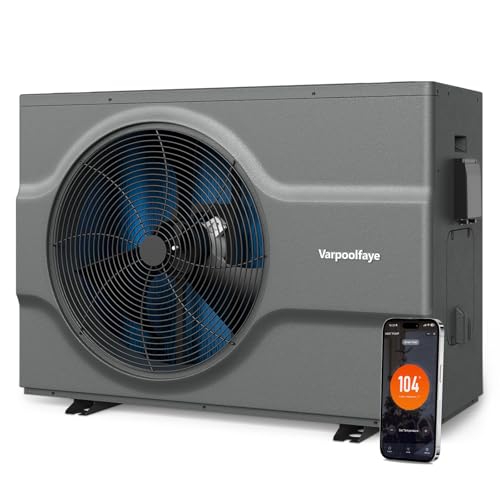
With 65,000 BTU and a COP of around 6.6, this inverter heat pump emphasizes energy efficiency and fast heating. It’s designed for both above-ground and in-ground pools, compatible with saltwater systems, and includes an intelligent touch control panel with a one-button heat function. A WiFi connection enables convenient remote management via a mobile app.
Varpoolfaye 16,000 BTU 120V Heat Pump

This compact 16,000 BTU model provides efficient heating and cooling for smaller above-ground pools up to about 5,000 gallons. It features WiFi control, a COP around 4.3, and a 120V supply, making it a practical option for budget-conscious setups or as a supplemental heater within a multi-device system.
TURBRO Beluga 50,000 BTU Inverter Heat Pump

The TURBRO Beluga series uses inverter technology to maintain a stable water temperature with up to 50,000 BTU and a COP up to 16.2. It emphasizes energy savings and quiet operation, making it suitable for smaller to mid-size above-ground pools, including saltwater configurations. A four-way valve supports easy switching between heating and cooling modes.
Buying Guide: Key Purchase Considerations
- Pool size and desired temperature range: Larger pools and cooler climates demand higher BTU output or efficient multi-stage heating to reach target temps quickly.
- Gas vs. electric: Gas heaters typically offer rapid heating and strong peak outputs but require venting and fuel costs. Electric heat pumps are highly energy-efficient, especially in moderate climates, and work best when electricity is affordable and ambient temperatures are not extreme.
- Climate and season length: In cooler areas, gas heaters may provide faster warm-up, while inverter heat pumps excel in extended shoulder seasons due to steady efficiency at varying temperatures.
- Energy efficiency and COP/EF ratings: Look for high COP (coefficient of performance) or EF (energy factor) to estimate long-term operating cost savings, particularly with inverter-driven models.
- Maintenance and water chemistry: Heat exchangers in gas and copper-nickel designs in gas heaters resist corrosion; ensure compatibility with your pool chemical balance and, if applicable, saltwater systems.
- Control features: WiFi/app control and programmable timers add convenience and can help optimize energy use by scheduling heating when electricity rates are lower or when the pool is scheduled for use.
- Installation considerations: Check clearances, venting requirements (for gas), electrical supply (voltage and amperage), and whether your pool equipment pad has adequate space for the model you choose.
- Cost of ownership: Compare upfront unit price, installation costs, fuel/electricity costs, and expected maintenance when deciding between gas and electric options.
To balance performance and efficiency for an above-ground pool, consider models that fit your climate, pool size, and energy preferences. Gas heaters deliver rapid warmth for larger or faster warm-ups, while electric heat pumps offer year-round efficiency with lower operating costs in temperate environments. The options listed above provide a spectrum of capacities and control features to help you choose the best heater for your pool season needs.