Best Gas Instant Water Heaters for on-Demand Hot Water
Gas-powered tankless water heaters deliver instant hot water without keeping a bulky tank full of heated water. This guide highlights top models that balance flow rate, energy efficiency, and safety features for American homes. Each option below is evaluated on its capacity, stability, and reliability, with practical scenarios to help you choose the right unit for your kitchen, bathroom, and living spaces.
Summary at-a-glance: the table below compares five gas-on-demand models with varying capacities, from compact 3.6 GPM units suitable for small homes to higher-flow options that support multiple fixtures simultaneously. Consider installation requirements, venting needs, and the climate in your area when selecting a unit.
| Product | Brand | Max Flow (GPM) | BTU | |
|---|---|---|---|---|
| Ranein Natural Gas Tankless Water Heater | Ranein | 3.6 | 80,000 | Indoor, 2–3 points use, multiple modes |
| 2025 GEN II Ranein Natural Gas Tankless | Ranein | 3.6 | 80,000 | LED control panel, indoor, stable temp |
| RIWORY 102000 BTU Tankless Water Heater | RIWORY | 4.3 | 102,000 | 3–4 points, winter protection |
| ThermoMate CZ422NG | thermomate | 5.0 | 113,000 | Multi-point heating, high efficiency |
| APUS Tankless Water Heater Propane | APUS | 4.42 | 95,000 | Smart display, precise temp control |
Ranein Natural Gas Tankless Water Heater Amazon

The Ranein model delivers up to 80,000 BTU and 3.6 GPM, supporting continuous hot water for two to three outlets such as a bathroom, kitchen, and a bar area. It eliminates preheating time typical of tank-style heaters, providing hot water on demand. Designed with convenience in mind, the unit includes multiple modes for versatile use, including dish, fruit, elderly, and infant temperature presets (degrees Fahrenheit).
2025 GEN II Ranein Natural Gas Tankless Water Heater Amazon

This GEN II version maintains a 3.6 GPM flow and 80,000 BTU output for reliable on-demand hot water across 2–3 outlets. It features an LED temperature control panel for easy adjustments and enhanced indoor setup. The system emphasizes steady temperatures with minimal fluctuation, benefiting showers and infant bathing, while signaling potential savings by reducing standby energy losses compared with traditional storage tanks.
RIWORY 102000 BTU Tankless Water Heater Amazon

RIWORY offers up to 4.3 GPM and 102,000 BTU, enabling 3–4 water points to run simultaneously. It incorporates four-stage intelligent combustion technology to adapt heat output across seasons, helping prevent cold-water shocks. Anti-freeze protections and winter-specific safeguards reduce the risk of freezing, making it suitable for colder climates and bathrooms, kitchens, and laundry areas where steady hot water is critical.
ThermoMate CZ422NG Natural Gas Tankless Water Heater Amazon

ThermoMate CZ422NG provides up to 5 GPM and 113,000 BTU for whole-house performance. It uses advanced sensors to adjust heating power rapidly, maintaining water temperature with high precision (±1°F). Eight protections—boil-dry, freeze, flame-out, overheating, pipe blockage, high-temperature lock, excessive air pressure, and more—enhance safety and reliability in busy homes. The design emphasizes copper heat exchangers for efficiency and longevity.
APUS Tankless Water Heater Propane Gas Amazon
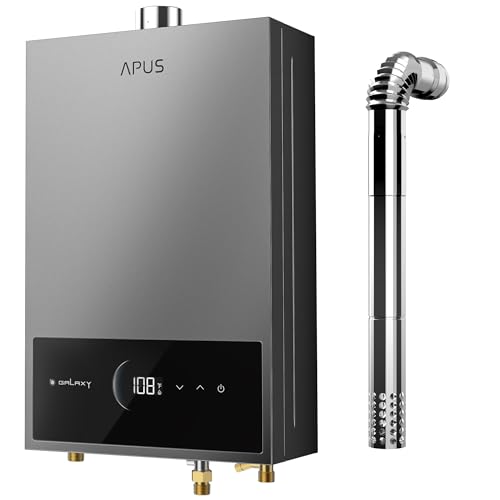
APUS propane tankless water heater delivers 4.42 GPM and 95,000 BTU with precise digital control. It uses smart CPU technology to maintain water temperatures within ±1°F of the desired setting, even with multiple outlets running. The unit emphasizes high thermal efficiency through oxygen-free copper heat exchangers and segmented combustion technology, offering improved energy savings and stable performance for two showers plus a sink or similar configurations.
Buying Guide: Key Purchase Considerations
- Flow rate versus household needs: Assess simultaneous hot-water demands. Homes with multiple bathrooms typically benefit from units in the 4–5 GPM range, while smaller setups may be comfortable with 3.5 GPM models.
- Gas type and venting: Ensure compatibility with your fuel source (natural gas or propane) and verify venting requirements. Indoor installations often require proper venting and clearance to combustibles.
- BTU output and efficiency: Higher BTU can deliver more hot water quickly but may require robust gas supply and venting. Look for models with high thermal efficiency and anti-waste features to reduce energy costs.
- Temperature control and stability: Models with LED panels, smart displays, or precise sensors help maintain steady temperatures and minimize cold-water shocks, enhancing comfort for showers and baths.
- Safety protections: Boil-dry, flame-out, freeze protection, high-temperature locks, and anti-freeze features are important in preventing damage and ensuring safe operation in different climates.
- Installation considerations: Indoor vs. outdoor placement, venting type, and space requirements influence cost and month-to-month performance. Some units include accessories or offer bundled vent pipes.
- Maintenance and longevity: Copper heat exchangers and corrosion-resistant materials typically offer longer service life. Consider warranties and availability of replacement parts in your region.
- Weather and climate impact: In colder climates, anti-freeze and frost protection features become more valuable to prevent freezing and maintain consistent hot water.
These products exemplify a range of on-demand options from compact 3.6 GPM units to higher-capacity 5 GPM models. When evaluating, align capacity with your home’s hot-water schedule, ensure proper venting, and prioritize units with reliable temperature stability and safety protections for year-round comfort.