Best Grinders for Filter Coffee: Top Machines for Fresh Grounds
Answering the search query directly: these grinders are best for filter coffee enthusiasts who want consistent grind size, flavor preservation, and reliable performance. This guide highlights five top picks, each suited to different brewing styles and budgets. Whether you prefer a quiet electric burr grinder, a precise conical burr, or a portable manual option, there’s a fit here. The table below gives a quick snapshot of who each product is best for and why.
| Product | Best For | Why It Stands Out |
|---|---|---|
| Cuisinart Coffee Grinder (DBM-8P1) | Home espresso and drip users | 8 oz hopper, 18-position grind selector, easy cleaning |
| Ollygrin Burr Grinder | Customization seekers | 30 grind settings, slow grinding with good flavor preservation |
| OXO Brew Conical Burr Grinder | Balanced, repeatable grinds | 15 grind settings plus micro adjustments, memory setting |
| Hamilton Beach Fresh Grind | Budget-conscious daily use | Low-cost, removable chamber, handles up to 12 cups |
| CEVING Mini Manual Grinder | Travelers and espresso fans | 40 external settings, compact, ceramic burrs |
Cuisinart Coffee Grinder DBM-8P1
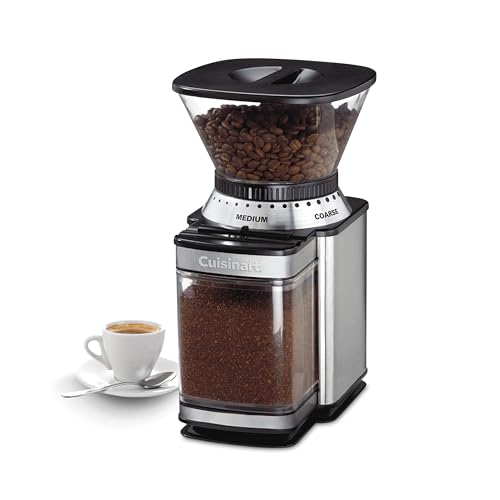
The Cuisinart DBM-8P1 delivers a consistent grind across 18 settings, from ultra-fine to extra-coarse. Its 8-ounce hopper and removable grind chamber support straightforward cleaning and quick refills, making it a practical choice for daily filter brews and mid-size households. Best for: home brewers who want reliable, repeatable grounds with easy maintenance. Caution: the 18-position dial is convenient but can be slow to adjust for very specific recipes.
Ollygrin Burr Coffee Grinder
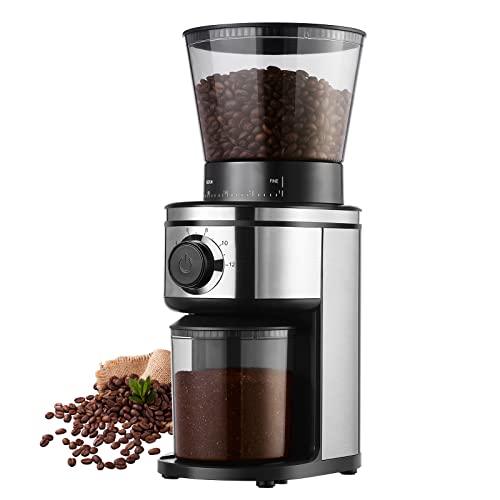
The Ollygrin grinder uses a 40 mm stainless steel conical burr set and 30 precise grind settings, suitable for everything from espresso to French press. It features a slow-grinding gear motor to minimize heat buildup and preserve flavor. Best for: users who want customizable grind profiles and a device that reduces heat during grinding. Limitation: higher price than basic models but justified by flavor retention and precision.
OXO Brew Conical Burr Grinder

The OXO grinder features stainless steel conical burrs and 15 grind settings plus micro-adjustments, enabling precise customization for any brew method, including pour-over and drip. It remembers your last setting for quick grinding. Best for: those who want consistent performance with easy memory recall. Caution: some users may prefer more grind steps for ultra-fine espresso adjustments.
Hamilton Beach Fresh Grind

The Hamilton Beach Fresh Grind is a budget-friendly option with a removable grinding bowl and stainless steel base. It can handle grinding enough beans for up to 12 cups, making it suitable for small to medium households. Best for: cost-conscious buyers who want a simple, easy-clean grinder. Limitation: fewer grind settings and basic performance compared with higher-end burr models.
CEVING Mini Manual Grinder

The CEVING manual grinder offers 40 external settings with a compact 325 g body and ceramic burrs for cooler grinding. Ideal for travel, camping, or office use where power is unavailable. Best for: espresso enthusiasts and travelers who want full control without electricity. Caution: manual grinding can be slower and requires effort, not ideal for large quantities.
Buying Guide
What grind size matters for filter coffee?
Filter coffee generally uses a medium grind for balanced extraction. Look for grinders offering adjustable burrs and at least 15–30 settings to fine-tune for your specific beans and brewer.
Electric vs manual: which should you choose?
Electric burr grinders offer consistency and speed, suitable for daily use. Manual grinders are portable and simple, ideal for travel or occasional brewing. Consider your brewing frequency, travel needs, and tolerance for manual effort.
How important is burr type?
Conical burrs tend to produce more uniform grounds and less heat than blade grinders. For reliable filter coffee, choose a grinder with burrs (conical or flat) rather than blades.
Maintenance and cleaning considerations
Removable grind chambers and hopper ease cleaning. Avoid models with hard-to-clean interiors if you brew daily. Regularly wipe surfaces and empty the chamber to prevent stale odors from affecting flavor.
What about flavor preservation?
Grinders with slower grinding or gear-reduction motors tend to generate less heat, preserving aroma and flavor. This is especially important for single-origin or lightly roasted beans where flavor nuances matter.
Size, capacity, and placement
Consider the hopper size and grind chamber capacity to match your brewing schedule. If counter space is limited, a compact or manual model might be best, while larger families can benefit from bigger electric grinders.
Quick tips for choosing
- Pick a model with at least 15 grind settings for broad compatibility with pour-over, drip, and French press.
- Choose a burr grinder over a blade grinder for consistent particle size.
- Prioritize ease of cleaning and user-friendly controls.
FAQ
- What grind size is best for filter coffee?
- Are conical burr grinders better than flat burrs for filter coffee?
- Is a higher number of grind settings always better?
- Should I choose a manual grinder if I mostly brew at home?
- How often should I clean my grinder?
A medium grind is typically ideal for most paper-filter methods like drip coffee and pour-over. Adjust slightly for your brewer’s specific guidance.
Both can produce consistent grounds; conical burrs often generate less heat and can be gentler on flavors, which is beneficial for nuanced beans.
More settings offer finer control, but reliability and build quality matter. Choose a model with robust burrs and stable adjustments.
If you value portability or a quieter option and don’t mind manual effort, a manual grinder can be practical. For frequent use, an electric burr grinder is usually more convenient.
Wipe and clean the burrs and chamber every few weeks or when you switch beans. Regular cleaning prevents stale flavors from affecting new brews.