Best Hand Crank Dough Sheeters for Home and Professional Bakers
The best hand crank dough sheeter options deliver consistent thickness, compact storage, and sturdy construction for home kitchens and bakeries alike. This guide highlights top picks for different needs—from small apartment setups to busy shops—so you can choose the right tool for croissants, pizza dough, pastries, or pasta sheets. Each entry covers who it suits best, why it’s chosen, and a practical limitation to consider before buying.
| Product | Best For | Key Advantage |
|---|---|---|
| HESMAX 12″ Foldable Manual Dough Sheeter | Home bakers with limited space | Foldable design for compact storage |
| Aobole 40.6″ Foldable Manual Dough Sheeter | Bakeries and restaurants with variable workloads | Wide working area and fine thickness control |
| UNGAII Folding Dough Sheeter (15.5″) | Small cafes or mid-size kitchens | Two rolling boards, strong corrosion-resistant build |
| UNGAII Folding Dough Sheeter (12″) | Compact spaces, occasional large batches | Two boards and portable foldable design |
| ATDSETR Folding Dough Rolling Machine | Budget-conscious bakers needing two rolling surfaces | Two rolling boards, adjustable thickness 0–17.5 mm |
HESMAX 12″ Foldable Manual Dough Sheeter

This compact dough sheeter uses a hand-crank design to roll dough evenly with minimal effort, making it ideal for home bakers and small kitchens. The foldable frame saves space when not in use, and the food-grade 304 stainless steel construction supports easy cleaning and sanitation. Best for: everyday home pizza, croissant prep, and small-batch pastries where storage space is at a premium. Caution: folding mechanisms should be dry and dry-cleaned after use to prevent rust over time.
Aobole 40.6″ Foldable Manual Dough Sheeter

With a generous working area and precise thickness control from 0 to 25 mm, this model supports consistent crusts and pastry sheets across pizzas, croissants, and puff pastries. Built with heavy-duty stainless steel and a reinforced frame, it suits busy bakeries and home kitchens that need reliable performance. Best for: medium to large batches, restaurant prep, and pastry shops that require consistent sheet thickness. Caution: folding and unfolding should be done on a clean, flat surface to avoid misalignment.
UNGAII Folding Dough Sheeter (15.5″)
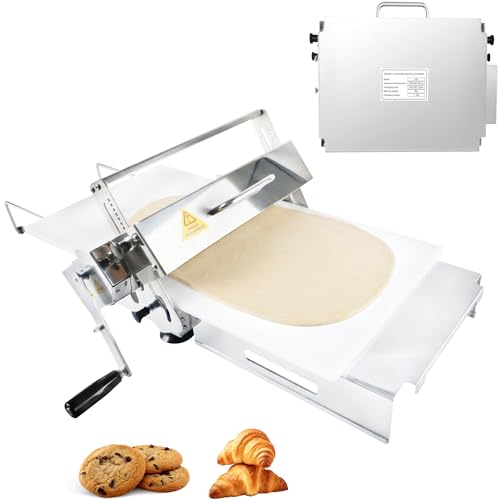
Featuring foldable design and two rolling boards, this model emphasizes ergonomic hand crank operation and food-grade stainless steel construction for safety and longevity. Best for: bakeries upgrading from manual rolling to sheeted dough with limited workspace. Limitation: overall surface area is smaller than some 40-inch variants, which may slow large-volume runs.
UNGAII Folding Dough Sheeter (12″)
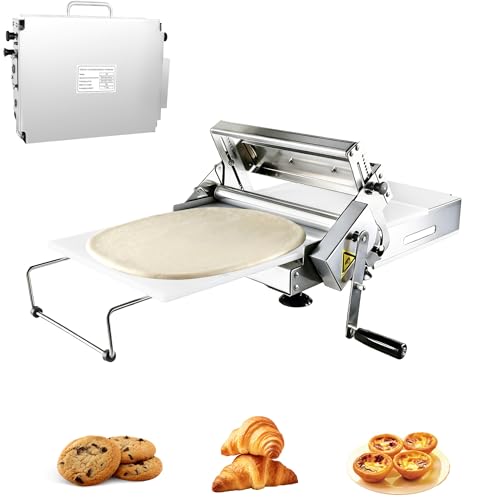
This compact 12-inch option prioritizes portability while delivering even rolling with an ergonomic hand crank. Best for: small kitchens or pop-up businesses needing a lightweight, easily stowed machine. Caution: smaller work area may require multiple passes for thicker dough sheets.
ATDSETR Folding Dough Rolling Machine
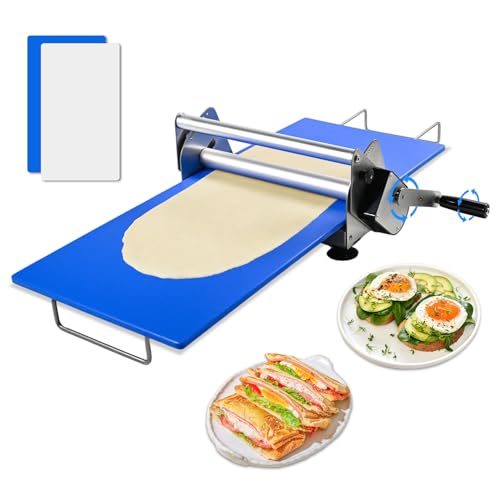
Two rolling boards with a 0–17.5 mm thickness range make this model flexible for croissants, pizza dough, and pastry sheets. It emphasizes a stable base with non-slip feet to reduce movement during operation. Best for: entries into laminated dough and cookie dough work in home or bakery settings. Limitation: some users may prefer higher-end models for very large dough runs.
Buying Guide
What to consider when choosing a hand crank dough sheeter
- Thickness range and settings: Look for models offering clear, repeatable adjustments to achieve consistent sheets, especially for pizza dough or puff pastry.
- Foldability and storage space: If you have limited room, prioritize foldable frames and compact footprints without sacrificing stability.
- Material and cleanliness: Food-grade stainless steel surfaces resist corrosion and simplify cleaning, which is essential for frequent use.
- Work surface size: Bigger work areas reduce the number of passes needed for large dough sheets; smaller models suit home use or light duties.
- Stability and base design: Non-slip feet and sturdy frames keep dough from shifting, improving accuracy and safety.
- Portability vs. capacity: Decide whether you need a lightweight, portable unit or a larger machine capable of marathon bakery sessions.
Practical buying questions
- Is a foldable dough sheeter better for small kitchens than a fixed-size model? Yes, if storage is a priority and you still need a reliable sheet for regular tasks.
- Do I need two rolling boards? Some models include two boards for smoother operation and alternative textures; this is helpful for laminated doughs or multiple dough types.
- Will a 12″ model suffice for home pizza or pastry sheets? For casual or occasional use, a 12″ model can be adequate; larger models speed up busy days.
- Are there safety concerns with manual crank operation? Use proper hand positioning and avoid forcing the crank to prevent jams or injuries.
FAQ
- What is the main advantage of a hand crank dough sheeter? It delivers consistent dough sheets without electricity and is generally more compact than powered machines.
- Can these machines handle croissant dough? Yes, many models support lamination and dough thinning suitable for croissants and pastries.
- Are there maintenance tips to extend life? Clean surfaces after use, dry thoroughly, and store folded to prevent rust on moving parts.
- Do foldable models compromise on stability? Reputable models provide stable bases; always ensure the base is flat and locked during operation.
- Which model is best for a small bakery? A larger foldable option with wide working area, such as the 40.6″ model, provides higher throughput while still folding for storage.
- Can I use these for pasta sheets? Some models double as pasta rollers; verify thickness settings and compatibility with dough types before use.