Best Hot Water Heater Purchase: Top Picks for Quick, Efficient Heating
Choosing the right hot water heater involves balancing space, power needs, and reliability. The following selections highlight compact point‑of‑use options, efficient tankless models, and small capacity solutions suitable for kitchens, bathrooms, offices, or RVs. This guide compares installation needs, energy use, and performance so you can pick a unit that matches your daily hot water needs.
| Product | Brand | Type | Key spec | Notable feature |
|---|---|---|---|---|
| Rheem 3.5kW Point‑Of‑Use | Rheem | Electric point‑of‑use | 120V, 30A | Compact, space‑saving design |
| Immersion Water Heater, 2000W | ROKAFU | Immersion, portable | 120V | Fast heating for small volumes |
| EcoSmart ECO 11 | EcoSmart | Electric tankless | 13 kW (240V) | Self‑modulating, space saving |
| GE 10 Gallon Plug‑In | GE | Electric tank | 120V | Simple plug‑in versatility |
| Orbek 14kW Tankless | Orbek | Electric tankless | 240V | High flow for multiple points of use |
Rheem 3.5kW Point‑Of‑Use Thermostatic Tankless Electric Water Heater

ELECTRICAL REQUIREMENTS: 1 x 30 AMP Double Pole Breaker Required. Product installation hard wired to 120 volts requiring a 30-amp breaker. This unit is designed for low‑flow point‑of‑use applications, making it ideal for bathrooms, offices, or small kitchens where space is limited. The compact size is up to 98% smaller than standard electric water heaters, saving valuable space. Thermostatic temperature controls adjust in 1‑degree increments from 80 to 140 degrees Fahrenheit for on‑demand hot water, providing consistent performance when a quick shower or faucet is needed.
Immersion Water Heater Electric, Fast Heating Portable Water Heater

ROKAFU immersion heater uses a 2000W high‑power design for rapid heating, up to 167°F (75°C), suitable for 5–10 gallons of water. It features a stainless steel guard to prevent contact with the heating element and includes auto shut‑off against dry boiling and overheating. For safety, unplug after use and avoid continuous operation beyond a few hours. Fully submerge the heater, plug into a grounded 120V outlet, and monitor with a power indicator light. Not ideal for large volumes, but excellent for quick, portable heating tasks.
Orbek 14kW Tankless Water Heater Electric

Orbek’s 14kW model provides on‑demand hot water with up to 3.38 GPM for 2–3 points of use. It requires a 240V/60A two‑pole breaker, with 6 AWG wiring and 1/2″ NPT water connections. The note highlights that the total household circuit should be capable of handling around 150A to ensure stable operation. The unit emphasizes high energy efficiency by separating water and electricity to minimize scale and corrosion, delivering hot water quickly and consistently.
EcoSmart ECO 11 Electric Tankless Water Heater

EcoSmart ECO 11 is a compact 13 kW, 240‑volt tankless heater with patented self‑modulating technology. It continuously monitors water temperature and adjusts flow to keep temperature within 1 degree of the set point. Amperage draw is 54 A, and the unit is designed to be space‑saving, with dimensions of approximately 11.5 x 8 x 3.75 inches. It emphasizes energy efficiency by heating water only when needed and is suitable for installation on a wall or at the point of use, contributing to lower energy use and a smaller footprint.
ThermoMate Tankless Electric 3500W

Tankless unit with 3500W heating capability is designed for under or over‑sink installation. It uses a self‑modulating power system that automatically adjusts energy use based on water flow and temperature, potentially reducing energy consumption by up to 50%. The device is hard wired (no plug) and runs on 110–120V input. A cast aluminum heating element with SUS 304 stainless steel water tube provides durability and reduces mineral buildup, making it a practical option for compact spaces and everyday use.
Feelrogast Electric Tank Water Heater – 8 Gallons

Feelrogast offers an 8‑gallon under‑sink electric tank, ideal for RVs, campers, and small kitchens. It heats water rapidly and provides adjustable temperature from 86°F to 167°F. The unit emphasizes safety with electrical insulation on inlets and outlets, leakage protection, and robust insulation. While compact and versatile, it’s best suited for lower daily hot water demand and should be wired according to its electrical requirements and installation guidelines.
GE Appliances 10 Gallon Plug‑In Electric Water Heater
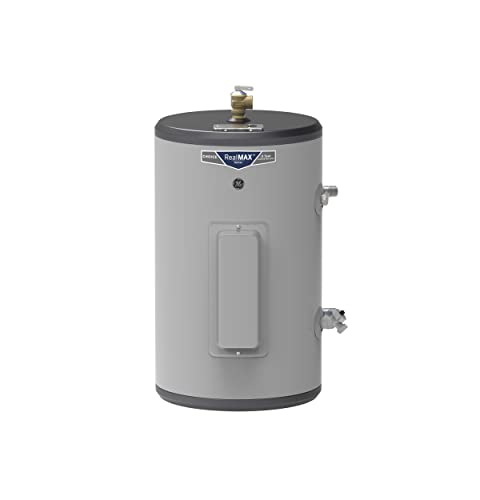
GE’s 10 gallon model offers easy installation in kitchens, bathrooms, RVs, or cabins. It uses standard 3/4‑inch NPT connections and 120‑V supply, emphasizing compact design and flexibility for spaces where a fixed tank is not feasible. The unit is backed by an 8‑year limited warranty on tank and parts, plus a separate labor warranty, providing a level of long‑term assurance for smaller households or occasional use scenarios.
Buying Guide: Key Purchase Considerations
- Hot water demand and flow rate: For two or more points of use simultaneously, consider higher GPM ratings or tankless models designed for multi‑point output. Tankless heaters scale with distance and pipe sizing, which affects peak flow.
- Power requirements and electrical capacity: Many point‑of‑use units require dedicated circuits (e.g., 30A, 60A) and 240V power. Check your electrical panel capacity and available breakers before purchasing.
- Space and installation: Compact models are ideal where space is limited. Wall‑mountable or under‑sink units reduce footprint, while traditional tanks require more room and proper venting (where applicable).
- Energy efficiency: Self‑modulating or on‑demand heaters reduce energy use by heating water only when needed. Consider long‑term operating costs and potential utility savings.
- Durability and materials: Stainless steel elements, durable housing, and corrosion resistance extend lifespan, especially in mineral‑rich water environments.
- Safety features: Look for automatic shut‑off, dry‑boil protection, and insulation to prevent burns or leaks. Regulations and certifications (ETL, CE, ROHS) indicate compliance with safety standards.
- Warranty and serviceability: Longer warranties and serviceable parts reduce ownership risk. Check whether replacements or components are readily available in your region.
- Water chemistry: Hard water can cause mineral buildup. Self‑modulating and high‑efficiency designs may help mitigate mineral deposition, but occasional descaling is recommended.
- Installation location: Point‑of‑use units are great for bathrooms or offices, while whole‑house solutions are better for families with higher hot water needs. Consider proximity to fixtures to minimize heat loss in pipes.
- Budget vs. long‑term savings: Upfront costs vary widely; weigh initial investment against utility savings, space savings, and the convenience of on‑demand hot water.