Best Humidifiers for Acoustic Guitars: Protect Your Instrument Year-Round
Acoustic guitars are sensitive to changes in humidity, which can cause warping, cracking, and tone changes. A reliable humidification solution helps maintain a steady environment inside the guitar case. Below is a curated guide to five well-regarded humidifier systems, each chosen for consistency, ease of use, and proven results with acoustic instruments.
| Product | Brand |
|---|---|
| D’Addario Humidipak Maintain Kit | D’Addario |
| Humitar ONE-Acoustic Humidifier & Hygrometer | MusicNomad |
| Guitar Humidifier Pro | D’Addario |
| Oasis OH-5 Humidifier | Oasis |
| Humitar Acoustic Humidifier MN300 | MusicNomad |
Introduction to the selected products: These options cover maintenance-free systems, sponge-based humidifiers, and sensor-equipped models. They share a focus on keeping your guitar within the ideal humidity range, typically around 45–50% relative humidity, to minimize the risk of wood damage and tonal changes. Each product below includes a brief overview and how it helps protect acoustics during dry seasons or in climates with significant RH swings.
D’Addario Humidipak Maintain Kit
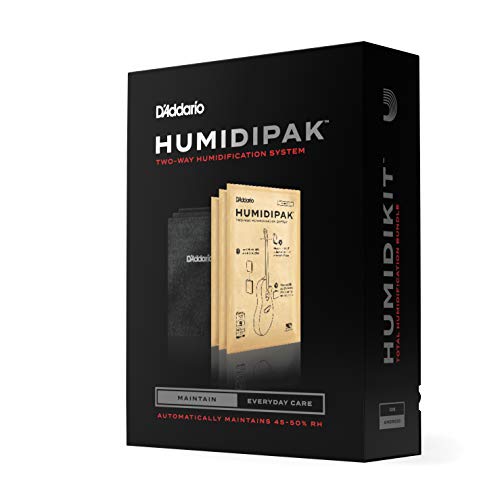
The Humidipak system provides automatic, two-way humidity control without maintenance. It includes pouches and humidity packs designed to stabilize humidity within the guitar case. By sustaining a constant RH around 45–50%, it aims to prevent warping, cracking, and other humidity-related issues. This system is ideal for players who want a set-and-forget solution that consistently protects the guitar’s structure and tone over time.
MusicNomad Humitar ONE-Acoustic Humidifier

This all-in-one unit combines a humidifier with a humidity and temperature monitor. The Humitar ONE uses the Humid-i-Bar reusable sponge, which holds water and reduces the frequency of checks. It provides readings every 20 seconds on an LCD display, helping guardians keep the instrument in a stable environment while minimizing maintenance and setup time.
D’Addario Humidifier Pro
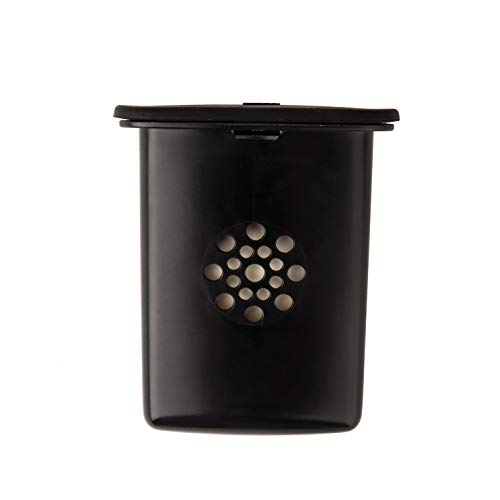
The Humidifier Pro uses a two-way humidity system to maintain 45–50% RH. It suspends from the guitar’s strings and includes a sponge component for moisture transfer. It’s designed for easy setup: moisten the sponge, check readings with the included hygrometer, and install the device in the soundhole. The design aims to prevent dry air damage and preserve tone and playability through regular humidity management.
D’Addario Guitar Humidifier (Non-Drip)

This non-drip soundhole humidifier is designed to fit acoustic guitar soundholes and maintain humidity inside the guitar. It suspends from the strings, never touching the guitar body, helping to avoid body contact and potential finish issues while delivering steady moisture delivery to the interior wood.
MusicNomad Humitar Acoustic Humidifier MN300
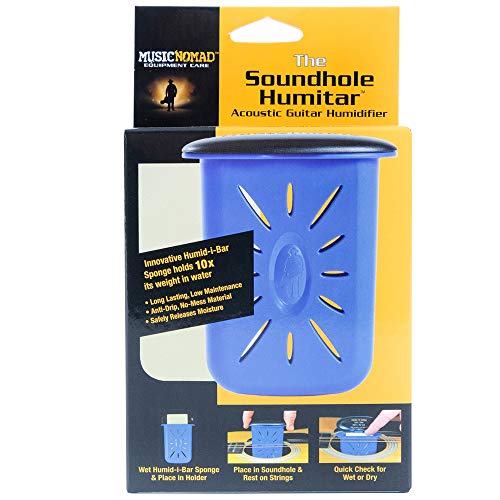
The MN300 Humitar model focuses on long-lasting, low-maintenance humidity control. It distributes moisture evenly to prevent warping and cracking, using the Humid-i-Bar sponge that holds significant water capacity and resists dripping. It’s designed to be a reliable choice for players who want consistent protection with minimal upkeep.
Buying Guide
Key purchase considerations help determine the best fit for your guitar and environment:
- Humidity range targets: Most acoustic guitars thrive around 45–50% relative humidity. Some systems offer a wider 45–65% recommended range; consider your climate when choosing.
- Maintenance needs: Maintenance-free options (like Humidipak) appeal to players wanting minimal upkeep, while sponge-based or monitor-equipped units require occasional filling and readings.
- Installation method: Soundhole-mounted humidifiers are common for acoustics, with some models suspending from the strings. Ensure compatibility with your guitar’s soundhole size and string gauge.
- Monitoring capabilities: Built-in hygrometers, LCD displays, and remote indicators help you track humidity levels. A separate hygrometer is an alternative if the device lacks a built-in sensor.
- Two-way vs single-way systems: Two-way systems actively manage moisture in both directions (adding and removing humidity) to maintain a consistent RH, whereas single-direction approaches may require more manual checks.
- Material and finish considerations: Some systems rely on sponge or gel packs; others use plastic housings and non-drip designs. Check for any potential contact with guitar finishes or interior bracing.
- Maintenance frequency: Plan for refills, sponge replacement, and sensor calibration if applicable. Readiness to perform light upkeep can influence long-term satisfaction.
- Portability and storage: For players traveling with guitars, consider compact units or easy-to-store packs that fit inside various cases without adding bulk.
- Price vs value: Higher upfront costs may be offset by longer intervals between replacements or reduced risk of costly guitar repairs. Weigh the total cost of ownership against your playing habits and climate.
In evaluating these options, consider your climate, the age and construction of your guitar, and how often you play and travel with your instrument. A reliable humidification strategy should be part of your preventative maintenance routine, helping preserve your guitar’s structural integrity and tonal stability over time.