Best Ice Maker Hose Connectors for Secure, Easy Fridge Water Lines
Whether you’re wiring a new fridge or replacing an aging line, the right ice maker hose connector ensures leak-free water flow and easy installation. This guide highlights five well-matched options, designed for different setups and buyer needs. Best for homeowners upgrading a kitchen, renters replacing worn lines, or DIY enthusiasts who want durable, corrosion‑resistant fittings.
Summary table of selected products:
| Product | Best For | Key Benefit |
|---|---|---|
| Certified Appliance Accessories Ice Maker Water Line, 5 Feet | General use, stainless steel braided | Durable stainless braid, secure 1/4″ FCM fittings |
| Ice Maker Water Line Brass Compression Tube Fitting, 1/4” OD x 1/4” OD (2) | Copper/plastic tubing systems | Two fittings, easy grip hex heads |
| JBT 1/4″ OD Quick Connect Push In Fittings (24-Pack) | Quick installs, no tools | Push-to-connect versatility for 1/4″ tubing |
| UPGRADE Ice Maker Water Connector Line by Beaquicy – 6 FT | Longer runs, high pressure | 304 stainless steel, 290 psi rating |
| Ice Maker Fridge Quick Installation Kit with 25′ Tubing | Complete install kits | Includes valve, tee, and long tubing |
Certified Appliance Accessories Ice Maker Water Line, 5 Feet
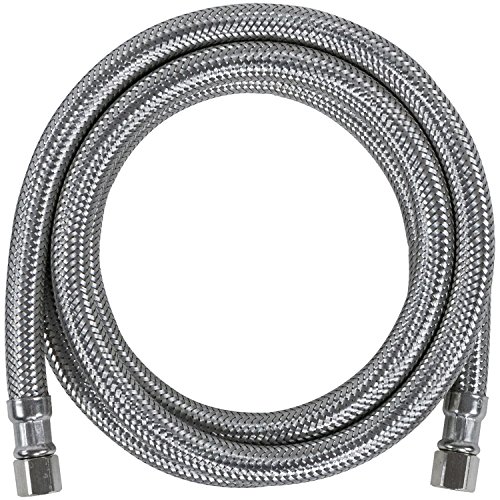
Product type and fittings: 1/4″ FCM (Female Compression) x 1/4″ FCM stainless steel fittings with washers for secure connection. Braided premium stainless steel resists punctures, crimping, and kinking. Best for: households needing a reliable, corrosion‑resistant line with minimal maintenance. Selected for its durable braid and standardized 1/4″ compression ends. Caution: ensure the line length fits your appliance distance to the supply shutoff to avoid strain on fittings.
Ice Maker Water Line Brass Compression Tube Fitting, 1/4” OD x 1/4” OD (2)

Features: Pack of two 1/4” OD x 1/4” OD tube fittings. Safe for copper or plastic tubing. Hex heads on both ends provide excellent grip during installation. Best for: projects needing flexible, easy-to-grip adapters that work with common copper or plastic lines. Limitation: brass fittings can require careful tightening to avoid overtightening and possible leaks; check clearance around the connection point.
JBT 1/4″ OD Quick Connect Push in to Connect Water Tube Fitting

Features: No tools required, easy to use. Quick connect push tee 1/4″ OD, standard for water filter systems using 1/4″ OD tubing. Material: polypropylene tubing; non-toxic and tasteless. Best for: quick, tool-free installations in DIY setups or retrofit jobs. Caution: all quick-connect fittings rely on proper insertion depth to seal; ensure tubing is fully seated to avoid leaks.
UPGRADE Ice Maker Water Connector Line by Beaquicy – 6 FT

Features: 6-foot 304 stainless steel ice maker connector with 1/4″ compression ends. PVC core, braided nylon reinforcement, and 304 stainless steel exterior resist rust and kinking. Best for: longer runs where bend radius or distance is a factor; rated up to 290 psi and burst strength up to 1500 psi. Caution: ensure total length accounts for both connections and any bends to prevent kinking.
Ice Maker Fridge Quick Installation Kit with 25′ Tubing

Features: 25′ white LLDPE tubing, brass universal adapter tee with 1/4″ shut-off valve, and 1/4″ quick connect adapter. NSF certified for potable water. Best for: complete installation projects where a long, flexible line with a shut-off valve is needed. Limitation: tubing material is different from metal braided lines, which may affect durability in high‑traffic areas or potential abrasion points.
Buying Guide: Key Purchase Considerations
- Fitting type and size: Most ice maker connections use 1/4″ compression or 1/4″ OD fittings. Verify the line’s end type (compression vs push-in) and the tubing material (metal braided vs plastic) to ensure compatibility with your fridge and supply valve.
- Length and routing: Measure the distance from the water supply to the appliance. Shorter lines are cleaner but less flexible; longer lines reduce tension but risk bending. Consider kits with longer hoses if mounting space is extended.
- Durability and materials: Stainless steel braided hoses resist punctures and kinking and are suitable for higher pressure; brass fittings are corrosion resistant and easy to grip; plastic or polypropylene components install quickly but may be less durable in some environments.
- Pressure tolerance: Look for hoses rated for typical residential cold-water pressure (often around 50–80 psi) and higher if your system fluctuates. Higher burst ratings offer extra safety margin.
- Installation tools and ease: Quick-connect or push-in fittings reduce setup time but require ensuring full insertion. Compression fittings require proper tightening with wrenches to avoid leaks.
- Safety and water quality: NSF certification on tubing indicates suitability for potable water. Avoid materials with odor or taste impacts when the water comes in contact with the line.
- Maintenance and replacement: Braided hoses generally last longer and resist wear from regular use or panel movement. Plan for periodic checks for leaks or corrosion around fittings.
Frequently Asked Questions
- What is the standard size for ice maker hoses? Answer: Most use 1/4″ compression or 1/4″ OD fittings on both ends, but always verify both ends before purchasing.
- Are stainless steel braided hoses better than plastic ones? Answer: Yes for durability and resistance to kinks, punctures, and leaks in typical kitchen environments.
- Do I need a shut-off valve when installing a new ice maker line? Answer: A shut-off valve at the supply end helps quickly stop water flow during maintenance or leaks.
- Can I install an ice maker line myself? Answer: Many kits are designed for DIY installation, especially those with push-in fittings or clear instruction sets. Follow all manufacturer safety guidelines.
- How long should an ice maker hose last? Answer: Durability depends on material and usage, but braided stainless steel lines generally offer longer service life in busy kitchens.
- What should I do if I notice a leak? Answer: Immediately shut off the supply valve and inspect fittings for tightness and seating. If the leak persists, replace the affected section.