Best Indoor Electric Tankless Water Heaters for Your Home
When selecting an indoor electric tankless water heater, homeowners prioritize reliable hot water, energy efficiency, and installation practicality. The models below offer strong performance across varying flows and household needs, from compact point-of-use setups to whole-house systems. This guide highlights five top choices with notable features, helping you compare thermostatic control, self-modulating technology, and power requirements. Read on to identify which unit aligns with your household water demand, electrical capacity, and space constraints.
Summary of chosen products
| Product | Brand | Max Flow (GPM) | Key Feature |
|---|---|---|---|
| Rheem 18kW 240V Tankless | Rheem | Up to 4.4 | Digital thermostat, self-modulation |
| Rheem RTEX-24 24kW | Rheem | Up to ~5.5+ | 3x40A breakers, adjustable 80–140°F |
| ThermoMate 27kW 114A | ThermoMate | Up to 5.27 | Self-modulating, high current draw |
| WINTEMP 36kW 150A | WINTEMP | Up to 8.7 | WiFi control, high power, 4x DP breakers |
| Westinghouse APOLO-27kW | Westinghouse | Up to 6.26 | Smart WiFi, Alexa/Google compatibility |
Rheem 18kW 240V Tankless Water Heater, Gray
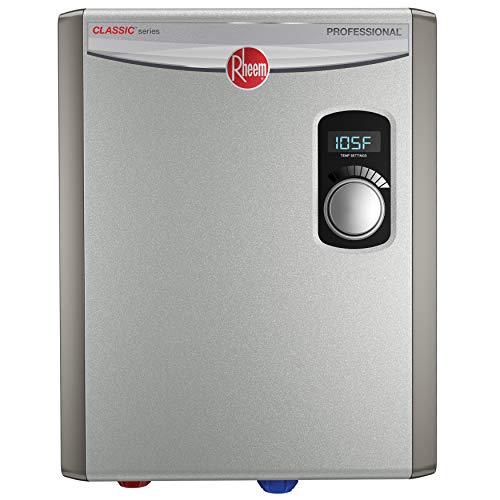
The Rheem 18kW model delivers compact, on-demand hot water with a digital thermostat that shows precise temperature readings to within one degree. Its self-modulating design adjusts power output to match demand, helping minimize energy waste while maintaining a steady hot water supply for smaller homes or apartments. The unit uses durable copper immersion elements and offers serviceability in the field, enhancing long-term reliability. With a maximum flow around 4.4 GPM, it is well-suited for single-point or light whole-house configurations where hot water demand is moderate.
Rheem RTEX-24 24kW 240V Electric Tankless Water Heater, Gray
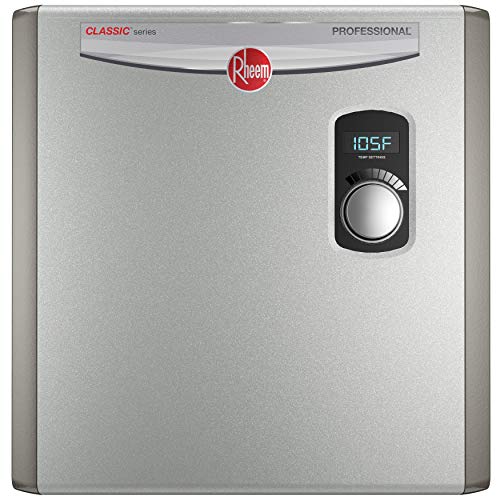
The RTEX-24 model targets higher-demand homes, requiring a robust electrical setup: 3 x 40-amp double-pole breakers and a recommended 200-amp service. Its performance guidance indicates continuous hot water availability for the whole home, with temperature rise influenced by groundwater temperature. Features include a user-friendly ON/OFF dial and a digital display for precise 1-degree adjustments from 80°F to 140°F. This unit suits mid-sized residences or homes with multiple hot-water points installed close to the water heater.
Tankless Water Heater Electric 27kW 240V — ThermoMate

The ThermoMate 27kW unit draws up to 114A and recommends three dedicated 40A breakers, plus a likely 200A service for stable operation. It promises instant hot water with a 5.27 GPM flow at a 35°F rise, leveraging self-modulating technology to adjust energy use based on demand. This compact, wall-mounted model is designed for space-limited installations, delivering reliable performance for households needing multiple hot-water points with quick response times.
WINTEMP 36kW Tankless Electric Water Heater
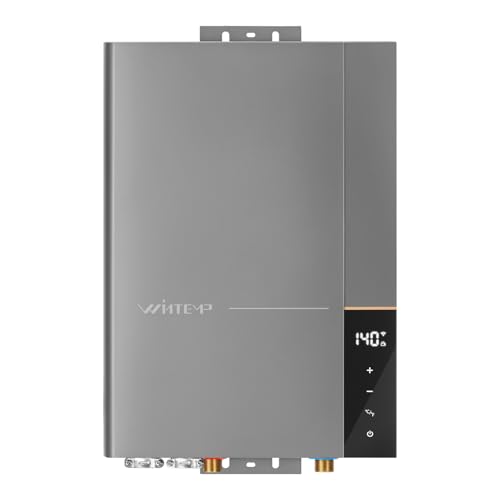
The WINTEMP unit is a high-power option designed for whole-house use, offering up to 8.7 GPM with a maximum rated current of 150A. Installation notes emphasize four 40-Amp double-pole circuits and four 8 AWG conductors, with a recommended 300A service for optimal performance. It features an LED display for temperature control and a WiFi app for remote monitoring and adjustment, aligning with modern smart-home setups. This model suits larger homes with simultaneous hot-water use across several points.
Westinghouse APOLO-27kW Tankless Water Heater
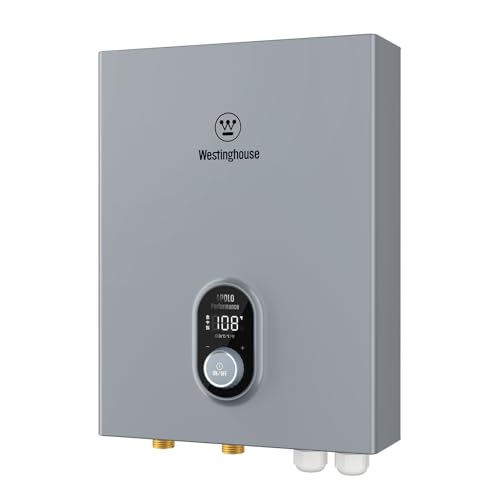
The APOLO-27kW from Westinghouse supports whole-house hot water with flows up to about 6.26 GPM and an activation flow around 0.79 GPM. It requires three 40-Amp double-pole breakers and 8 AWG wiring, plus 3/4″ NPT water connections. A standout feature is smart Wi-Fi compatibility, enabling temperature and power control via an app or voice assistants (Alexa/Google). Its design aims to balance strong performance with modern convenience for larger homes where simultaneous hot-water use is common.
Buying Guide: Key Considerations for Indoor Electric Tankless Heaters
- Electrical service and breaker requirements: Many high-flow models demand multiple 40-amp circuits and sizable service capacity (often 200–300 amps). Ensure your panel can safely support the load, or consult a licensed electrician.
- Flow rate and temperature rise: Calculate GPM needs based on peak hot-water use and typical water temperature rise in your area. Higher flow units handle more simultaneous points, while compact models suit smaller apartments or point-of-use needs.
- Self-modulating technology: This feature optimizes energy use by adjusting heat input to match demand, often delivering better efficiency and cost savings over non-modulating systems.
- Thermostat control accuracy: Look for units with digital displays and fine-tuned temperature adjustment (often 1°F increments) for consistent comfort and reduced risk of scalding.
- Installation space and clearances: Wall-mounted tanks save space, but ensure adequate ventilation and suitable mounting surfaces. Some models are better suited for tight closets or utility rooms.
- Smart features and control: WiFi connectivity, app control, and voice assistant compatibility add convenience for remote monitoring and set-point changes, especially in busy households.
- Reliability and serviceability: Field-serviceable elements and robust materials (like copper heating elements) contribute to longer life and easier maintenance.
- Compatibility with existing infrastructure: Check if your electrical panel, wiring gauge (8 AWG vs 6 AWG), and breaker configuration align with the unit’s requirements to avoid upgrades beyond necessity.
- Warranty and support: Compare warranty terms and the ease of obtaining parts or service in your region to minimize downtime if issues arise.
- Cost of ownership: Consider installation costs, electrical upgrades, and potential energy savings over traditional tanks when evaluating value.