Best Induction vs Pressure Rice Cookers for Every Kitchen
Choosing between induction heating and pressure cooking can impact texture, speed, and energy use. This guide highlights five top models that exemplify each approach, helping you decide who benefits most from induction or pressure settings. Ideal buyers include small households seeking precise, fast cooks (induction), families needing flexible meal options (pressure), and multi-cook enthusiasts who want automation and versatility.
Summary table of selected products:
- CUCKOO CRP-MHTR0309F — 3-Cup uncooked, induction heating, 15 modes
- Zojirushi NP-NWC10XB — 5.5-Cup capacity, AI-assisted pressure induction heating
- Instant Pot Duo Plus — 6-Quart, 9 functions, app-enabled
- TOSHIBA Induction Heating Rice Cooker — 5.5-Cups uncooked, low-carb setting
- CUCKOO CRP-JHR1009F — 10-Cup uncooked, 19 menu options, voice guide
CUCKOO CRP-MHTR0309F Induction Twin Pressure Cooker

Best for small households that want a compact, versatile unit with both high-pressure and non-pressurized modes. This 3-cup uncooked capacity (6 cups cooked) supports small dinners and gatherings. Induction heating surrounds the inner pot for quicker, more even cooking. Features include 15 versatile modes such as GABA/brown rice, glutinous rice, scorched rice, and high-pressure steam.
Who it’s for: individuals or couples who value precise control and a diverse menu in a compact cooker. Why selected: strong balance of induction efficiency and varied options for everyday meals. Caution: smaller capacity may require multiple batches for larger meals.
Zojirushi NP-NWC10XB 5.5-Cup IP Heating Rice Cooker

Best for cooks seeking AI-assisted precision with a larger cooked capacity. This 5.5-cup cooked (about 2.75 cups uncooked) unit uses pressurized cooking and steaming to produce plump rice. AI technology learns and adjusts the cycle for consistent results. Auto pressure levels tailor settings automatically based on the chosen menu.
Who it’s for: households that want hands-off consistency and a premium control system. Why selected: smart learning helps adapt to different grains. Caution: higher price point relative to basic models.
Instant Pot Duo Plus 9-in-1 Multicooker

Best for kitchens wanting an all-in-one appliance. The Duo Plus combines pressure cooking, slow cooking, sautéing, steamer, yogurt, warmer, and rice making in one device. It features 15 one-touch options and a clear display with cooking indicators. The detachable cord supports easy storage.
Who it’s for: busy homes that value versatility and a single appliance to handle many tasks. Why selected: broad function set reduces need for separate gadgets. Caution: large footprint; may require familiarization with programs.
TOSHIBA Induction Heating Rice Cooker
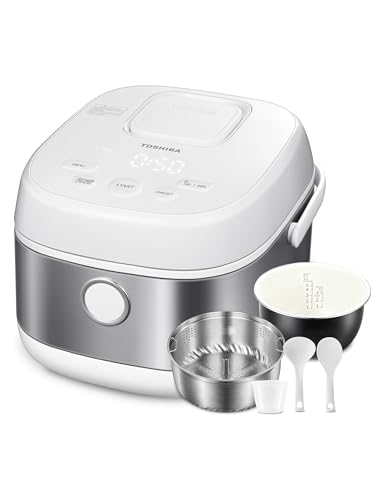
Best for low-carb or low-sugar needs with multi-function flexibility. This 5.5-cup uncooked capacity cooker includes eight cooking modes like Low Carb, White Rice, Brown Rice, Quinoa, Steam, and Oatmeal. It uses induction heating for precise control and a fuzzy logic system to adjust cooking in real time.
Who it’s for: dieters or households seeking healthier options without sacrificing texture. Why selected: dedicated Low Carb function helps reduce starch-related content. Caution: specific low-carb benefits depend on grains and portions used.
CUCKOO CRP-JHR1009F Induction Heating Pressure Cooker

Best for large households and gatherings with 19 menu options and a 10-cup uncooked capacity. It combines induction heating with pressure control and features a voice guide for step-by-step operation. The unit supports both high-pressure and non-pressure modes for varied textures.
Who it’s for: families that frequently host and want a premium, feature-rich rice cooker. Why selected: high capacity plus extensive menu options. Caution: larger footprint requires more counter space.
CUCKOO Twin Pressure Rice Cooker LHTR1009FW

Best for users who want the flexibility of two pressure settings and a large menu selection. This 10-cup uncooked capacity model offers 20 menu modes, including white, glutinous, GABA/brown rice, and baby food. Induction heating delivers even cooking, while dual pressure selections tailor the outcome.
Who it’s for: families needing substantial capacity with varied cooking options. Why selected: combines dual pressure with a broad menu. Caution: higher complexity may require longer learning curve.
Buying Guide: Induction vs Pressure Rice Cookers
What matters most: capacity and grains
Choose capacity based on household size and typical grain types. Induction models often excel with smaller capacities and precise control, while larger pressure cookers handle bulky meals and mixed grains with speed.
Texture outcomes: fluffy versus sticky
Induction heating tends to provide even heat distribution and can yield fluffy grains, especially with white rice and mixed grains. Pressure cooking can create stickier textures on certain grains or deliver ultra-soft results with precise timing. Consider your preferred rice texture when selecting a model.
Automation and intelligence
Models with AI or smart programming adjust cooking cycles automatically for different grains. If you value hands-off results and consistent texture across meals, this is a strong differentiator.
Versatility beyond rice
Appliances that combine slow cooking, steaming, yogurt making, or sautéing can reduce kitchen clutter. If you want an all-in-one device, a multi-function pressure cooker or an induction multi-cooker may be ideal.
Ease of cleaning and maintenance
Nonstick coatings, dishwasher-safe parts, and auto-clean features improve maintenance. Induction pots that are easy to clean reduce daily effort, especially for frequent cooks.
Energy use and speed
Induction heating often yields faster cooking with precise control, potentially saving energy. Pressure cooking reduces simmer times for tougher grains or dense meals, offering a different efficiency profile depending on the recipe.
Safety and user experience
Look for clear safety indicators, temperature and pressure controls, and intuitive interfaces. Voice guides or app connectivity can help beginners, while seasoned users may favor more manual control.
Frequently Asked Questions
- Which is faster for cooking rice: induction or pressure? Induction can heat evenly and quickly for many grains, while pressure cooking speeds up cooking times for tougher grains and larger batches. The best choice depends on the grain type and desired texture.
- Can I use any rice in an induction cooker? Induction cookers support a variety of rice types, including white, brown, and mixed grains, depending on the model and settings.
- Is a higher-capacity cooker better for families? Yes, larger uncooked-capacity units (e.g., 6–10 cups) suit families and gatherings, but require more counter space and may be slower to heat initially.
- Do smart features matter? AI, auto-pressure levels, and app connectivity can simplify cooking and improve consistency, especially for busy households.
- What is the main trade-off between induction and pressure? Induction emphasizes precise, even heating and texture control, while pressure focuses on speed and flexibility across multiple cooking tasks.
- Should I avoid any model for health reasons? No model inherently harms health; your choice should focus on texture, capacity, and convenience that suit your dietary needs and cooking style.