Best Instant Hot Water Heaters for RVs: Top Tankless on-Demand Choices
For RVers, reliable on-demand hot water matters—from refreshing showers to quick dishwashing. The following five tankless RV water heaters are highlighted for their high BTU output, high-altitude performance, and easy retrofit options. Each product section provides direct access to the item on Amazon, plus key features to help compare efficiency, altitude handling, and installation versatility. The summary table below offers a quick reference to the chosen models.
| Product | Brand | BTU | Door Size Options | Key Benefit |
|---|---|---|---|---|
| FOGATTI InstaShower 9 Pro Gen 3 | FOGATTI | 66,000 | 13×13″ (openings vary by model) | High capacity; suitable for simultaneous RV showers and sinks |
| FOGATTI InstaShower 7 | FOGATTI | 48,000 | 15×15″, 15×18″, 18×18″ | Good balance of price and performance for busy families |
| ORBEK 60,000 BTU | Orbek | 60,000 | 3 door sizes (15×15, 15×18, 18×18) sold separately | Strong altitude handling and replacement options |
| RV Part Pro 60,000 BTU | RVPart Pro | 60,000 | 15×15″ door standard | Built-in diagnostics and user-friendly controls |
| Poukaran 65,000 BTU | Poukaran | 65,000 | 15×15″ Black Door; other sizes sold separately | High performance for high-altitude camping |
The following sections delve into five top options, with objective notes on performance, installation, and operating considerations to help you pick the best fit for your RV lifestyle.
FOGATTI InstaShower 9 Pro Gen 3

FOGATTI’s InstaShower 9 Pro Gen 3 delivers up to 66,000 BTU and supports hot water flow up to 3.6 GPM, enabling simultaneous use in both the bathroom and kitchen in many RV layouts. The model includes a built-in mixing tank and a compact 15×15 inch door footprint, which makes it a strong retrofit option for several older RV water-heater openings. It is designed to operate at high altitude, with a fan system rated at 300 Pa and enhanced combustion stability. A remote controller allows convenient adjustments from a distance, and the unit aims to minimize cold spots and ensure a steady supply of hot water even under demanding schedules.
Key considerations:
– Pros: High hot-water output, robust at altitude, remote control, versatile retrofits.
– Cons: Higher BTU can require careful electrical and propane planning; door and opening compatibility varies by model and RV layout.
FOGATTI InstaShower 7

The InstaShower 7 provides about 2.5 gallons of hot water per minute with 48,000 BTU output, suitable for a busy RV family. It comes with three door options and two color choices to accommodate different retrofit needs. The system emphasizes on-demand heating to reduce energy use and eliminate wait times associated with traditional tank heaters. Fogatti highlights high-altitude readiness with staged combustion technology to minimize cold spots and provide consistent temperatures.
Key considerations:
– Pros: Moderate BTU, flexible door sizes, energy-efficient operation, good for multi-user households.
– Cons: May require careful sizing for larger families or peak-demand days; ensure door compatibility with existing openings.
ORBEK 60,000 BTU RV Tankless
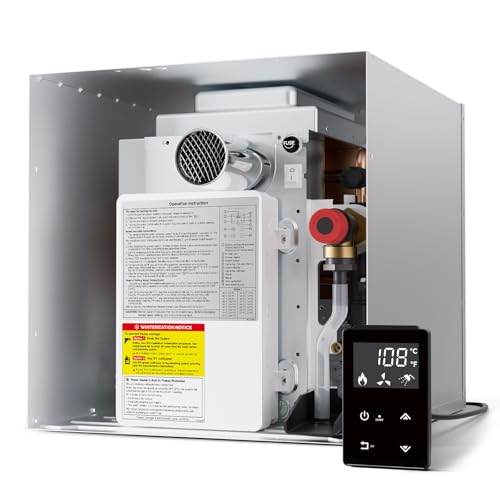
Orbek’s model provides 60,000 BTU with a focus on high-altitude suitability using oxygen-free copper heat exchangers and a brushless DC fan. It includes staged combustion to reduce cold spots and protect against overheating, plus a control system designed for RVs. The unit is compatible with all RVs and ships with a controller; various door sizes allow matching to existing openings for a retrofit.
Key considerations:
– Pros: Solid altitude performance, energy efficiency, versatile installation options.
– Cons: Requires proper sizing for extreme temperate changes and ensuring compatibility with your RV’s ventilation and propane system.
RV Part Pro 60,000 BTU
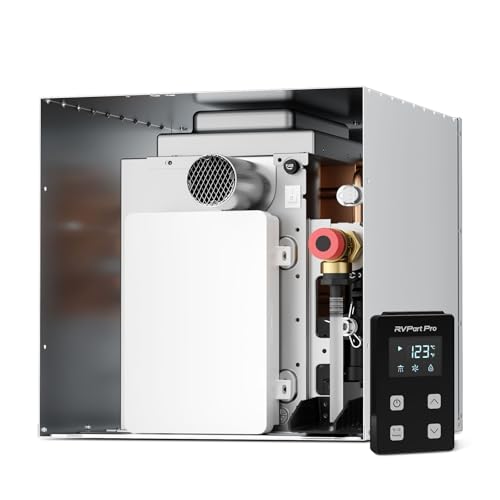
RVPart Pro emphasizes user-friendly operation with a built-in microcomputer panel that lets you set temperatures between 95°F and 123°F and view fault codes for troubleshooting. The 60,000 BTU heater uses an oxygen-free copper heat exchanger and a brushless DC fan for efficiency and reliability. A notable feature is the included high-quality pressure reducing valve, reducing extra hardware requirements for RV installations. It’s designed for high-altitude use and provides consistent heating with staged combustion.
Key considerations:
– Pros: Clean, integrated diagnostics; user-friendly temperature control; added valve for streamlined installation.
– Cons: Higher-end model may require precise electrical and gas planning; ensure compatibility with your RV’s waste and venting setup.
Poukaran 65,000 BTU

Poukaran delivers 65,000 BTU and high-altitude readiness with an oxygen-free copper heat exchanger and a brushless DC fan. The unit provides on-demand hot water without waiting, with a focus on energy efficiency and consistent temperatures. It features a 15×15 inch black door for installation replacements and matches most standard RV retrofit openings. Internal and external water outlets expand flexibility for various RV activities, including pets washing or outdoor cleaning.
Key considerations:
– Pros: Higher BTU for robust hot water; dual outlets add versatility; strong altitude performance.
– Cons: High BTU requirements imply ensuring appropriate propane and electrical support; verify door opening compatibility with your current setup.
Buying Guide
When choosing an instant hot water heater for an RV, consider these factors to align with your needs and your RV’s infrastructure:
- BTU and flow rate: Higher BTU generally means faster hot water, but you must balance with your RV’s propane availability and electrical capacity. Look for units that offer 40,000–66,000 BTU with reasonable GPM at your typical water temperature target.
- Altitude performance: Many RV models are used at elevations well above sea level. Select a unit with staged combustion, oxygen-free copper heat exchangers, and a design that maintains stable temperatures at higher altitudes.
- Door size and retrofit options: Retrofit success hinges on matching a commonly available door size (e.g., 15×15, 15×18, or 18×18). Ensure you can adapt to your RV’s current opening without replacing multiple components.
- Power and fuel source: Decide whether you’ll rely on propane, electricity, or a combination. Tankless systems can work on 12V DC power or be integrated with your RV’s gas line; confirm compatibility with your electrical system and gas supply.
- Control and diagnostics: Built-in controllers and fault-code displays simplify troubleshooting. Units with remote controls offer convenience for on-the-go adjustments while traveling or showering.
- Warranty and service: Consider models with robust warranties and a network of service providers. If you RV regularly travels to remote locations, a supplier with accessible replacement parts is valuable.
- Maintenance: Tankless systems generally have fewer maintenance needs than tank heaters, but check for filter requirements, periodic descaling, and access for service calls during long trips.
- Installation footprint: The door opening and mounting arrangements should fit your RV’s floor plan and cabinet space. Some models offer multiple door size options to ease retrofit decisions.
In choosing a top option, evaluate your typical usage pattern (one person vs. family), the maximum hot-water demand during trips, and how often you’ll be traveling to high-altitude areas. Procedural safety should always be a priority, ensuring proper venting, propane connections, and electrical charging capacity. For some RVers, a dual-outlet design and a precise temperature range offer the greatest flexibility for different activities, while others may prioritize the simplest retrofit configuration and the lowest upfront effort.
All models listed provide on-demand hot water and are designed to minimize wait times, improving comfort during RV adventures. Review your RV’s current plumbing openings, electrical panel, and propane system to determine which unit aligns best with your configuration and travel plans.