Best Instant on Gas Hot Water Heater Solutions for Quick, Consistent Showers
Homeowners looking for reliable instant hot water often seek gas-powered tankless systems that deliver continuous warmth on demand. This guide highlights five top options that emphasize fast heating, temperature stability, and energy efficiency. Each product is evaluated for performance at multiple points in the home, from showers to sinks, while minimizing wait times and energy waste.
Summary at a glance: the following table compares the five selected models on key features like flow rate (GPM), heating capacity (BTU), installation suitability, and notable safety or efficiency advantages. Use this to quickly assess which unit best fits your household needs and climate.
| Product | Flow (GPM) | BTU | Best For | Notable Feature |
|---|---|---|---|---|
| RIWORY 102000 BTU Tankless | up to 4.3 | 102,000 | 3–4 outlets | 4-stage energy-saving combustion |
| ThermoMate CZ422NG | Up to 5.0 | 113,000 | Whole-house | High efficiency, wide protection set |
| APUS Tankless Propane | Up to 4.42 | 95,000 | 2 showers + 1 sink | Smart digital display, precise control |
| Ranein 80K BTU Natural Gas | 3.6 | 80,000 | 2–3 taps | Stable temperature with LED control |
| NOVIEEX 4.3 GPM | Up to 4.3 | 100,000 | Family bathrooms | ±1°F temperature control |
RIWORY 102000 BTU Tankless Water Heater

The RIWORY unit delivers up to 4.3 GPM with 102,000 BTU of heating capacity, designed to supply hot water to three or four points of use, such as a shower, faucet, and additional outlets. Its four-stage energy-saving combustion technology adjusts the flame to minimize waste, including a minimum heat load during low-demand periods. The system also includes anti-freeze protection and a windproof design for safer winter operation. The combination of higher BTU and intelligent modulation makes it a strong option for medium-sized homes in cooler climates.
Key considerations include installation requirements (venting, gas line sizing, and clearance), the potential need for professional venting adjustments, and local code compliance. While the unit can be efficient, the higher BTU rating means a capable venting system and appropriate gas supply are essential. Users should plan for a robust indoor installation space to accommodate clearances and service access.
ThermoMate CZ422NG Natural Gas Tankless

The ThermoMate CZ422NG provides up to 5 GPM with 113,000 BTU, aiming to cover whole-house needs with multiple heat zones. It emphasizes rapid recovery, a compact footprint, and a broad temperature operating window. The system’s eight protective features—including boil-dry, freeze, flame-out, and over-temperature protections—help reduce risks during operation. By using a copper heat exchanger, the unit promises good thermal conductivity and resistance to corrosion, contributing to long-term reliability.
Performance considerations include ensuring your home’s gas supply and venting are matched to the 113,000 BTU rating. The unit’s high efficiency should translate to noticeable energy savings, but proper sizing, installation, and maintenance are critical to realize those benefits. Regular checks on vent integrity and combustion efficiency are advised for peak results.
APUS Tankless Propane Gas Heater
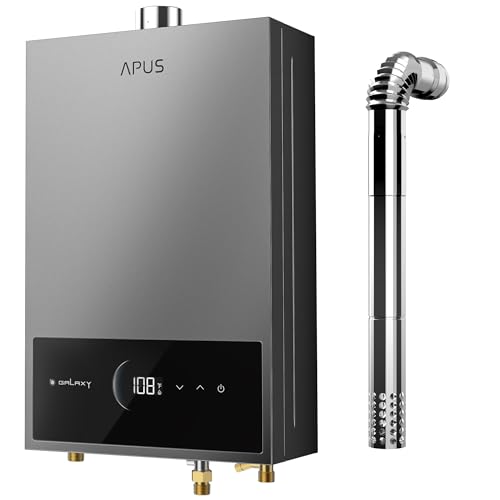
The APUS propane tankless heater delivers up to 4.42 GPM at 95,000 BTU with a smart digital display. It is designed to serve two showers and a sink simultaneously while maintaining stable temperatures, aided by sensors and a digital control system that keeps water within a tight tolerance (±1°F). The unit highlights high energy efficiency through segmented combustion technology and oxygen-free copper heat exchangers, aiming for significant energy savings and quiet operation compared with traditional tank systems.
Prospective buyers should verify compatibility with propane supply arrangements and ensure appropriate venting for outdoor or indoor installation. The digital display and precise control make adjustments straightforward, but correct setup is essential to maximize efficiency and reliability in varying climate conditions.
VELPAX Propane Tankless Water Heater

This model offers 4.74 GPM with a high-flow rate, designed for use with propane. It emphasizes steady temperature control with several safety protections, including flame failure and anti-freeze safeguards. The stainless steel body and oxygen-free copper components contribute to durability and efficient heat transfer, while the LED smart display provides intuitive temperature adjustments from 95°F to 149°F. The unit is positioned for households needing multiple outlets with reliable performance and a compact form factor.
Considerations for this option include ensuring propane availability and proper venting, along with compliance to local codes. The robust protection suite supports safe operation, but professional installation is recommended to optimize performance and longevity.
Ranein Natural Gas Tankless 3.6 GPM

The Ranein 3.6 GPM unit uses 80,000 BTU to deliver continuous hot water for two to three outlets. It emphasizes immediate hot water on demand and elimination of waiting periods common with tank-style systems. The product features multiple preset modes (Dish, Fruit, Elderly, Infant) for tailored water temperatures, adding convenience for varied household needs. The LED temperature control panel supports straightforward operation and quick adjustments.
Practical considerations include verifying gas line capacity and appropriate venting for the 80,000 BTU rating. While the unit is compact, ensure there is adequate service space for maintenance and venting components. Its focus on instant hot water makes it suitable for smaller homes or apartments where efficient use of water at multiple points is desirable.
NOVIEEX 4.3 GPM Gas Water Heater

The NOVIEEX unit provides up to 4.3 GPM with 100,000 BTU, designed for household use across multiple points. It features a wide adjustable temperature range (95°F to 149°F) and precise temperature control within about ±1°F. The unit’s on-demand design reduces standby energy consumption, offering potential savings relative to traditional tank-style heaters. The compact, indoor installation adds to its appeal for homes with restricted space.
Potential buyers should ensure proper venting and gas sizing for peak performance. The product’s digital temperature control and steady output make it suitable for families needing reliable hot water across several fixtures, particularly in moderate climates where demand fluctuates with seasons.
Buying Guide: Key Purchase Considerations
- Flow rate vs. climate: In cooler climates or larger homes, choose units with higher GPM (3.6–5 GPM) and higher BTU ratings to prevent cold-water shocks when multiple outlets run simultaneously.
- Ventilation and gas supply: Gas tankless models require appropriate venting and correctly sized gas lines. Have a licensed professional assess venting layouts, clearances, and gas line capacity for safe, efficient operation.
- Inlet water temperature: Performance varies with incoming water temperature. Some units include logic to compensate for lower inlet temps, but extreme climates may demand higher BTU units or additional heat recovery measures.
- Temperature stability: Look for models with precise digital thermostats and sensors. A ±1°F control range minimizes temperature fluctuations during showers or multi-point use.
- Safety and protections: Choose units with multiple protections (freeze, boil-dry, flame-out, overheating) and anti-freeze features for winter reliability, especially in regions with cold winters.
- Maintenance and serviceability: Consider the ease of access for filter cleaning, vent inspection, and potential module replacements. Durable materials (oxygen-free copper, corrosion-resistant headers) enhance longevity.
- Energy efficiency: Gas tankless heaters offer on-demand heating, reducing standby energy. Compare thermal efficiency percentages and UEF ratings where available to estimate operating costs.
- Installation footprint: Some units are more compact and easier to install in tight spaces. Verify wall clearance, vent routing, and local codes before purchase.
- Warranty and support: Check manufacturer warranties and customer support options. A strong warranty provides peace of mind for long-term reliability.
- Cost considerations: While prices aren’t listed here, balance purchase price with installed cost, venting requirements, and potential energy savings when evaluating total cost of ownership.