Best Kitchen Range Hood Exhaust Duct Solutions for Your Home
The best range hood choices for exhaust duct installation balance powerful airflow, ducted or ductless flexibility, and easy maintenance. This guide highlights five top options ideal for homes needing effective smoke and odor removal, whether you have a full-size kitchen or a compact condo. Each product is evaluated for who it’s best for, its ventilation strength, and practical limitations so you can pick confidently.
| Product | Airflow (CFM) | Best For |
|---|---|---|
| Zomagas Range Hood 30 Inch Under Cabinet | 280 | Small to medium kitchens with under-cabinet space |
| FIREGAS 30 Inch Under Cabinet Range Hood | 300 | Modern, quiet under-cabinet setups in apartments |
| IKTCH 30 Inch Insert Range Hood | 900 | Open-plan kitchens needing high airflow and modern controls |
| Tieasy Wall Mount Range Hood 30 Inch | 450 | Ceiling-to-cooktop installations with ducted or ductless options |
| COMFEE’ CVU30W4AST 30 Inch Under Cabinet | Up to 3 speeds | Slim, space-saving solutions with easy filter maintenance |
Zomagas 30 Inch Under Cabinet Range Hood

Best for compact kitchens that require a slim profile with straightforward controls. This 30 inch under-cabinet hood offers two fan speeds and a 280 CFM capacity to efficiently remove smoke and cooking odors. The 3-layer grease filter combines aluminum mesh and activated carbon to improve air quality. The unit is designed for hardwired installation (plug sold separately). The rocker button control makes adjusting speed and LED lighting simple. Best for: small to mid-sized kitchens where space is at a premium and basic operation suffices. Limitation: may struggle with very heavy cooking loads or large kitchen layouts without higher airflow options.
FIREGAS 30 Inch Under Cabinet Range Hood

This 30 inch hood is designed for efficient operation in tight spaces, ideal for condos and apartments. It features 2-speed exhaust, a durable steel construction, and a multi-layer aluminum filter (carbon filter sold separately) to trap grease and odors. Hardwired installation is typical, with LED lighting to illuminate the cooking area. Best for: users who want a robust under-cabinet option with straightforward operation and a quiet profile. Caution: ensure compatibility with your ducting setup and consider the need for a carbon filter if you plan ductless operation.
IKTCH 30 Inch Insert Range Hood

Best for high-demand cooking spaces needing substantial airflow. The IKTCH insert provides up to 900 CFM with ducted/ductless convertible options and a 4-speed gesture sensing control panel. It includes a stainless steel finish and a remote for added convenience. Ultra-quiet operation is achieved through optimized fan design, and the unit minimizes noise at lower speeds. Best for: larger kitchens or open-plan layouts where elevated airflow is beneficial. Limitation: higher airflow models may require more robust ducting and venting considerations.
Tieasy Wall Mount Range Hood 30 Inch
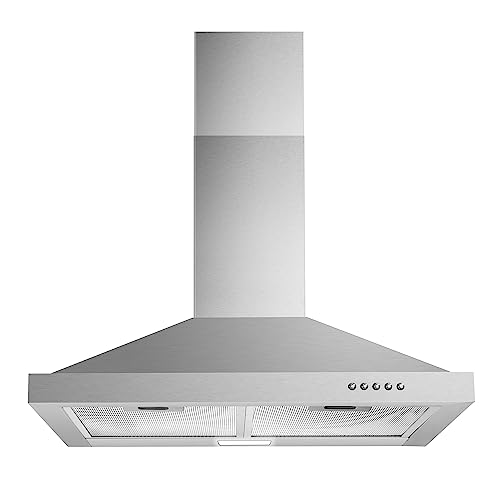
Best for chimney-style setups with flexible ducting options. This 30 inch wall-mount hood is built from 430-grade stainless steel and supports ducted or ductless configurations via a carbon filter kit. It features a 3-speed exhaust with an LED light and a tall chimney range that helps fit kitchens with varying ceiling heights. Best for: traditional, chimney-style installations where a sturdy, visually appealing hood is desired. Caution: ensure the chimney height is adjustable to fit your ceiling clearance and extension needs.
FIREGAS 30 Inch Range Hood Insert

Best for ducted or ductless versatility in larger cooking environments. This 30 inch insert combines a 600 CFM capacity with three-speed operation and dual LED lamps for bright task lighting. It includes both baffle and charcoal filters for ducted or recirculating use. The installation supports 6 inch round ducts, making it suitable for varied venting configurations. Best for: kitchens requiring powerful performance with flexible venting. Limitation: higher CFM models require appropriate ducting and space considerations to maximize efficiency.
Buying Guide
What should you consider when choosing a kitchen range hood exhaust duct system?
- Ventilation type: Decide between ducted (venting air outside) and ductless (recirculating via filters). Ducted generally provides more effective odor removal.
- CFM needs: Larger kitchens or heavier cooking demand benefit from higher CFM (600–900 CFM) versus compact spaces (280–450 CFM).
- Power vs. noise: Higher speeds increase noise. Look for units offering low-noise operation at higher speeds or variable speed controls.
- Installation layout: Under-cabinet, wall-mount, or insert configurations must align with kitchen layout and ceiling height. Convertible options offer flexibility for future changes.
- Filters and maintenance: Aluminum, baffle, or charcoal filters influence grease capture and odor control. Dishwasher-safe filters simplify upkeep.
- Controls and features: Gesture sensing, remote controls, and LED lighting improve usability. Ensure controls are intuitive and accessible.
- Materials and finish: Stainless steel provides durability and a professional look. Match with existing kitchen appliances.
Frequently Asked Questions
- What is the difference between ducted and ductless exhaust hoods?
A: Ducted hoods vent air outside, generally providing stronger odor removal, while ductless hoods recirculate air through filters and are easier to install in apartments. - How high should a range hood be installed above the stove?
A: Typical clearance ranges from 24 to 30 inches above the cooking surface, depending on hood size and local codes. - Is higher CFM always better?
A: Not necessarily. Higher CFM suits large kitchens or heavy cooking, but it can create more noise and requires appropriate ducting. - Do I need professional installation for ducted hoods?
A: For hardwired, ducted installations, professional installation is often recommended to ensure proper vent sizing and electrical connections. - Can I replace a ducted hood with a ductless one later?
A: Yes, many models offer ductless conversion via carbon filters, but verify compatibility with the hood model and any additional kits required. - What maintenance is involved with these hoods?
A: Regularly clean grease filters, replace carbon filters if used in recirculating mode, and inspect the fan housing for grease buildup.