Best Kitchen Vents in Ceiling for Powerful, Quiet Ventilation
Answering the question, these ceiling-mounted kitchen vents deliver robust airflow, flexible ducted or ductless setups, and modern controls for busy American kitchens. They’re ideal for open-plan layouts, large ranges, and homes seeking stylish, easy-to-clean solutions. The top picks below target cooks who want strong suction, low noise, and simple maintenance. The table summarizes five standout options based on capacity, features, and install versatility.
| Product | CFM | Vent Type | Controls | Best For |
|---|---|---|---|---|
| FIREGAS Island Range Hood | 700 | Ducted/Ductless Convertible | 3-speed, LED lights | Large kitchens, strong suction |
| Tieasy Island Range Hood | 700 | Ducted/Ductless Convertible | Gesture & Touch Control, 3 speeds | Modern kitchens, hands-free control |
| VIKIO HOME Island Range Hood | 390 | Ducted/Ductless Convertible | Touch/LED lights | Quiet operation, budget-minded |
| JOEAONZ Island Range Hood 36 inch | 700 | Ducted/Ductless Convertible | Gesture & Touch Controls, 4 LED lights | Stylish, versatile installations |
| Awoco Super Quiet Split Ceiling Hood | 800 | Split ceiling mount, ducted | Remote, 4 speeds, LED | Split-system, attic blower option |
FIREGAS Island Range Hood – 700 CFM, Ceiling Mount

Best for: Large kitchens needing high suction and ducted or ductless flexibility. This unit offers 700 CFM with a 3-speed fan and 4 LED lights, plus 2 baffle filters and 2 charcoal filters for grease and odor capture. It supports ducted or ductless configurations to adapt to your space. Limitation: Higher airflow can introduce more noise at maximum speed, though noise remains manageable around 55 dB.
Tieasy Island Range Hood – Gesture & Touch, 700 CFM

Best for: Kitchens that value modern controls and a clean design. With 700 CFM and 3 speeds, it supports ducted or ductless installation and includes a 5-layer grease filter setup. Gesture sensing and a touch panel enhance convenience. Caution: Ensure your ducting kit matches the unit’s specifications for optimal venting, especially in retrofit projects.
VIKIO HOME Island Range Hood – 390 CFM

Best for: Quiet operation in smaller to medium kitchens with budget considerations. The 390 CFM dual-intake motor design increases airflow efficiency, while 3 speeds and four LED lights brighten the cooking zone. Best for: homes prioritizing low noise and simple maintenance with dishwasher-safe filters. Limitation: Lower airflow compared to 700 CFM models; plan accordingly for heavy frying or large open layouts.
JOEAONZ Island Range Hood 36 Inch – 700 CFM

Best for: Contemporary kitchens needing strong suction with curb appeal. This hood provides 700 CFM with a curved tempered glass canopy and 4 LED lights, plus gesture and touch controls. It’s ducted or ductless convertible for flexible installation. Caution: High-output performance can raise sound levels; verify mount height and duct design to minimize noise.
JOEAONZ 36 Inch Island Hood – 700 CFM
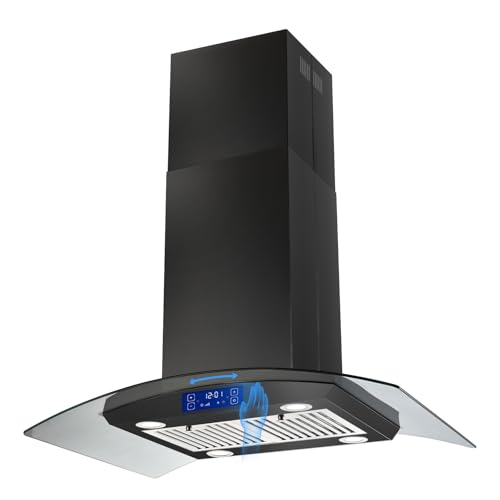
Best for: Homeowners seeking modern control features and a robust 700 CFM. The unit combines black painted stainless steel with 4 LED lights and a ducted/ductless convertible setup. It uses a 430-grade stainless steel body for durability. Caution: The higher airflow is paired with noise at the upper end of the range; consider installation height to balance noise and performance.
EZ-FLO Duct Opening Air Vent Cover

Best for: Simple, non-ducted venting in ceilings or walls. This 10 x 4 inch vent cover provides two-way ventilation with adjustable dampers and louvers. It’s a durable, steel, white powder-coated option for basic airflow management but does not itself move air like a hood. Use as a complementary component in basic ceiling venting systems.
Awoco 14-1/2” Ceiling Mount Hood

Best for: Split-ceiling installations with attic-mounted blowers. This 800 CFM unit is designed for strong performance with 4 speeds and LED lighting, offering a sleek, quiet operation. It’s ideal where a separate blower location helps reduce ceiling clutter. Caution: The system requires separate ducting and plenums; check compatibility with existing ducts before purchase.
Buying Guide: Key Considerations Before You Buy
- Ventilation capacity (CFM) vs. kitchen size: Choose higher CFM for large kitchens and heavy cooking. Smaller spaces may do well with 390–700 CFM, especially if noise is a concern.
- Ducted vs. ductless: Ducted (external venting) typically provides stronger performance and better odor removal; ductless uses filters and recirculates air, suitable when exterior venting isn’t possible.
- Installation type: Ceiling-mounted island hoods work well above island ranges or peninsulas. Split ceilings (blower in attic) can reduce ceiling clutter and noise but require precise labor.
- Controls and usability: Gesture or touch controls offer convenient operation, especially when hands are dirty. Ensure the control panel is accessible and responsive.
- Filters and maintenance: Look for dishwasher-safe baffle filters and replaceable charcoal filters for odor control. Easy access for cleaning saves time.
- Lighting: LED lighting improves visibility at the cooktop. Check lighting output and color temperature to ensure it matches kitchen tasks.
- Noise levels: Consider 45–65 dB as a practical range for most kitchens at high speed; quieter models are preferable near open living areas.
Frequently Asked Questions
- What is the difference between ducted and ductless ceiling vent hoods? Ducted hoods vent air outside, offering stronger removal; ductless hoods recirculate air through filters, suitable where exterior venting isn’t possible.
- How do I choose the right CFM for my kitchen? For small kitchens, 200–400 CFM may be sufficient; for larger spaces or heavy cooking, 700 CFM or more reduces heat and smoke faster.
- Are gesture controls reliable in kitchen hoods? Gesture controls are designed for convenience and can be very reliable, but ensure the model supports stable recognition in typical kitchen conditions.
- What maintenance do ceiling island hoods require? Regular cleaning of filters and light covers, plus periodic checks of ductwork, sealants, and electrical connections to maintain performance.
- Can these hoods be installed over any island or peninsular? Most are designed for standard island setups, but check dimensions, ducting requirements, and mounting height to ensure compatibility with your kitchen layout.
- Do split ceiling hoods require attic space access? Yes, split systems place the blower in an attic or cabinet area; verify attic clearance, duct routing, and electrical supply during planning.