Best Knife Sharpening Bench Grinders for Precise Edges
When aiming for razor-sharp blades, a knife sharpening bench grinder can be a game changer for home workshops and professional kitchens alike. This guide highlights five top options, clarifying who each is best for, and why they stand out. Whether you need wet sharpening for heat-sensitive tools or a versatile belt-and-wheel combo for metal and wood, these picks cover diverse workloads and skill levels. The buyer intent is to help buyers choose fast, durable, and predictable results for knives, chisels, and curved edges.
Overview at a glance: the table below summarizes key capabilities of the selected products to help you compare at a glance.
| Product | Best For | Key Feature | Notes |
|---|---|---|---|
| Bucktool 10-Inch Variable Speed Wet Sharpening System | Knives and chisels needing controlled, cool sharpening | 90–160 RPM variable speed, water cooling | Two-position jig simplifies set angles |
| Woodskil 6-Inch Variable Speed Bench Grinder | General sharpening with fast material removal | 2000–3400 RPM, dual wheels 36/60 grit | Great balance of speed and control |
| ONESAM Electric Knife Sharpener Wheel | Kitchen knives and light tools | 2-in-1 with #80 and #120 wheels | Stable base, quiet operation |
| KFMK 10 Inch Variable Speed Wet Sharpening System | Woodworking tools needing burr-free edges | 90–160 RPM, water cooling, leather stropping | Note on leather direction |
| Bucktool 2×42 Belt Sander and 6 Inch Bench Grinder Combo | Combined belt grinding and wheel sharpening | 3450 RPM belt, 4480 FPM belt speed | Versatile but not a dedicated wet sharpener |
Bucktool 10-Inch Variable Speed Wet Sharpening System
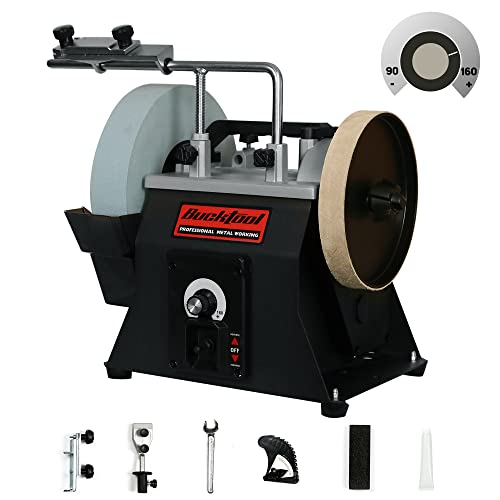
This wet sharpening system is designed for precise blade work with adjustable speed. It uses a 10-inch aluminum oxide wheel and an 8-inch leather stropping wheel, paired with a water tray to prevent overheating. The system is best for knife makers, chisels, and axes where a cool cut quality matters. The two-position universal jig supports horizontal and vertical sharpening, helping achieve consistent bevels. Best for hobbyists or professionals who value temperature control and predictable angles. A potential limitation is the need to manage water and wheel wear during extended sessions.
Who it’s best for: knife enthusiasts, woodworkers, and metalworkers who require clean finishes and controlled heat during sharpening. Why it’s selected: strong emphasis on cooling and precision with a versatile jig system. Caution: maintain water levels and inspect the wheel for wear to avoid overheating or uneven edges.
Woodskil 6 Inch Variable Speed Bench Grinder

Woodskil’s bench grinder provides a broad range of speeds (2000–3400 RPM) with dual grinding wheels (36 and 60 grit). This setup supports fast material removal on rough shaping tasks while enabling fine sharpening for knives, chisels, and a variety of metal tools. The adjustable tool rest helps maintain stable angles during grinding, which is useful for shop workflows requiring repeatable edges. Limitation to note: higher speeds can heat tools quickly if not cooled or timed properly, so use generous cooling intervals.
Who it’s best for: hobbyists and fabricators who need a versatile grinder capable of rough shaping and fine finishing. Why it’s selected: flexible grits and solid stability at a reasonable price point. Caution: manage heat buildup with intermittent use or external cooling when sharpening heat-sensitive edges.
ONESAM Electric Knife Sharpener Wheel AC 110V

ONESAM offers a compact, 2-in-1 sharpening setup designed for kitchen knives and light tools. With a coarse #80 wheel for quick repairs and a fine #120 wheel for honing, it balances material removal with edge refinement. The suction-based base aids stability on countertops, and the unit emphasizes quiet operation. The trade-off is that it’s best suited for smaller blades and kitchen tasks rather than heavy-duty metalwork. Choose this if you want a dedicated kitchen sharpener or small-tool sharpener for quick maintenance.
Who it’s best for: home cooks, barbers, or small-tool enthusiasts seeking a compact, quiet sharpener. Why it’s selected: practical dual wheels for quick repairs and fine honing in a small footprint. Caution: avoid pushing at excessive angles to prevent wheel gouges.
KFMK 10 Inch Variable Speed Wet Sharpening System

KFMK presents a 10-inch wet sharpening system with a 90–160 RPM variable speed and water cooling, plus an 8-inch leather stropping wheel for burr-free finishes. The water trough helps prevent overheating during sharpening of knives, chisels, and woodworking tools. A note for users: avoid sharpening against the leather honing wheel’s direction to prevent cutting into the leather. Best for users who value a slow, controlled approach with post-sharpening stropping for edge refinement.
Who it’s best for: woodworkers and knife makers who want a wet system with precision control and a leather finish pass. Why it’s selected: strong focus on heat management and edge refinement. Caution: follow leather wheel orientation to avoid damaging the stropping surface.
Bucktool 2×42 Belt Sander And 6 Inch Bench Grinder Combo
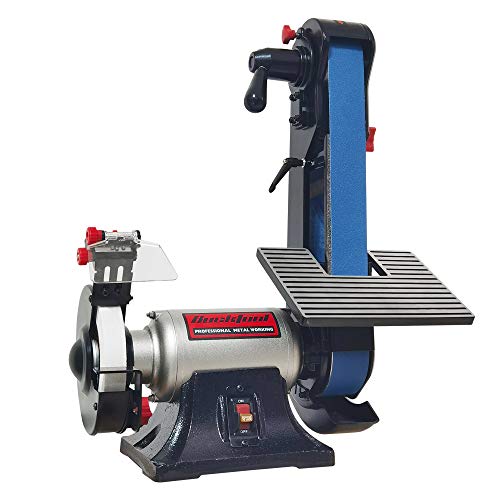
This Bucktool combo provides a versatile belt sander paired with a 6-inch bench grinder. The 1/2 HP induction motor delivers 3450 RPM on the belt and 4480 FPM belt speed, enabling rapid material removal on metals and wood. The belt tilts 0 to 90 degrees, and the housing swivels for long-piece sanding. It’s best for projects needing both belt sanding and wheel sharpening in one workstation. Limitation: not a dedicated wet sharpening system, so it relies on dry grinding dynamics and dust management.
Who it’s best for: workshop owners who want a two-in-one solution for shaping and sharpening. Why it’s selected: high versatility and a robust motor for mixed tasks. Caution: ensure appropriate dust collection and wear eye protection during belt use.
Buying Guide
What to consider when choosing a knife sharpening bench grinder
- Wet vs. dry sharpening: Wet systems keep blades cool and reduce overheating, ideal for high-hardness blades. Dry grinders are simple and fast for everyday maintenance.
- Wheel and belt options: Coarse wheels (e.g., 36 grit) remove material quickly; finer wheels (e.g., 60 grit, 80/120) refine edges. Dual-wheel setups offer flexibility.
- Speed control: Variable speeds help tailor sharpening to tool type; lower speeds minimize heat, higher speeds speed up material removal for rough shaping.
- Stability and base: A wobble-free base and secure mounting reduce edge wandering and accidents.
- Bevel guides and jigs: Universal or adjustable jigs help maintain consistent angles for knives, chisels, and axes.
- Safety features: Water trays, suction bases, and robust guards reduce splashes and slips during operation.
- Footprint and budget: Larger wet systems offer more control but require more space; consider your workshop layout and expense.
How to compare products quickly
- Best for precision finishing: wet sharpening systems with leather stropping wheels.
- Best for generic metal shaping: high-speed grinders with dual wheels and stable rests.
- Best for kitchen knives: compact sharpeners with dual wheels and stable bases.
- Best for versatility: belt-sander-and-grinder combos for mixed tasks.
Maintenance tips
- Regularly inspect wheels and belts for wear and replace when appropriate.
- Keep cooling water clean to prevent residue buildup on blades.
- Lubricate moving jig components per manufacturer instructions to maintain accuracy.
FAQ
- What is the main difference between wet and dry sharpeners?
Wet sharpeners use water to reduce heat buildup, protecting temper and finish; dry grinders rely on air-cooling, which can heat edges faster. - Which speed setting is best for knives?
Lower, controllable speeds minimize heat and help maintain edge quality; higher speeds are useful for rapid material removal on rough edges. - Are belt grinders good for knife sharpening?
Yes, especially for shaping and removing material; finer wheels or belts are used for finishing edges. - Should I use a jig with a knife sharpener?
Jigs help maintain consistent bevel angles, improving repeatability across multiple blades. - Can I sharpen chisels and axes with these tools?
Most models support chisels and axes with proper jig settings and angle control. - Is a compact sharpener suitable for a kitchen?
For occasional kitchen knife maintenance, a compact sharpener can be sufficient, but a dedicated kitchen sharpener may be more convenient.