Best Low Frost Fridge Freezers for 2026
Answering the buyer’s search, these low frost fridge freezers maximize energy efficiency and minimize ice buildup while offering practical storage for homes, dorms, offices, and small kitchens. The top picks balance compact footprints with usable freezer space, making them suitable for apartment dwellers, students, or small-business break rooms. The following selections emphasize true frost-free or low-frost operation to reduce manual de-icing and maintenance.
| Product | Capacity | Best For | Key Benefit |
|---|---|---|---|
| Frostorm 3.2 Cu Ft Mini Fridge with Freezer (Single Door) | 3.2 cu ft total | Dorms, bedrooms, small offices | Compact with dedicated freezer |
| TCL 11.6 Cu Ft Counter-Depth Refrigerator | 11.6 cu ft | Small apartment kitchens | Efficient, reversible doors |
| Upstreman 14.6 Cu Ft Refrigerator | 14.6 cu ft | Small condo kitchens, offices | Frost-free cooling system |
| Midea WHD-113FSS1 Double Door Mini Fridge | 3.1 cu ft | Dorms and tight spaces | Reversible door, interior LED |
| Electactic 2.6 Cu Ft Mini Fridge | 2.6 cu ft | Student rooms, RVs, offices | Built-in freezer, compact |
Frostorm 3.2 Cu Ft Mini Fridge with Freezer

- Large 3.2 cu ft capacity with a dedicated 0.35 cu ft freezer compartment.
- Energy efficient operation, about 0.6 kWh per day; low daily running cost.
- Reversible door for flexible placement in any room.
Best for: Buyers who need a compact fridge with a true freezer for dorm rooms, bedrooms, or small offices. The separate freezer is useful for ice cubes and frozen snacks. Limitation: Smaller freezer space compared to larger combos, so plan around lighter frozen needs.
Frostorm 3.2 Cu Ft Mini Fridge With Double Door Freezer
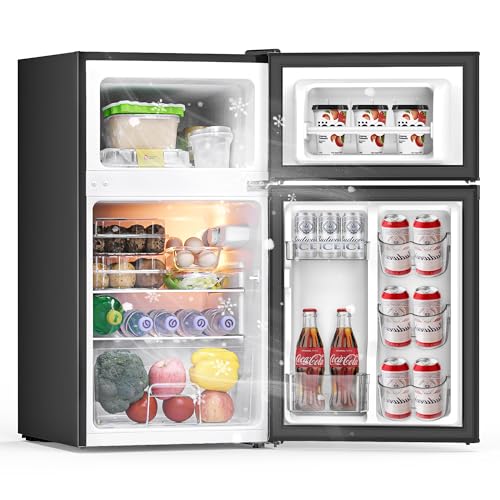
- True double-door design with a separate freezer (0.95 Cu Ft) and fridge (2.25 Cu Ft).
- Bright interior LED light and tempered glass shelves for better visibility and durability.
- Energy saving with a 1-5 thermostat and economical daily cost.
Best for: Users who want real freezing capability and an organized layout in limited spaces. Limitation: Slightly larger footprint than single-door mini fridges.
TCL 11.6 Cu Ft Counter-Depth Refrigerator
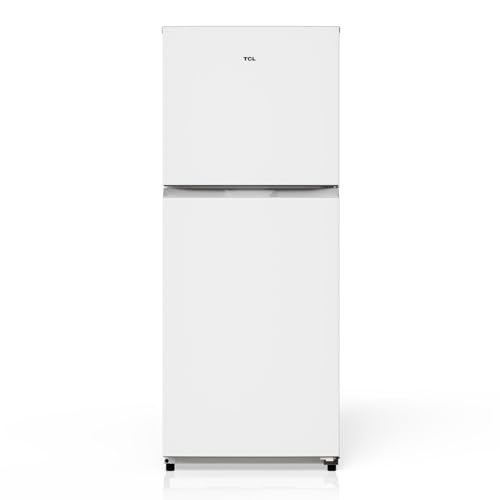
- Space-efficient 11.6 cu ft capacity with a separate top freezer (3.1 cu ft).
- Adjustable glass shelves and door storage with gallon bins for flexible organization.
- Reversible door for versatile placement in tight spaces.
Best for: Small apartments or shared living areas needing a compact yet functional fridge-freezer combo. Limitation: Not a full-size kitchen fridge, but offers balanced capacity.
Upstreman 14.6 Cu Ft Refrigerator

- Large 14.6 cu ft total capacity with separate refrigeration and freezing zones.
- Electronic temperature control with five settings; frost-free operation.
- Reversible door and robust cooling performance suitable for kitchens, offices, or small households.
Best for: Those needing substantial storage in a compact footprint with frost-free efficiency. Limitation: Higher energy use than smaller models, yet still efficient for its size.
Midea WHD-113FSS1 Double Door Mini Fridge

- 3.1 cu ft total with a small freezer and separate chilled area.
- Reversible door and interior LED lighting for visibility in tight spaces.
- Compact size ideal for bedrooms, dorms, or offices with modest cooling needs.
Best for: Dorm rooms or small offices needing a reversible-door fridge with a dedicated freezer. Limitation: Limited freezer space relative to larger units.
Electactic 2.6 Cu Ft Mini Fridge
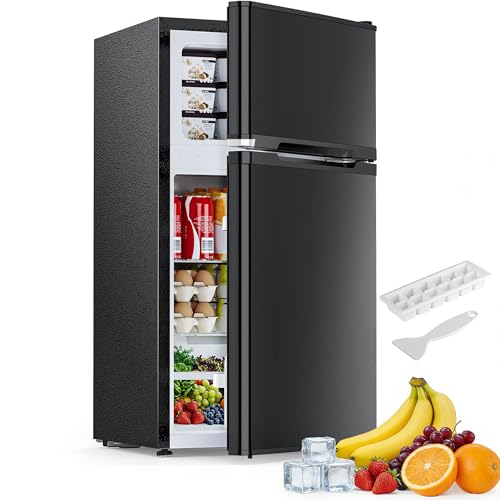
- 2.6 cu ft capacity with a built-in freezer and a separate fresh food zone.
- Thermostat control knob and leveling feet for easy setup in any room.
- Compact, space-saving design suitable for apartments, dorms, or offices.
Best for: Renters or students who need a compact fridge with a dedicated freezer and straightforward controls. Limitation: No automatic defrost function mentioned; manual upkeep may be required in higher humidity areas.
Buying Guide
Key factors to consider when choosing a low frost fridge freezer:
- Frost-free vs. low-frost: Frost-free or frost-free-assisted units reduce ice buildup, lowering maintenance but often cost more upfront.
- Capacity and layout: Match total capacity with your frozen goods needs. Double-door designs provide separate freezer and fridge spaces, while single-door units save space.
- Door orientation: Reversible doors offer layout flexibility in tight spots and diverse rooms.
- Energy efficiency: Look for models with low daily kWh usage and ENERGY STAR or similar efficiency marks to reduce operating costs.
- Dimensional fit: Measure your intended space, including door swing clearance, to ensure the unit fits without obstructing pathways.
- Storage flexibility: Adjustable shelves and door racks improve usability for bottles, tall containers, and groceries.
Compared to traditional frost-free models, these options emphasize compact footprints with practical freezer space. For dorms or offices, prefer units with reversible doors and LED lighting for visibility. If you store substantial frozen foods, choose a model with a larger freezer compartment or a true double-door design.
FAQ
- What is “low frost” and why choose it?
Low frost reduces ice buildup compared to manual defrost models, easing maintenance while providing reliable cooling.
- Is a separate freezer better than a combined unit?
Yes, a separate freezer (true two-compartment design) generally keeps frozen items more organized and at a stable temperature.
- Do compact fridges drink more energy when they have freezers?
Energy usage depends on size and design; compact units with efficient compressors can still be economical while offering freezers.
- Should I prioritize reversible doors?
Yes, if you need flexible placement in rooms where door swing direction matters for clearance.
- What maintenance is required for frost-free units?
Frost-free units typically require less manual defrosting, but periodic cleaning of shelves and seals helps maintain efficiency.