Best Bread Maker Machines for Fresh Homemade Bread at Home
The top choice for home bakers is a dependable bread maker that automates kneading, rising, and baking. This guide highlights five strong options, each suited for different needs—from beginners seeking simplicity to advanced planners craving versatility. If you want consistent loaves for a busy family, choose models with multiple loaf sizes and crust settings. For gluten-free or specialty breads, look for programs that support alternative flours and custom menus. The following picks are organized to help you compare capacity, programs, and ease of use at a glance.
Summary table of selected products:
| Product | Capacity | Key Features | Best For |
|---|---|---|---|
| Cuisinart Bread Maker CBK-110NAS | 1–2 lb | 12 programs, 3 crust colors, nonstick pan | Versatile for everyday bakers |
| OSIPOTO 2LB Bread Maker | 1–2 lb | 17 programs, beginner-friendly, low noise | First-time bakers |
| Elite Gourmet Programmable Bread Maker | 1–2 lb | 19 presets, gluten-free, delay timer | Comprehensive presets |
| KITCHENARM 29-in-1 Smart Bread Machine | 1–2 lb | 29 menus, one‑press operation, homemade setting | Health-focused, customization |
| Neretva 3.3LB Bread Maker | 2.2–3.3 lb | 15 programs, dual heaters, auto nut dispenser | Large loaves and complex recipes |
Cuisinart Bread Maker CBK-110NAS

The CBK-110NAS offers 12 programs, including common bread flavors and specialty options, suitable for versatile kitchen use. It supports three crust colors and three loaf sizes up to 2 lb, making it adaptable for small households or entertaining guests. The nonstick baking pan and kneading paddle simplify cleanup and dough handling. This model is best for home bakers who want a compact machine with a solid set of programs and reliable performance. A potential limitation is the smaller 2 lb maximum loaf, which may require multiple cycles for larger gatherings.
OSIPOTO 2LB Bread Maker Machine

This model highlights beginner-friendliness alongside a wide program selection—17 presets cover basic, whole wheat, gluten-free, jam, yogurt, and more. The 2 lb capacity and multiple loaf sizes (1 lb to 2 lb) support family use and portion control. It also emphasizes a straightforward control surface, which helps new users achieve reliable results with minimal trial. Caution: while versatile, more advanced bakers may want additional customization options not offered by all preset programs.
Elite Gourmet Programmable Bread Maker
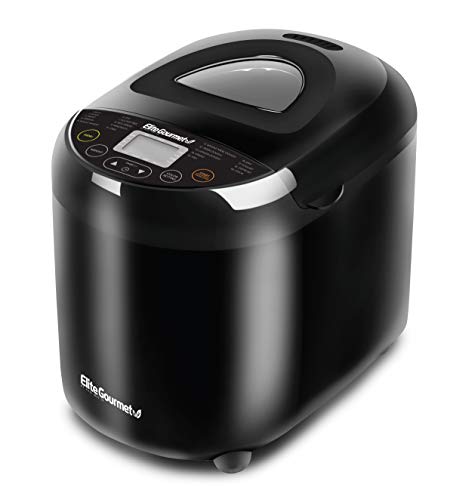
This Elite Gourmet model provides 19 one-touch programs, including gluten-free and dough options, plus a delay timer for timed baking. It supports loaves up to 2 lb with 1 lb, 1.5 lb, or 2 lb options, aiding portion control and meal planning. It is best for users who value a broad program library and quick setup. A limitation is that some programs may require ingredient adjustments for best results, depending on altitude and flour type.
KITCHENARM 29-in-1 Smart Bread Machine
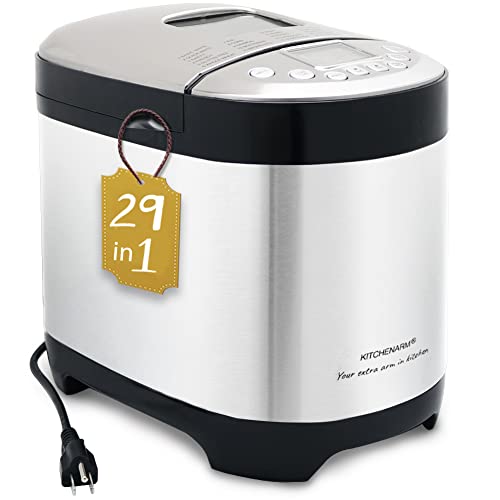
This smart bread maker stands out with 29 automatic menus, including 21 bread options and a fully customizable home-made mode. It features a one-press operation and a saved preset menu, with three loaf sizes and three crust colors. It is best for health-conscious cooks who want extensive recipe variety and repeatable results. A caveat: the large feature set may feel overwhelming to absolute beginners; starting with a few core programs is advised.
Neretva Bread Maker (2.2LB)

The Neretva 2.2 lb model emphasizes dual heaters for more even baking and a quiet operation with a 600W motor. It includes auto nut dispenser and a nonstick ceramic pan, designed for gluten-free and diverse dough needs. Best for households that want larger loaf options and automatic ingredient addition. A potential limitation is the mix of features across models—confirming compatibility with specific recipes is advised before use.
Buying Guide
What matters most when choosing a bread maker? Start with capacity and loaf size options. If you bake for a family, a 2 lb or larger model with multiple size settings helps prevent waste. Consider crust controls and preset programs for your preferred breads, plus any gluten-free or specialty options if needed. For beginners, models with straightforward controls and a built-in timer can reduce complexity. Advanced users may value a “homemade” or custom setting to preserve their favorite recipes. Noise level, pan material (nonstick or ceramic), and ease of cleaning also affect daily use.
Which features deliver the best value? A broad program library saves time and expands baking options. A visible lid or transparent window helps monitor progress without opening the machine. Delayed start timers are convenient for waking up to fresh bread or returning home to a warm loaf. If you care about nutrition, look for machines that support gluten-free or whole-grain cycles and allow you to choose crust darkness for a preferred texture.
FAQ
- What loaf size should I start with? Begin with a 1 or 1.5 lb loaf to test the machine and your recipe tolerance before making larger loaves.
- Do these machines handle gluten-free bread well? Many models include gluten-free programs or custom settings; verify each model’s gluten-free capability in its program list.
- Is a delay timer useful for bread making? Yes, a delay timer lets you set dough to bake later, handy for fresh bread upon waking or returning home.
- Are ceramic pans better than nonstick? Ceramic pans can be easier to clean and more durable, but check that the pan is compatible with your chosen model and recipe.
- Which model is best for beginners? Models with intuitive controls and a smaller learning curve, like the OSIPOTO’s beginner-friendly interface, are typically recommended for first-time users.
- Can I bake non-bread items? Several machines offer cake, jam, yogurt, and dough settings, but the primary purpose remains bread making. Use non-bread programs as directed by the manufacturer.