Best Meat Saws for Butchering: Efficient, Durable Options for Home and Pro Use
Top-tier meat saws for butchering provide powerful performance, precise thickness control, and durable construction. This guide highlights five solid choices to help buyers choose the right tool for home use, small shops, or field processing. Each option suits different needs, from compact, handier models to high-powered, industrial-grade machines. The table below compares key aspects to help you decide quickly.
| Product | Best For | Approx. Cutting Thickness | Power (W) | Notes |
|---|---|---|---|---|
| 1500W Bone Saw Meat Cutter (Generic) | Home shops and semi-professional use | 0.04″–7.8″ | 1500 | High efficiency, stainless workbench, replaceable blades |
| KATA Meat Saw For Butchering At Home (25″) | Budget-conscious home butchers | N/A | n/a | SK5 blade, easy blade changes |
| Weston 22″ Butcher Saw (47-2201) | Farm or field processing | N/A | n/a | Ergonomic handle, handles large cuts |
| POWKOL 2000W Electric Bone Saw | Commercial or busy shop | 0.04″–5.0″ | 2000 | Multiple safety features, 8 hours continuous run |
| 2500W Electric Bone Saw (Generic) | Heavy-duty, long-term use | 0.04″–8″ | 2500 | 316 stainless steel workbench, 8 blades included |
1500W Bone Saw Meat Cutter

Best for: Small shops or serious hobbyists who need fast bone processing without excessive footprint. This model offers 1500 W of cutting power with a 20″ x 15″ stainless workbench, providing robust performance and rust resistance. The design emphasizes high efficiency, capable of processing substantial bone quantities per hour. It includes replaceable blades to extend service life and maintain sharpness.
Why chosen: Combines high cutting strength with precise thickness control and a pure copper motor for stable operation. The adjustable thickness range supports varied ingredient sizes, making it versatile for steak, beef, and bone cutting tasks.
Caution: The unit’s power and size mean it’s best placed on a sturdy, level surface with proper splash containment to protect surrounding areas.
KATA Meat Saw For Butchering At Home (25″)

Best for: Home users who want an affordable, simple-to-use butcher saw for occasional bone and meat cutting. The 25-inch SK5 blade provides a sharp edge with minimal bending, helping to produce uniform pieces.
Why chosen: Durable stainless steel frame and quick blade changes make it easy to maintain. The blade’s sharp edge reduces effort and improves material yield for home butchering tasks.
Caution: The blade length may not suit very large cuts; consider mobility and storage space when selecting for frequent use.
Weston 22 Inch Butcher Saw (47-2201)
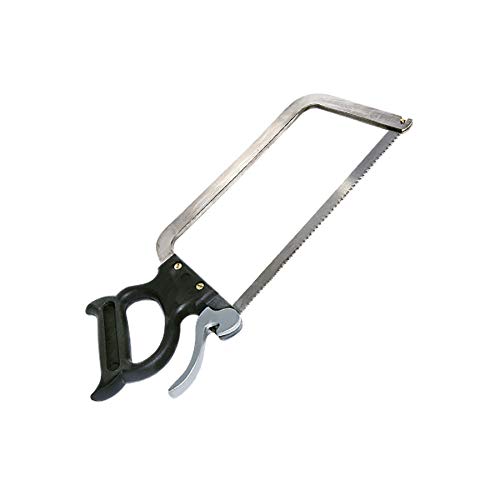
Best for: Processors who need to handle large cuts with comfort and control during extended sessions. The 22″ serrated blade is well-suited for field or farm use when breaking down large pieces of meat.
Why chosen: The ergonomic handle design reduces fatigue, enabling longer cutting sessions. It supports straight, consistent cuts through muscle, sinew, and bone.
Caution: Large cuts require stable handling; ensure a non-slip work surface to minimize slips and maintain safety.
KATA Bone Meat Saw For Butchering (20″)

Best for: Home butchers seeking a compact, durable bone saw for deer, small livestock, or game processing. The 20-inch SK5 blade provides strong cutting power without bending.
Why chosen: Durable stainless steel frame with an ergonomically designed polypropylene handle for comfort and reduced fatigue during longer sessions.
Caution: Shorter blade length may limit capability with large carcasses; assess typical meat sizes before choosing.
POWKOL 2000W Electric Bone Saw

Best for: Busy commercial setups requiring high throughput and continuous operation with robust safety features. This model suits processing farms and large kitchens needing speed and reliability.
Why chosen: A 2000 W copper motor provides strong torque with low noise and stable operation. The adjustable thickness range (0.04–5.0 inches) supports a variety of cuts, while multiple safety devices (blade stabilizer, push bar, waterproof switch) enhance operator safety.
Caution: Higher power and larger footprint demand ample space and appropriate electrical setup; ensure proper maintenance to keep safeguards effective.
2500W Electric Bone Saw (Generic)

Best for: Heavy-duty, long-term use in shops that process large quantities of meat and bone daily. The 316 stainless steel workstation adds durability and cleanliness for frequent cleaning.
Why chosen: Very high power and a wide thickness range (0.04″–7.8″) enable efficient processing of tough cuts and frozen meat. Eight included blades expand versatility and readiness for various tasks.
Caution: The unit’s size and power require careful placement and electrical considerations; regular blade maintenance is essential to sustain performance.
Buying Guide: Key Considerations For Meat Saws For Butchering
- Power and throughput: Larger, industrial models offer higher horsepower and can process more per hour. Choose based on typical batch sizes and space constraints.
- Cutting thickness range: If you plan to slice very thin ham or thick bone sections, ensure the thickness adjustability matches your needs.
- Construction materials: Stainless steel worktables and corrosion-resistant frames improve hygiene and longevity in wet environments.
- Blade design and maintenance: Replaceable blades and easy blade-changing mechanisms save downtime and support consistent cuts.
- Safety features: Look for blade stabilizers, push bars, waterproof switches, and emergency stops to reduce risk during use.
- Ergonomics and handling: Ergonomic handles and balanced weight help reduce operator fatigue during extended sessions.
- Footprint and cleaning: Compact units fit smaller shops, while larger models require dedicated space and splash containment for easy cleaning.
- Price vs. value: Higher-power models justify their cost in high-volume settings; for occasional use, a simpler model may offer better value.
Frequently Asked Questions
- What is the typical best use case for a meat bone saw?
– Best for processing large cuts, bones, and frozen meat in small shops or on farms where efficiency and power are important. - Is a higher wattage always better for butchering?
– Higher wattage can improve throughput, but space, heat, and noise considerations also matter for your workflow. - Should I prefer a model with multiple safety features?
– Yes. Safety features help prevent accidents in busy environments and increase operator confidence during heavy tasks. - How important is the thickness adjustment range?
– Very important if you regularly cut varied thicknesses; a broader range offers more versatility for different meats and cuts. - Do I need stainless steel for the work surface?
– Stainless steel is preferred for hygiene, easy cleaning, and resistance to moisture in meat processing environments.