Best Mini Washer/Dryer Combos for Small Spaces
Discover compact, efficient laundry solutions designed for apartments, dorms, RVs, and other tight living spaces. This guide highlights five top mini washer/dryer combos, each offering twin-tub or fully automatic operation, flexible drying, and easy setup. Learn how to choose based on capacity, energy use, and cycle options, then compare features side by side to find the best fit for your routine.
| Product | Brand | Capacity | Type |
|---|---|---|---|
| Auertech Portable Washer | Auertech | 18 lbs wash / 10 lbs spin | Twin Tub Semi-Automatic |
| Pataku Portable Washer | Pataku | 11 lbs wash / 6.6 lbs dry | Twin Tub Semi-Automatic |
| Giantex Portable Washer | Giantex | 12 lbs wash / 8 lbs spin | Twin Tub Semi-Automatic |
| Auertech Washer & Dryer Combo | Auertech | 18 lbs wash / 10 lbs dry | Fully Automatic Combo |
| Panda Beata Portable | Panda | 14 lbs wash / 8 lbs spin | Twin Tub Semi-Automatic |
When selecting a mini washer/dryer, look for a few common strengths: compact footprint, twin-tub or integrated dryer options, clear visibility of the wash cycle, water and energy efficiency, and simple controls. The products below span twin-tub and fully automatic designs, offering options for dorms, apartments, RVs, and other small living scenarios. Each entry includes a quick snapshot of key features to help you compare at a glance.
Auertech Twin Tub Portable Washer
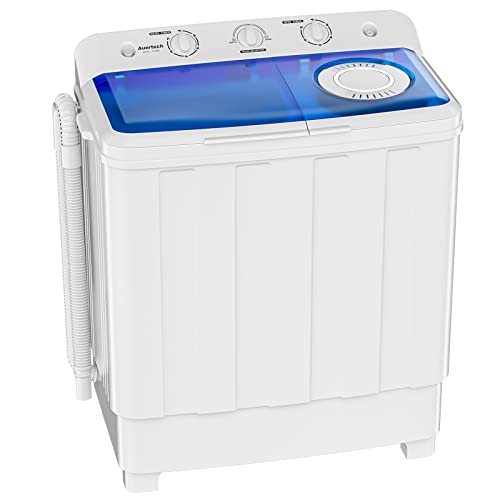
Auertech’s portable twin tub design combines an 18-pound washing capacity with a 10-pound spin dryer. The two separate tubs let users wash and dry in parallel, which can cut total laundry time. The unit is praised for its compact footprint, making it suitable for bathrooms or small closets in apartments, dorms, or RV setups. The transparent lid and window enable real-time monitoring of both wash and spin cycles. An included drainage pump and adjustable inlet hose add convenience when drainage needs to be elevated or redirected.
The washer operates at up to 1300 RPM, promoting efficient cleaning while conserving water. Note that the product is tested prior to packaging, and the water inside during testing should not be misconstrued as a used product. This model emphasizes ease of use for small households that need flexible scheduling without a full-sized machine.
Pataku Compact Mini Washer and Dryer

The Pataku unit offers a total capacity of 17.6 pounds, with 11 pounds for washing and 6.6 pounds for drying. The dual-tub design allows simultaneous washing and spin drying, which can streamline family laundry routines. Operation is straightforward, with a simple control panel for wash timing, drain options, and spin timing. A soaking function helps pre-treat tougher stains, and the design is suitable for apartments, dorms, RVs, and camping scenarios—great for light to moderate laundry loads.
Giantex Portable Washer and Spinner

The Giantex model provides 12 pounds for washing and 8 pounds for spinning within a compact twin-tub setup. It emphasizes user-friendly operation with a semi-automatic design and timer-based cycles. The unit’s compact form suits studio apartments, dorm rooms, or RV interiors, offering flexible cycle lengths to match different fabric types. A transparent lid provides visibility into wash progress, and the dual-tub design supports concurrent washing and drying tasks.
Auertech Full Automatic Washer & Dryer

This Auertech combo provides an 18-pound fully automatic washer paired with a 1.5 CuFt dryer, delivering a full wash-dry-wear cycle in one compact unit. The product notes emphasize a solution for apartments, RVs, and dorms with a fast, 10-pound drying capacity per cycle and smart heat control for fabric-friendly drying. The device is designed for daily use, with multiple dry settings that adapt to different textiles and clothing types. It’s ideal for users who want a more hands-off laundry experience without needing separate machines.
Panda Beata Portable Twin Tub

The Panda Beata offers a large twin-tub design with 14 pounds of wash capacity and 8 pounds of spin capacity, allowing concurrent washing and spinning. Its 1300 RPM motor provides robust cleaning power while maintaining energy efficiency. A compact build makes it viable for apartments, dorm rooms, RVs, and even camping setups. The Beata model emphasizes a balance between usability and performance, with clear indicators for load balance and cycle timing to help users manage smaller laundry tasks efficiently.
Buying Guide
Key considerations when choosing a mini washer/dryer combo include capacity, space, and cycle flexibility. For tiny living spaces, twin-tub models excel by letting you wash while another load spins dry, saving time and energy. If you prefer a one-piece solution, fully automatic combos offer simpler operation and integrated drying, but they may require a slightly larger footprint.
Capacity should match your typical laundry load. Families or shared spaces may benefit from larger wash and dry capacities, while singles or students can manage with 10–12 pounds of wash and 6–8 pounds of dry per cycle. Look at motor power (RPM and wattage) to gauge washing speed and drying efficiency. A transparent lid or window helps you monitor progress without pausing cycles.
Drainage options are important in tight spaces—units with a built-in drainage pump can boost flexibility when the drain outlet is higher than the machine. Noise level, build quality, and ease of maintenance also matter for daily use. Finally, verify compatibility with the available water line height and ensure the unit fits your closet, bathroom, or kitchenette space.
Versus and usage scenarios
Twin-tub machines are ideal for people who want to run a wash and a spin cycle at the same time, maximizing throughput in a compact footprint. Fully automatic combos simplify operation for users who prefer not to manage separate cycles and settings, at the possible cost of a larger footprint. Consider your living situation, laundry frequency, and tolerance for manual draining when selecting the best option.
Energy and water efficiency
Many models advertise low water use and efficient spins to reduce energy and utility impact. When comparing, inspect motor specifications and cycle options designed to optimize water usage. A transparent view into cycles helps you adjust loads to avoid overfilling and to select appropriate wash and dry durations for fabrics.