Best Non Electric Tankless Water Heaters for Reliable On‑Demand Hot Water
For households seeking continuous hot water without relying on electric circuitry, non-electric tankless gas models offer steady performance and fast recovery. This guide highlights top gas-powered options and explains how to compare them with electric equivalents. Readers will see practical considerations for sizing, venting, and installation, helping you choose a model that fits your home’s needs and your local climate.
Summary of selected products:
| Product | Type | Flow (GPM) | BTU / Power | |
|---|---|---|---|---|
| Rheem RTG-70DVLP-3 | Gas, Indoor | up to 7.0 | 160,000 BTU | Liquid propane; indoor venting |
| Rheem RTG-70DVLN-3 | Gas, Indoor | up to 7.0 | 160,000 BTU | Natural gas; indoor venting |
| Rheem RTG-70XLN-3 | Gas, Outdoor | up to 7.0 | 160,000 BTU | Outdoor installation; weatherproof cabinet |
| Rheem 18kW 240V Tankless Electric | Electric | up to 4.4 | N/A | Indoor; dedicated circuits |
| EcoSmart ECO 11 | Electric | up to 13 | 54 A draw | Compact; wall-mountable |
Note: This comparison focuses on non-electric options where feasible and includes electric models as reference points for total on-demand water heating choices. Always verify venting, gas supply, and local code compliance before purchase and installation.
Rheem RTG-70DVLP-3 Gas Tankless Water Heater

Type: Natural gas-fired indoor tankless unit. Capacity up to 7.0 GPM with a 160,000 BTU input. It is designed to supply hot water for 2–3 bathrooms under typical conditions. The model relies on a compact, durable cabinet and requires proper venting and a suitable gas supply. Installation should be performed by a qualified professional to ensure code compliance and safe operation.
Key features include high-efficiency operation, a robust 160,000 BTU input, and indoor installation with a durable build. The unit’s gas-fired design means reliable hot water even during peak demand, provided the venting and gas supply are appropriately configured for your home.
Rheem RTG-70DVLN-3 Natural Gas Tankless Water Heater

Type: Indoor natural gas tankless unit with up to 7.0 GPM and 160,000 BTU input. Designed for compact spaces and indoor installation, it supports wall mounting by a qualified installer. The model is intended to deliver continuous hot water across multiple outlets, with performance influenced by water temperature and flow.
Considerations include gas line sizing, venting requirements, and adequate space in the electrical panel if auxiliary components are used during installation. This unit emphasizes reliability under variable daily demand and is well-suited for homes with multiple hot water needs.
Rheem RTG-70XLN-3 Outdoor Tankless Gas Water Heater
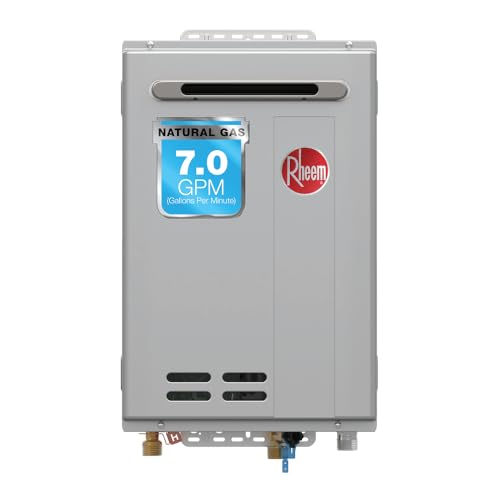
Type: Outdoor propane-fired tankless gas water heater with up to 7.0 GPM and 160,000 BTU input. The outdoor design offers weather-resistant protection and simplifies venting as compared with indoor models. It is suitable for homes with outdoor installation space and appropriate clearances.
Important considerations include climate exposure, venting routing, and ensuring annual maintenance to maintain efficiency. Outdoor units can reduce indoor space constraints while delivering reliable hot water during peak usage across bathrooms and laundry needs.
Rheem 18kW Electric Tankless Water Heater (Reference)
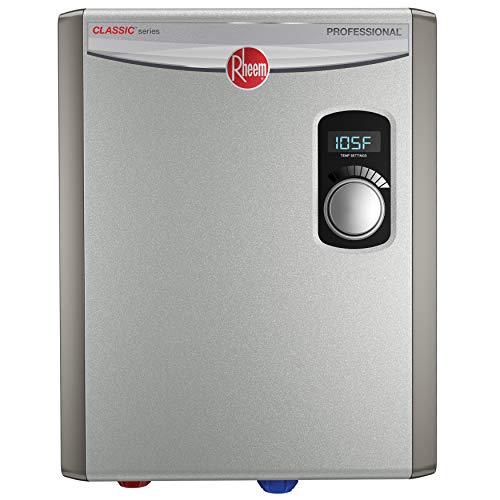
Type: Electric tankless unit with 18 kW at 240V. Delivers up to 4.4 GPM and uses self-modulating technology to adjust power with flow. The LED temperature display helps with precise control, and the device is compact for space-conscious installations. It is useful as a retrofit or new installation where electricity is readily available and gas options are unsuitable.
Note: While not non-electric, this model provides a benchmark for electric-only systems when comparing performance, efficiency, and space requirements against gas-fired non-electric options.
EcoSmart ECO 11 Electric Tankless Water Heater

Type: 13 kW electric unit featuring patented self-modulating technology and compact dimensions. It provides up to about 2–3 GPM depending on inlet water temperature and usage, with a design that saves space and reduces standby heat loss. A good option for point-of-use or smaller households where electricity is preferred or gas is not available.
When considering electric vs. gas, this model demonstrates efficiency benefits and installation flexibility, though it may not meet all simultaneous hot water demands in larger homes without staging or multiple units.
Buying Guide: Key Considerations For Non-Electric Tankless Water Heaters
- Household hot water demand: Estimate simultaneous use points (showers, sinks, laundry) to determine required GPM. Gas units typically deliver consistent performance at higher GPMs, while electric models depend on circuit capacity and inlet water temperature.
- Gas supply and venting: For gas models, ensure your home’s gas line capacity matches the unit’s BTU rating and that venting materials and clearances comply with local codes. Indoor installation requires venting, while outdoor models bypass some indoor venting challenges.
- Efficiency and operating costs: Gas units offer strong performance, but fuel costs vary by region. Electric models depend on electricity prices and may be constrained by panel capacity. Self-modulating electric units help optimize energy use.
- Space and installation: Tankless units are space-efficient, but they still require wall or surface mounting and clearances. Outdoor gas units can simplify interior space needs but require weatherproofing and exterior venting considerations.
- Maintenance and serviceability: Look for field-serviceable components, easy access for filter or element checks, and manufacturer support. Proper professional installation is critical for gas units.
- Electrical and utility considerations: If you’re cross-checking non-electric options, verify available gas supply, venting routes, and local codes. For electric models, confirm circuit breakers, wire gauge, and panel space are adequate.
- Longevity and warranties: Review manufacturer warranties, serviceability, and availability of replacement parts. Gas units often emphasize robust durability and long-term reliability when properly maintained.