Best Off Grid Kitchen Appliances for Camping and Remote Living
Discover reliable off-grid kitchen appliances designed to keep you fed and warm without traditional power. This guide highlights five top options, each suited to different off-grid lifestyles—from camping and tiny homes to emergency preparedness. Whether you need an off-grid oven, a compact fridge, a wood-fired stove, or a versatile gas range, these picks help you cook, preserve, and heat efficiently. Read on to find the best fit for your needs and space, with practical considerations for each option.
| Product | Type | Best For |
|---|---|---|
| InstaFire Ember Oven | Off-grid oven | Indoor-safe off-grid baking and outdoor cooking |
| Unique Appliances Off-Grid Refrigerator | DC solar fridge | Solar-powered food storage in remote areas |
| Trailblazer Cookstove | Wood-fired stovetop with oven | Versatile off-grid cooking and heating |
| Avanti Gas Range Oven | Gas range with oven | Compact, reliable cooking in small spaces |
| IronClad Rocket Stove | Portable wood stove | Emergency prep and outdoor cooking |
InstaFire Ember Oven: Compact Off-Grid Oven

The InstaFire Ember Oven is an indoor-safe, off-grid oven designed to pair with InstaFire Canned Heat+ for safe indoor baking without power. It also supports outdoor baking using biomass such as leaves, wood chips, twigs, and charcoal. Convection heating provides evenly cooked results, making it suitable for home-cooked meals in off-grid settings. Best for campers who want reliable oven capabilities without electricity and for emergency preparedness planning where indoor baking is needed.
Best for: small households or campers seeking a portable, biomass-friendly baking option. Consider this if you want an oven that works with biomass fuel and offers home-like convection results. Caution: verify indoor use with your space configuration and ensure proper ventilation when using biomass indoors.
Unique Appliances Off-Grid DC Refrigerator

This retro-styled 14 cu.ft. DC refrigerator is designed for solar-powered operation, making it ideal for remote locations, cabins, or off-grid homes. It features a top freezer, adjustable shelves, multiple door shelves, and efficient insulation for reliable cooling with solar energy. Best for: off-grid residents who prioritize stylish design and reliable cold storage powered by solar energy. Caution: ensure adequate solar capacity and battery support for continuous cooling in extended cloudy periods.
Trailblazer Cookstove: Wood Fired Oven

The Trailblazer Cookstove is a heirloom steel, wood-fired stove with an oven and a removable cooktop. It offers two heat zones, a reversible grill/griddle, and a full-size oven capable of baking breads and casseroles. Best for: off-grid cooks who want true wood-fired versatility, including boiling, simmering, frying, and baking. Limitation: heavier and less portable than compact stoves; setup is more involved.
Avanti Gas Range Oven

This compact freestanding 20-inch gas range offers four sealed burners with electronic ignition and a 2.1 cu. ft. oven, plus a storage drawer and broiler access. Best for: small kitchens, RVs, or vacation homes needing reliable gas-powered cooking with a compact footprint. Caution: ensure proper ventilation and gas supply compatibility in off-grid or remote locations.
IronClad Rocket Stove: Portable Wood Stove
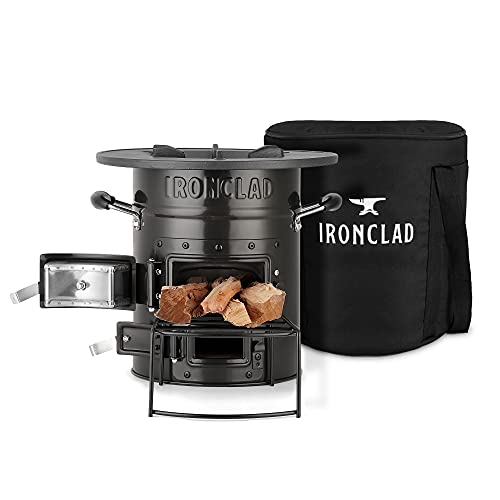
The IronClad Rocket Stove delivers high-efficiency wood burning with up to 23,000 BTUs, designed for portability and reliability in off-grid environments. It is truly off-grid, requiring no propane or electricity, and includes a weather-resistant canvas bag and a rugged stove top. Best for: emergency kits, backcountry cooking, and compact outdoor setups. Caution: fuel source depends on available wood and biomass; plan for varying burn rates in different conditions.
Buying Guide: Key Considerations For Off-Grid Kitchen Appliances
- Fuel Source Compatibility: Do you rely on biomass, solar, natural gas, or a combination? Match appliances to your preferred energy sources and storage capabilities.
- Space And Portability: How much room do you have? If you travel often, prioritize light, compact units like the Ember Oven or Rocket Stove.
- Cooking Versatility: Do you need baking, boiling, or frying? Some devices combine oven and stove features, while others excel at a single function.
- Power Independence: Are you fully off-grid or occasionally connected to a generator or solar array? Consider battery and solar requirements for DC refrigeration or electronic ignition systems.
- Durability And Weather Resistance: Outdoor-use appliances should withstand moisture, heat, and dust. Look for rugged construction and protective coatings.
- Safety Features: Indoor-use devices must meet ventilation and fire-safety guidelines. Check for heat shields, stable bases, and proper clearances.
- Maintenance: Look for easy-to-clean components, removable parts, and dishwasher-safe or wipe-clean options where available.
- Tank Or Fuel Capacity: For stoves and ovens, ensure you have an adequate fuel source or energy supply to meet your cooking needs over time.
Frequently Asked Questions
- What is the main advantage of an off-grid oven?
- Can I use a conventional refrigerator off-grid?
- Which fuel is best for off-grid cooking?
- Is portable gear sufficient for a full off-grid kitchen?
- Are there safety concerns with off-grid appliances indoors?
- How do I evaluate off-grid efficiency?
Off-grid ovens provide baking capabilities without electricity, enabling reliable cooking in remote locations or during power outages.
Yes, with a solar-powered or battery-supported DC refrigerator designed for off-grid use. Check voltage, insulation, and solar capacity for continuous operation.
Biomass (wood, leaves, charcoal) works well for wood-fired stoves, while solar-powered and gas options suit different travel and storage needs. Choose based on fuel accessibility and safety.
Portable gear covers basic needs, but for full-time off-grid living, a mix of compact appliances and larger, durable units may be necessary to meet daily cooking and refrigeration demands.
Yes. Indoor use requires proper ventilation and adherence to safety guidelines, especially when burning biomass or using specialized heat sources.
Assess fuel efficiency, burn rates, storage capacity, and energy requirements. Compare total operating costs and reliability in your typical off-grid scenario.