Best Olive Oil Extraction Machines for Home and Small Business
Looking for an olive oil extraction machine that fits home use or a small commercial setup? This guide highlights the best options for extracting olive oil and other seeds and nuts. Each product is evaluated for durability, versatility, and suitability for different buyers—home cooks, small cafes, or hobbyists who want fresh oil. We focus on models that support hot and cold press modes, easy operation, and reliable build quality.
| Product | Best For | Key Benefit |
|---|---|---|
| Rkazes 820W Oil Press | Home & light commercial | Two press modes, real-time temperature display |
| Rkazes 1800W Oil Press | Medium to larger batches | High output, wide material range |
| FrameFirm Automatic Oil Press | Compact spaces, varied materials | Cold/Hot press, space-saving |
| MilleLoom 900W Oil Press | Small households, beginners | Premium stainless steel, user-friendly |
| JOYKUVA 850W Automatic Oil Press | Quiet operation, home kitchens | Copper motor, automatic safety |
Summary: The top picks emphasize machines with both cold and hot pressing, robust stainless steel or food-grade construction, and clear temperature or operation controls. These features help users maximize oil yield while preserving flavor and nutrients. The following sections provide detailed insights for each model to help buyers choose the best olive oil extraction machine for their needs.
Rkazes 820W Oil Press Machine

The Rkazes 820W model offers hot and cold oil pressing modes. Hot pressing heats material before pressing to maximize oil yield and nutrients, while cold pressing preserves natural flavors by pressing at lower temperatures. This dual functionality makes it suitable for users who want flexibility across different seeds and nuts. The machine features an intelligent panel, real-time oil temperature display, and countdown-based operation for hands-free processing. It can run continuously in a commercial or home setting, with the press rod crafted from wear-resistant stainless steel for durability.
Best for: Home users and small shops seeking flexibility between hot and cold press methods. It is well-suited for peanuts, sesame, soybeans, sunflowers, and other common oil seeds.
Limitations: The data notes a maximum yield range; results may vary based on material quality and moisture content. Not all materials are recommended; confirm compatibility for your specific seeds.
Rkazes 1800W Oil Press Machine
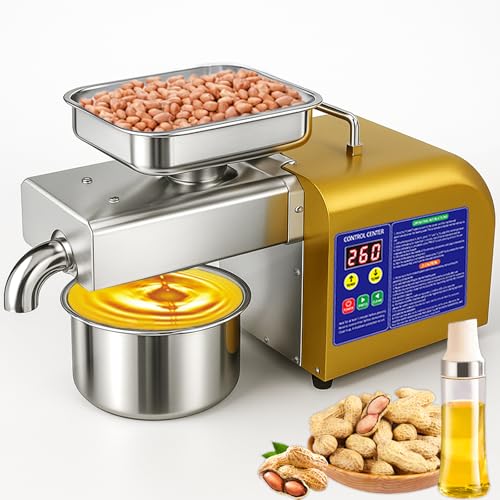
This high-power model is designed for larger batches and faster processing. It supports both cold and hot press modes, with a broad temperature range (104-572°F / 40-300°C) to accommodate seeds, nuts, and other oil-bearing materials. The machine operates continuously for up to 24 hours and can process up to 11-20 pounds of oil per hour, depending on the material. A caution note indicates that freshly pressed oil may appear turbid and should be left to settle for 24 hours before use. It does not extract olives, among other limitations noted in the features.
Best for: Small businesses or dedicated home setups that need efficient, high-volume oil production and can work with non-olive seeds and nuts (excluding olives).
Limitation: Not suitable for whole olives, spices, or certain delicate ingredients. Fresh oil may require settling before use.
FrameFirm Automatic Oil Press

The FrameFirm model emphasizes multi-material capability and space efficiency. It supports both cold pressing and hot pressing, with a compact stainless steel design that saves space in kitchens or small workshops. The unit is promoted as suitable for over 30 types of raw materials, including nuts and seeds like castor and coconuts, making it versatile beyond olive oil. Cleaning is made easier with a flip-top lid design for straightforward disassembly and cleaning.
Best for: Those who want a versatile machine for experimenting with multiple oil crops in a compact footprint. It’s suitable for small businesses or serious hobbyists exploring diverse materials.
Limitation: While described as multi-material, performance may vary with harder seeds or unusual materials; ensure your chosen material is compatible before pressing.
MilleLoom 900W Oil Press

The MilleLoom oil press is built with 304 stainless steel and offers both cold and hot pressing options. The 900W motor provides solid performance for home users who want safety, reliability, and user-friendly operation. Constructed from food-grade stainless steel, the unit aims to deliver safe, durable oil production suitable for a kitchen or small workshop environment. The design emphasizes simplicity, making it accessible for beginners and those seeking an easy setup.
Best for: Home cooks and beginners who want a durable, simple, and clean-friendly machine for occasional oil production from nuts and seeds such as peanuts, sesame, and walnuts.
Limitation: Some seeds may require pre-cutting or handling to avoid jams; check material suitability for olives, as olives are typically more challenging to press with many home units.
JOYKUVA 850W Automatic Oil Press

The JOYKUVA 850W unit combines copper motor efficiency with automatic safety features and a smart temperature control system. It supports hot and cold press modes, and the 110V setup makes it practical for home kitchens and small businesses. The machine is designed to handle a variety of seeds and nuts, including walnuts, olives (kernels), sesame, and sunflower seeds, with a focus on stable, low-noise operation and 24-hour continuous capability. The safety protections help prevent jams or overheating.
Best for: Home kitchens and small operations seeking a quiet, efficient oil press with automatic safety features and precise temperature control.
Limitation: It is not recommended for green olives or certain delicate materials; verify seed size and hardness before pressing to avoid mechanical issues.
Buying Guide
What should you look for in an olive oil extraction machine?
- Press type: Choose hot press for higher yields and flavor intensity, or cold press to preserve nutrients and aroma.
- Power and throughput: Higher wattage models generally handle larger batches; consider your daily volume needs.
- Materials compatibility: Ensure the machine supports the seeds and nuts you plan to use, particularly whether olives themselves are suitable.
- Construction: Stainless steel bodies and food-grade components reduce rust and contamination risk.
- Temperature control: Real-time monitoring helps optimize extraction for different materials.
- Ease of cleaning: Removable components and flip-top lids simplify maintenance.
- Noise and stability: Copper or premium motors with mechanical stability reduce vibration and noise.
Should you buy a compact or a high-output model?
Compact models are ideal for home cooks, hobbyists, or small cafes with moderate daily oil needs. High-output models suit small businesses that require continuous operation and higher oil yields. Consider whether you need multi-material capability (pressing seeds beyond olives) or a single-focus machine for olive oil only.
What are common limitations to watch for?
- Some machines can’t process whole olives or certain delicate seeds. Check the product notes for olive compatibility.
- Freshly pressed oil may need settling before use; factor this into processing timelines.
- Oil yield depends on material quality and moisture content; results can vary between batches.
Maintenance and safety tips
- Regularly inspect gaskets, seals, and screens for wear and tear.
- Operate within the specified temperature range to prevent motor strain.
- Keep the machine clean and dry after use to prevent rust and buildup.
FAQ
- Can these machines press olives directly? Some models press olive kernels but not whole olives. Always check product specifications for olive compatibility.
- Is cold pressing better for health? Cold pressing preserves natural flavors and nutrients but may yield less oil than hot pressing.
- What materials can I press besides olives? Common seeds include peanuts, sesame, sunflower, walnuts, almonds, and soybeans, depending on the model.
- Do these machines operate quietly? Many units use copper motors or high-quality gear systems to reduce noise, but all are still mechanical devices.
- Is continuous operation safe for home use? Some models specify 24-hour continuous operation; follow the manual for safe usage and cooling requirements.
- Do I need to settle oil after pressing? Fresh oil may appear turbid and typically benefits from a settling period before use.