Best Outdoor Wood Burning Cookers for Rustic Cooking and Backcountry Escapes
Answering the practical buyer’s search for durable, versatile outdoor wood burning cookers, this guide highlights five top options designed for camping, backyard gatherings, and off-grid cooking. Each product is assessed for best-use scenarios, durability, and portability. Ideal buyers include hikers and backpackers needing compact stoves, campers seeking versatile cooking setups, and homeowners wanting a backyard fire pit with grill functionality. The table below compares key details to help you choose quickly.
| Product | Best For | Notes |
|---|---|---|
| Siohdagu Multifunction Wood Burning Stove | Backyard cooking and tent camping | Durable steel build; integrated chimney design |
| Lineslife Wood Burning Camp Stove | Backpacking and lightweight camping | Cast iron, compact and portable |
| GXONE Multifunction Wood Burning Stove with Grill Rack | Off-grid cooking and versatile cookware | Sturdy 1.8mm steel; includes grill and 3 wok rings |
| Japard Wood Burning Camp Stove | Portable camping and emergency use | Foldable legs; stainless steel; compact with side table |
| TMWINGS Fire Pit For Outside | Patio gatherings and outdoor grilling | 3-in-1 fire pit with rotating table and grill |
Siohdagu Multifunction Wood Burning Stove

- Built for Durability: Crafted from high-class steel with integrated compression technology for heat resistance and longevity.
- Efficient Combustion: Unique chimney design helps exhaust smoke and improves burning efficiency.
- Enhanced Versatility: Burner rings in multiple sizes to fit various cookware dimensions.
Best for: Campers and backyard cooks who want a single stove that can handle different pot sizes and keep up with higher heat demands. Limitations: Heavy for ultra-light backpacking; may require windbreak in open terrain.
Lineslife Wood Burning Camp Stove

- Premium Materials: High-quality cast iron offers durability, rust resistance, and longevity.
- Efficient Burning: 16 air vents promote ventilation and efficient burning; large combustion chamber supports extended burns.
- Adjustable Designs: Adjustable pot holders and rotatable, foldable stove legs maximize compatibility with various cookware.
Best for: Backpackers and campers who prioritize durability and long burn times with flexible cookware support. Limitations: Heavier than ultra-light models; requires careful packing to protect cast iron.
GXONE Multifunction Wood Burning Stove With Grill Rack
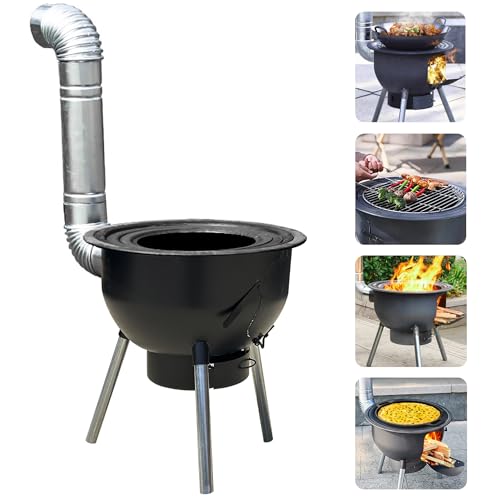
- Direct Fuel Use: Burns wood, charcoal, branches—suitable for outdoor and off-grid cooking.
- Durable Construction: 1.8mm steel body; robust door for adding wood mid-cook.
- Cookware Flexibility: Includes a 15-inch stainless steel cooking grate and three wok rings for varied cookware sizes.
Best for: Those who want a robust stove with integrated grill capabilities and broad cookware compatibility. Limitations: Welding at joints can appear rough but remains sturdy; check for fit with larger pots.
Japard Wood Burning Camp Stove

- Foldable & Portable Design: One-touch leg fold for compact storage; includes carrying bag for easy transport.
- Airflow & Fuel Access: 16 air vents promote airflow; side table aids fuel management.
- Stainless Steel Build: Durable and rust-resistant construction for varied outdoor uses.
Best for: Quick-setup camping or emergency use where compact size and portability matter. Limitations: Smaller footprint may limit larger cooking vessels.
TMWINGS Fire Pit For Outside

- 3-in-1 Design: 28″ fire bowl with a 26″ rotating table; serves as a fire pit, BBQ grill, or table for 4–6 people.
- Heavy-Duty Construction: Cold-rolled steel frame with wheels and a parking brake for easy movement and stability.
- Large Cooking Grate: 21″ grate enables versatile outdoor cooking; spark guard enhances safety.
Best for: Patio and backyard gatherings where a combined fire pit, grill, and table is desired. Limitations: Requires a larger outdoor footprint and protection from wet weather.
Buying Guide
- Purpose and portability: If you need ultra-light transport, prioritize backpacker-focused models like Lineslife. For backyard versatility, consider GXONE or Siohdagu with grill options.
- Fuel flexibility: Look for stoves that support multiple fuels (wood, charcoal, branches) to maximize usability in different settings.
- Cookware compatibility: Check pot ring sizes, cooking grate dimensions, and whether the stove supports large pots or grills safely.
- Durability and materials: Stainless steel or heavy-gauge steel increase longevity in harsh outdoor environments; rust resistance is a key factor.
- Safety features: Integrated ash boxes, spark guards, and stable bases help prevent accidents during use.
- Maintenance: Favor designs with easy ash removal and simple cleaning to keep the stove ready for next use.
- Weather and space: Fire pits with rotating tables or enclosed pits suit semi-outdoor spaces; portable stoves suit all-season use with proper wind protection.
When comparing products, consider your typical outdoor settings, the volume of cooking you anticipate, and how often you move equipment between locations. The options above emphasize durability, portability, and versatile cooking methods to support varied outdoor cooking goals.
FAQ
What is the main difference between a wood burning stove and a fire pit?
A wood burning stove is designed for controlled cooking or heating with an enclosed fire environment, while a fire pit focuses on ambiance and open-flame cooking or grilling in a social setting.
Can these stoves burn charcoal as well as wood?
Many models support multiple fuels, including charcoal and wood; check the product features to confirm compatibility.
Are these portable stoves suitable for backpacking?
Some are lightweight and foldable, suitable for backpacking, while others are heavier and intended for car camping or backyard use.
What should I consider for safety when using outdoor wood burners?
Look for spark guards, stable bases, and proper ventilation. Follow manufacturer guidelines for fuel loading and air intake management.
Do these products require special maintenance?
Regular cleaning of ash and residues, checking joints for corrosion, and storing in dry conditions help extend life.