Best Ovens for Ceramic Art: Safe, Efficient Kilns and Bake Ovens for Crafting
The best oven for ceramic art combines even heat, reliable temperature control, and safety features to protect your pieces. This guide highlights practical, user-friendly options ideal for hobbyists, crafters, and small studios. Top picks emphasize energy efficiency, ease of use, and consistent results for clay, polymer clay, pottery, and jewelry projects. Below is a quick buying guide table of the five recommended ovens and kilns to consider.
| Product | Best For | Key Advantage | Limitations |
|---|---|---|---|
| WECLAYER 25QT Polymer Clay Oven | Polymer clay artists | Large capacity, included mats and gloves | Plastic shell needs careful handling |
| PYY Electric Kiln, 1500W | Ceramic firing and small ceramic pieces | Precise digital temp control up to 2200°F | Compact chamber limits very large items |
| Ryfolim 1500W Kiln | Jewelry casting and small metal/clay pieces | Fast heat, PID control | Top-opening design may need clearance |
| PYY Electric Pottery Kiln | Home pottery and wax casting | High temp, safety features | Small chamber limits scale |
| ReArt Oven Bake Polymer Clay White | DIY modeling and kids projects | Non-toxic clay set, oven-bake ready | Not a traditional kiln for large batches |
WECLAYER 25QT Polymer Clay Oven with Accessories

Best for serious polymer clay projects, this 25-quart oven offers a spacious interior for batching. It ships with two heat-resistant gloves, a thermometer, two non-stick silicone mats, and a diamond-pattern baking grid, ensuring even heat distribution and reduced scorching. The heat-resistant shell and scald-proof handles add safety for frequent use in a busy studio or home workshop.
Who it’s best for: hobbyists and small business makers who bake multiple polymer clay pieces at once. Why selected: its large capacity enables batch processing and the included accessories help protect finishes from direct contact with metal during baking. Limitation: the exterior is a plastic shell, so it requires careful handling and placement away from heat-sensitive surfaces.
PYY Electric Kiln, 1500W for Ceramics and Jewelry

Designed for artists working with ceramics, this kiln reaches up to 2200°F/1200°C with precise digital temperature control. The compact chamber is suitable for small pottery pieces, jewelry molds, wax casting, and glass fusing. A Type-K sensor and real-time display support reliable, repeatable firings.
Who it’s best for: home studios and small makers needing high-temperature capability with accurate control. Why selected: its digital PID controller provides stable, repeatable results, and the included safety features help manage heat during longer firings. Caution: the firing chamber is relatively compact, so large or tall items may require space planning.
Ryfolim 1500W Kiln for Pottery and Jewelry

This table-top muffle-style furnace blends speed with control, delivering ready-to-work temperatures around 800°C in under 40 minutes. Its four-sided heating and PID control are designed for jewelry casting, enameling, and basic ceramic drying. The top-opening door and included heat-resistant gloves enhance user safety during operation.
Who it’s best for: artists who want fast heat-up for metal clay and small ceramic pieces. Why selected: high power and modern digital control, plus safety features. Limitation: chamber size may constrain larger pieces, making it better suited for smaller projects.
PYY Electric Pottery Kiln – Home Studio
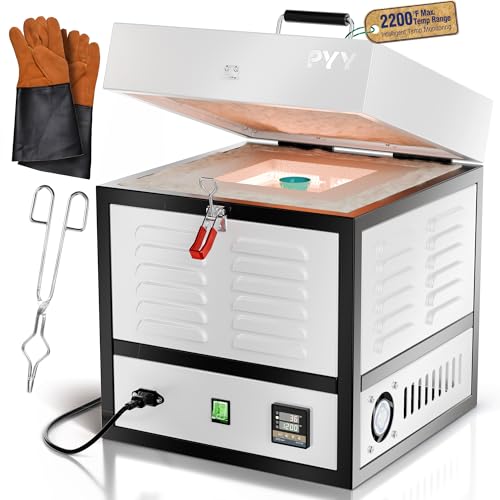
Built for home studios, this 1500W kiln provides a high-temperature firing environment with a safe, top-opening design. The kiln supports long-term use with protective features, including an audible/visual alarm for over-temperature conditions and power-out memory. It comes with anti-slip crucible pliers and heat-resistant gloves for safer operation.
Who it’s best for: hobbyists and crafters who need reliable heating for clay, ceramics, and metalwork. Why selected: advanced safety features and a top-opening design that simplifies access. Caution: space planning is needed to accommodate the top-opening lid during use.
ReArt Oven Bake Polymer Clay White Kit

This beginner-friendly polymer clay set includes a white oven-safe slab and tools designed for modeling and jewelry making. The kit emphasizes a safe, non-toxic composition and straightforward instructions for baking and finishing. It is ideal for home use and holiday projects where quick, creative results are desired.
Who it’s best for: beginners and kids crafting projects who want an all-in-one clay baking solution. Why selected: clear, ready-to-use kit with everything included. Limitation: not a full-size kiln, better for smaller polymer clay jobs and education kits.
Buying Guide: How to Choose the Right Oven or Kiln for Ceramic Art
- Project scale: For batch polymer clay work, a larger capacity oven offers higher throughput. For individual pieces, a smaller kiln with precise control can be more economical.
- Temperature range: Ceramic and glass projects require kilns that reach high temperatures (up to 2200°F/1200°C). For polymer clay, ensure the oven reaches around 265–275°F (130–135°C) or the manufacturer-recommended bake range.
- Heat distribution: Look for even heating features, multiple heating elements, and accessories like diamond mats or non-stick surfaces to prevent scorching and indentations.
- Safety features: Heat-resistant shells, insulated bodies, glare-free displays, over-temperature alarms, and safety gloves reduce risk during operation.
- Chamber size and access: Top-opening versus front-loading designs affect ease of placement and removal, especially for tall or bulky pieces.
- Controls and accuracy: Digital PID or precise thermostat control helps maintain consistent temperatures across firings, leading to repeatable results.
- Accessories: Included trays, racks, mats, gloves, and thermometers add value and reduce extra purchases.
- Space and ventilation: Ensure the chosen unit fits your workspace and has adequate clearance for safe operation in enclosed areas.
Frequently Asked Questions
- What kind of oven is best for polymer clay? For polymer clay, a dedicated polymer clay oven with adequate temperature control and a large baking surface is ideal. Look for safety features and included mats to protect clay surfaces.
- Do kilns require special ventilation at home? Most small kilns used for pottery and jewelry do not require special ventilation, but ensure proper room ventilation and follow safety guidelines when firing materials indoors.
- Can I bake polymer clay in a regular kitchen oven? Some polymer clay brands are designed to bake in standard home ovens at low temperatures, but use an oven dedicated to crafts if possible to prevent contamination of food surfaces.
- What should I consider when buying a kiln for jewelry making? Prioritize temperature stability, a compact yet sufficient chamber, precise digital control, and safety features to protect delicate pieces during sintering or firing.
- Is a larger oven always better for clay work? Not necessarily. Larger capacity helps with batch work, but smaller kilns can offer faster heat-up, easier handling, and lower energy use for single-piece projects.
- What maintenance does a ceramic kiln require? Regularly inspect insulation, seals, and cords; keep the interior clean; replace worn gloves or trays; and calibrate temperature controls to ensure consistent results.