Best Over Edging Sewing Machines for Home Projects and Professionals
If you’re shopping for an over edging sewing machine (serger) to finish edges, trim fabric, and create professional-looking seams, you’ll want models that are fast, durable, and easy to thread. This guide highlights five top options suited for different builders—from beginners tackling simple hems to pros handling heavier fabrics. Each choice is explained with who it’s best for, why it stands out, and a practical limitation to consider. A quick buyer’s table follows to help you compare at a glance.
| Product | Threading | Stitches (SPM) | Best For |
|---|---|---|---|
| Brother 1034D | 4-thread capable | 1,300 | Heavy fabrics and denim projects |
| FEIYUE FY505 | 2/3/4-thread | Noted for precision cutting | Versatile fabrics and rolled hems |
| SewLaVie 360 | 2/3/4-thread | 1,300 | Beginners seeking easy setup |
| VEVOR Serger | 3/4-thread | 1,250 | Budget-friendly heavy use |
| SINGER S14-78 | 2/3/4-thread | 1,200 | Comprehensive stitch options |
Brother 1034D Overlock / Serger

The Brother 1034D is a heavy-duty metal- framed serger designed to handle multiple layers, including denim. It operates at up to 1,300 stitches per minute and offers a reliable 3- or 4-thread setup with an underlooper threader and removable trim trap. This model is best for experienced hobbyists or small shop sewists who routinely work with thicker fabrics and require fast, clean edge finishing. A potential limitation is that the 1034D relies on standard serger threading and setup, which can be time-consuming for complete beginners.
Best for: Sewers who routinely work with heavy fabrics (e.g., denim) and need high-speed finishing with a sturdy metal frame. The included accessories and speed make it efficient for substantial projects.
Why selected: Combines durable construction with high-speed performance and a versatile 3/4-thread system, making it a strong all-around choice for robust edging tasks.
Limitations to consider: The machine’s setup may require some initial practice to thread efficiently, especially for first-time serger users.
FEIYUE FY505 Serger Overlock Machine

The FEIYUE FY505 offers 2/3/4-thread capability and a durable metal frame, with built-in rolled hems and adjustable differential feed. This model is well-suited for crafters who want flexible stitch options and the ability to handle different fabrics, from knits to wovens. Its robust blade design supports clean, professional edges. A consideration is that moving between 2-, 3-, and 4-thread configurations may require some setup time to optimize stitch quality across fabrics.
Best for: Projects that require flexible threading options and precise finishing, especially when rolled hems are part of the plan.
Why selected: The combination of multiple threading options and built-in rolled hem makes it a strong pick for versatile garment finishing and decorative edges.
Limitations to consider: Adjusting tension and stitch width across fabrics may require experimentation for beginners.
JAYGOVAN Serger Overlock Machine

The JAYGOVAN 4-thread serger delivers up to 1,200 stitches per minute and includes an adjustable stitch width and tension system. Built for a heavy-duty metal frame, it supports fabrics like cotton, silk, and denim. The machine also highlights automatic fabric trimming during serging, which reduces workflow steps. The main caveat is that the feature-rich setup may require some learning time to optimize tension and threading for different fabrics.
Best for: Users who want faster edging with the convenience of automatic fabric trimming and a robust metal frame for heavy fabrics.
Why selected: High efficiency and adjustable controls accommodate diverse fabrics, making it a reliable mid-range option for serious hobbyists and small studios.
Limitations to consider: Beginners may need guidance to master tension settings across materials.
SewLaVie 360 Upgraded Serger / Overlock
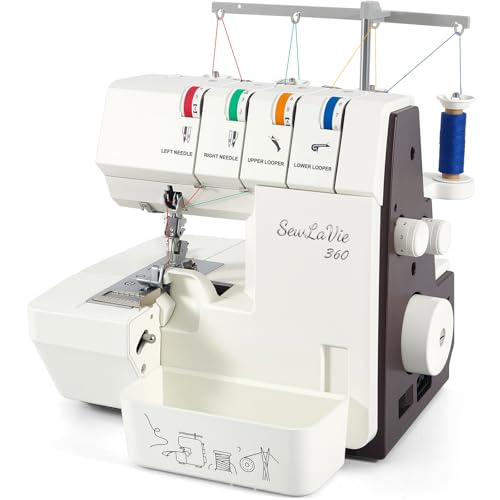
The SewLaVie 360 Upgraded Serger emphasizes accessible threading with a wide-open threading area and a visual alignment guide. It supports 2/3/4 thread configurations and operates at 1,300 stitches per minute with differential feed. This model is particularly appealing to beginners and professionals who value straightforward setup and quick project turnaround. A minor caveat is that advanced stitch customization may feel less granular than some dedicated professional machines.
Best for: Beginners and pros who want quick setup, easy threading, and strong overall performance for a range of fabrics.
Why selected: The open threading and guided alignment help reduce setup time, enabling faster progress on projects without sacrificing edge quality.
Limitations to consider: It may offer fewer advanced decorative options than higher-end models.
VEVOR Serger Overlock Machine

The VEVOR serger provides 3/4-thread versatility with adjustable stitch length and width. It’s powered by a strong motor and built on a sturdy metal frame, delivering up to 1,250 stitches per minute. This model is an economical option for projects that require fast edging across various fabrics, with a focus on reliable edge finishes. A caution is that some users may need to practice blade control to prevent fabric snags on thicker materials.
Best for: Budget-conscious sewists who need solid performance for routine edging and edge-finishing tasks.
Why selected: The balance of speed, versatility, and durable construction makes it a compelling value pick for ongoing serging tasks.
SINGER S14-78 Serger With Accessory Kit

The SINGER S14-78 offers 2/3/4-thread stitching with 1,200 stitches per minute, a differential feed, LED light, and a free arm for hard-to-reach areas. This model is a solid choice for home sewers who want a versatile machine with essential features packaged in a user-friendly design. A potential limitation is that some advanced decorative stitches may not be as expansive as higher-end sergers.
Best for: Garment sewers and home textiles enthusiasts who require a comprehensive feature set, including a free arm and helpful lighting.
Why selected: The combination of versatile threading, LED illumination, and free arm makes it a capable all-around serger for varied projects.
Buying Guide: Key Purchase Considerations
- Threading versatility: Decide if you need 2-, 3-, or 4-thread capability. More threads offer broader stitch options and stronger edges, especially on thicker fabrics.
- Fabric compatibility: Consider whether you work with knits, wovens, denim, or delicate fabrics. A machine with adjustable differential feed helps manage stretch and fabric puckering.
- Speed and power: Higher stitches-per-minute (SPM) support faster production, but ensure the machine provides a smooth, controlled pedal feel for precise edging.
- Ease of setup: Open threading areas, visual guides, and automatic trimming features reduce setup time. This is valuable for beginners and busy projects alike.
- Durability and build: Metal frames tend to offer greater stability and longevity, especially under heavy use.
- Accessory kit and maintenance: Look for a comprehensive accessory set and easy maintenance options to keep the machine running smoothly over time.
FAQ
- What is an over edging sewing machine best used for? It finishes fabric edges to prevent fraying, creates clean hems, and provides professional-looking seams on garments and home décor projects.
- Do I need a 4-thread serger? A 4-thread serger is most versatile, enabling stronger seams and better edge finishing on thick fabrics. A 2- or 3-thread machine can be sufficient for lighter fabrics and simple edges.
- Is automatic threading important for beginners? Yes. Open threading and guided alignment reduce setup time and frustration for new users, helping you start sewing faster.
- Can sergers trim fabric automatically? Some models include automatic trimming as you serge, which speeds up workflows but may require learning how to balance tension with fabric type.
- What maintenance is needed for sergers? Regular oiling, blade maintenance, and cleaning of lint from under the looper areas help extend life and consistent performance.
- Can sergers replace regular sewing machines? Sergers specialize in edge finishing and looping stitches. For complete garments requiring topstitching and precise seams, a traditional sewing machine is still essential.